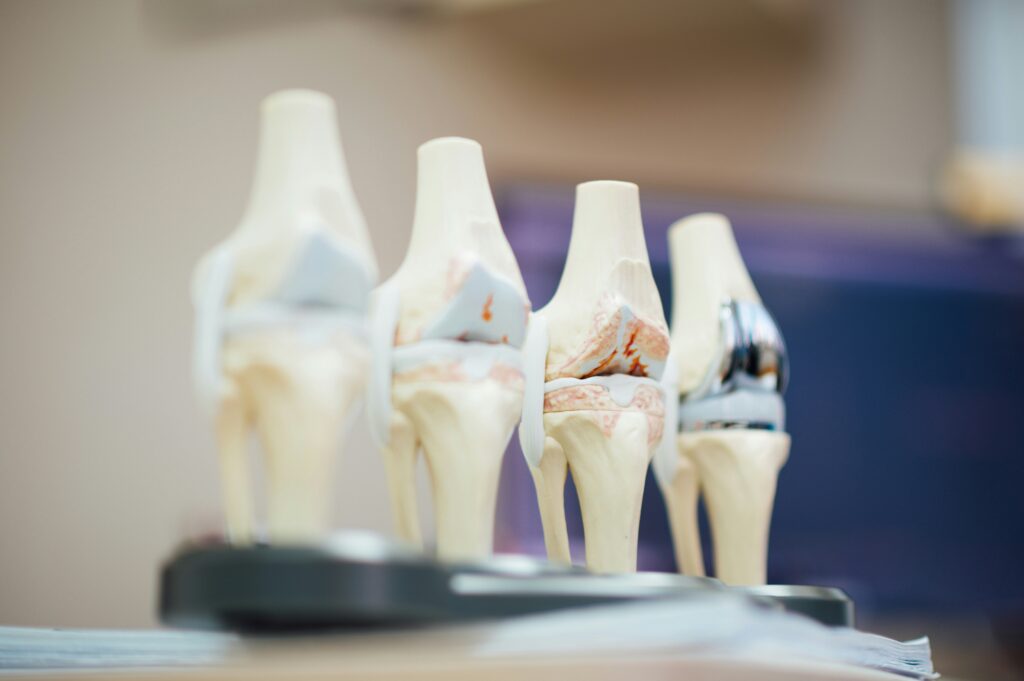
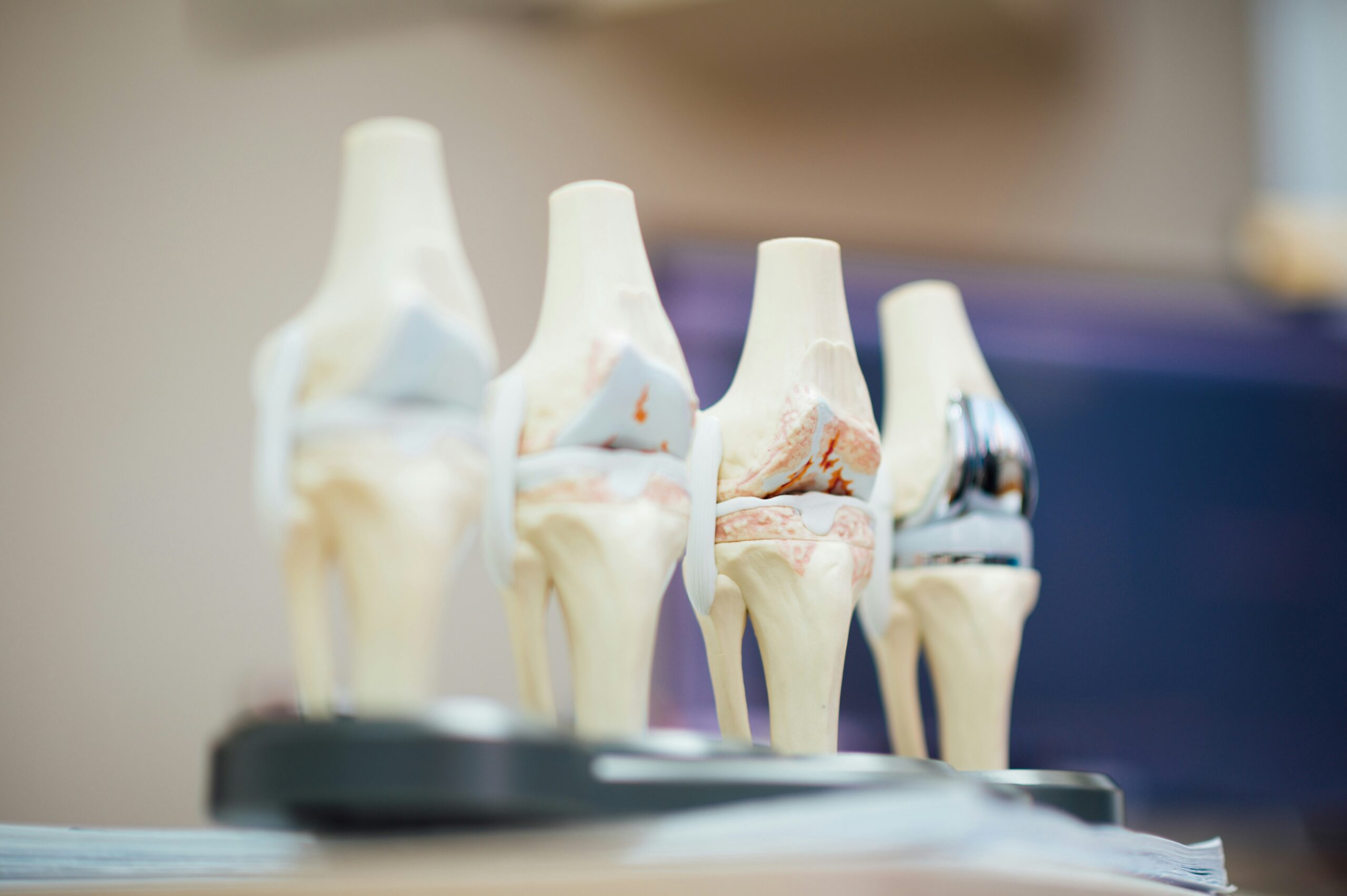
Patients often tell me that they would like to exercise but hesitate due to their knee or hip pain. They want to know what they should avoid, how to prevent and what is recommended to prevent or limit the progression of arthritis. Osteoarthritis (OA) is also known as degenerative arthritis. It is the most common form of arthritis in the knee. OA is usually a gradual, slow and progressive process of “wear and tear” to the cartilage in the joint which eventually wears down to the bony joint surface.
It is most often found in middle-aged and older people and in weight bearing joints such as the hip, knee and ankle. It causes gradual onset of pain, swelling and stiffness in the joint involved, especially after increased activity. While diet and exercise help, some people are more likely to develop OA based on previous trauma or injury, labor intensive occupations and genetics. Either way, we all get OA to some degree but there are a few things you can do to limit wear and tear to your joints.
However, OA is not an excuse to avoid exercise, but it is important to be smart about it. Regular exercise is essential to maintain a normal lifestyle for those with OA. However, if you make poor lifestyle choices, do the wrong exercise, use poor technique, or are too aggressive, you could flare-up your joints and do more harm than good.
Don’t Burn the Candle at Both Ends
Poor sleep can affect your joints. One study found that people with arthritis felt more pain after restless nights. One theory is that when you don’t sleep well, it triggers inflammation in your body, which may lead toOA over time.
Don’t Slouch and Slump
Posture matters. Sit up straight. When you slump in your chair, it puts more stress on your muscles and joints and tires them out. Two good posture stretches are making a double chin by bringing your head over your shoulders and the second is pinching your shoulder blades together.
Don’t Ignore Pain
The exercise mantra “no pain, no gain” may be appropriate for a young healthy athlete, however, it may prove counterproductive for most of us. It’s true that some muscle soreness is OK, but not if it lasts for days or if your muscles are swollen or too sore to move or to touch. Joint pain isn’t normal, so pay attention to it. If you think you overdid it, ease up on your exercises. If the pain won’t go away, check with your doctor.
Don’t Overdo Computer Time
It can literally be a pain in your neck -- and your elbows, wrists, back, and shoulders. The problem isn’t just bad posture, but that you hold it for too long. That overworks your muscles. It also puts pressure on the discs in your back. Set up an ergonomic workstation. If you’re in a soft chair, prop up your arms with cushions to take the load off your shoulders and your neck. Be sure to get up and move every hour.
Don’t Get Rigid and Repetitive in Your Exercise Routine
If you perform the same exercise, sport or activity every day, you use the same muscles and joints repeatedly. Remember, overtraining problems commonly occur in single sport athletes. Mix in fun sports and activities to break the monotony by adding fun activities such as golf, swimming, biking, skiing, hiking or playing tennis. Avoid weight bearing exercises two days in a row. Run one day, walk, swim or bike the next. Use the elliptical instead of the treadmill on various days. Limit intensity – only work out intensely 2-3 times out of 5 days per week.
Don’t Squat
Avoid squatting…deep squatting is bad for your hips and knees. Even when gardening, use a kneeling pad instead of bending down and squatting.
Don’t Smoke and Chew Tobacco
Nicotine from cigarettes and chewing tobacco cuts down on blood flow to your bones and to the cushioning discs in your back. It limits how much bone-building calcium your body can take in. It also breaks down estrogen, a hormone you need for bone health. And it slows new growth that thickens bones…which can lead to OA and osteoporosis.
SOURCES: WebMD, University of Pennsylvania
Visit your family doctor regularly and listen to your body.
EVERY MONDAY – Read Dr. Paul J. Mackarey “Health & Exercise Forum!” via Blog
EVERY SUNDAY in "The Sunday Times" - Read Dr. Paul J. Mackarey “Health & Exercise Forum!” in hard copy
This article is not intended as a substitute for medical treatment. If you have questions related to your medical condition, please contact your family physician. For further inquires related to this topic email: drpmackarey@msn.com
Paul J. Mackarey PT, DHSc, OCS is a Doctor in Health Sciences specializing in orthopedic and sports physical therapy in Scranton and Clarks Summit. Dr. Mackarey is in private practice and is an associate professor of clinical medicine at Geisinger Commonwealth School of Medicine. For all of Dr. Mackarey's articles, visit our exercise forum!