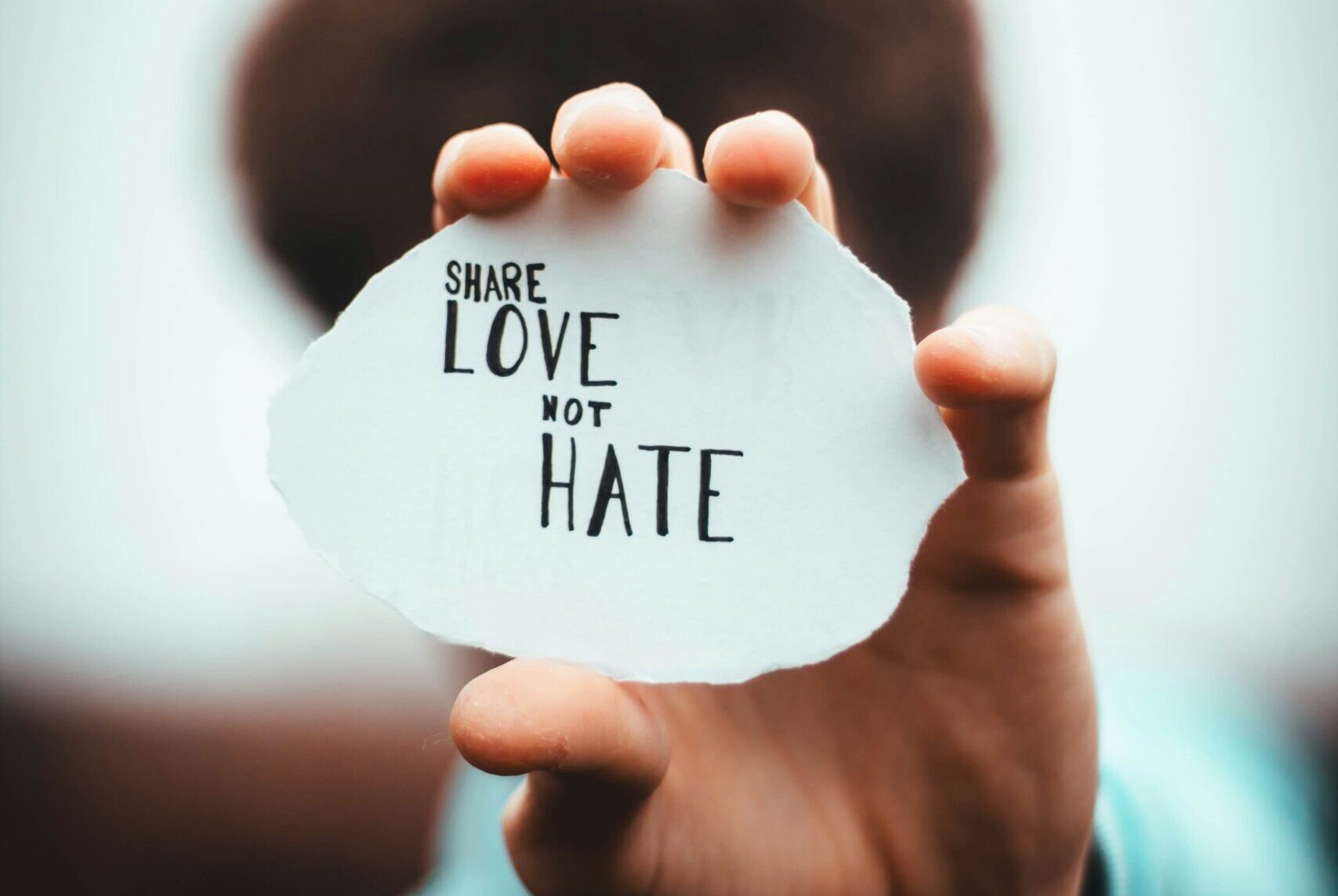
It is no surprise that the most common New Year Resolution is to be healthier…eat less, exercise more, etc. However, health is multidimensional! To be truly healthy, one must have a healthy mind, body and spirit! It is well documented and established that exercise and diet contribute to your physical health, and mentally, the brain is healthier by avoiding toxins such as tobacco, drugs and alcohol, while the spirit is healthier by being mindful, spiritual and meditative. Unfortunately, less attention is paid to other critically important aspects of health: the unhealthy impact of negative visceral emotions such as hate, jealousy, and anger.
Considering our present divisive social and political climate in the United States and globally, I find myself in constant search to understand the pervasive hate and division which seems to be, not only prevalent, but acceptable. I have attempted to read books such as “The Science of Hate,” by Matthew Williams, about the science of hate and survival, “Demon Copperhead,” by Barbara Kingsolver, about those marginalized and left behind, ”The Demon of Unrest,” by Erik Larson, about the history of our national political division preceding the Civil War and its relevance in the present, and watch TED Talks podcasts and television specials such as those presented by WVIA Public Media in a special series “We Stand Against Hate.”
All of this, to no avail! I failed in my effort to understand the unthinkable: We hate individuals whom we have NEVER even met. We hate groups of people through unfounded generalizations. We hate because of color, creed, stature, rank?!?! At the end of the day, I just don’t get it! Fortunately, I was not born with the “hate gene” and may never fully understand. But what I do understand is that HATE IS UNHEALTHY! So, if you want to be truly and completely healthy this new year, work on your hate!
The word “hate” is thrown around more often than the actual emotion is felt. The statement “I hate broccoli” is rarely accompanied by the strong negative emotion of true hatred. Even strong feelings of anger or disgust are not the same as hate. According to Laura Williams, clinical psychologist “Hate is a profoundly intense and enduring dislike for someone or something. Hate can be tenacious, and often has roots in mistrust, fear, or (lack of) individual power, and vulnerability.”
It can be hard to distinguish hate from other powerful negative emotions that you may be feeling at the same time. Some psychologists say what makes hate different is that it’s directed toward who or what someone or something is, rather than what they’ve done.
The negative physiological, physical health, mental and emotional effects of hate are well documented by many sources including the National Institutes of Health.
Ultimately, hate creates an internal state of emergency which demands significant physical and mental resources and leads to wear-and-tear on your entire system. Letting go of hate is a form of self-care that promotes relaxation and long-term well-being.
2026 is a great opportunity to be truly healthy…eat well, exercise more and rid yourself of hate!
Visit your family doctor regularly and listen to your body.
EVERY MONDAY – Read Dr. Paul J. Mackarey “Health & Exercise Forum!” via Blog
EVERY SUNDAY in "The Sunday Times" - Read Dr. Paul J. Mackarey “Health & Exercise Forum!” in hard copy
This article is not intended as a substitute for medical treatment. If you have questions related to your medical condition, please contact your family physician. For further inquires related to this topic email: drpmackarey@msn.com
Paul J. Mackarey PT, DHSc, OCS is a Doctor in Health Sciences specializing in orthopedic and sports physical therapy in Scranton and Clarks Summit. Dr. Mackarey is in private practice and is an associate professor of clinical medicine at Geisinger Commonwealth School of Medicine. For all of Dr. Mackarey's articles, visit our exercise forum!