After a long, cold and snowy winter, complicated by COVID 19, we look to spring as a time of renewal. It is a time for great hope and optimism; trees are budding, flowers blooming and more people are doing their civic duty and receiving vaccinations…all contributing to a sense of promise for a fresh start!
Spring can also be a time of personal renewal…a time to reestablish goals for health and wellness. However, to be completely healthy, one must have a healthy mind, body and spirit. A healthy mind requires intellectual stimulation, a healthy body requires eating well and engaging in physical activity and a healthy spirit, requires faith, hope and prayer and meditation. This spring, consider the following tips to promote a healthy mind, body and spirit throughout the year.
Begin your meal with healthy vegetables and salads will fill you up and reduce the temptation to over-indulge in high-fat, high-calorie foods. Drinking plenty of water throughout the day is also very important for good health.
Physical activity is one of the most important factors in improving a lifestyle in a positive way. But, it does not have to be complicated. A minimum of 30 minutes of physical activity, 3-5 days per week will have many positive effects on your body.
One cannot be completely healthy without a healthy mind. Like your body, you must continue to challenge your mind in order for it to remain strong, learn, expand, and grow. Read a good book, do crossword puzzles or try something new...piano lessons! Emulate my mentor, Dr. Gino Mori, who has been taking classes (and takes the exams) in art, science and history since his retirement more than 20 years ago!
Prayer, meditation, or chanting has been known to reduce your heart rate, blood pressure and stress level. These activities can lead to a sense of peace, serenity, joy, and faith. Remember, those who are spiritual and faithful live longer.
Those who love themselves are more likely to take care of their bodies. People who are not comfortable in their own skin are never satisfied with their appearance and often attempt to change their body. For example, men use steroids to appear “bigger and better” or women have cosmetic surgery to appear “younger and better.” It is impossible to love others if you don’t love yourself. You must learn to accept and embrace change in your body and life in order to have a healthy mind, body and spirit.
Get the appropriate amount of uninterrupted sleep. A good sleep promotes healing and refueling for your body. When needed, sit, rest, or take a short nap to recharge.
Countless hours are wasted on feelings of anxiety, regret or worry about a past or upcoming event. This can be a waste of precious life time and adds stress to the body, which makes you more susceptible to disease. Stay focused on the beauty of the present moment!
When you associate with healthy people, you take on their healthy habits. You will drink less, eat healthier and exercise more if you are hanging around with those who engage in these habits...they will have a positive influence on you! Bob Knowles, local insurance broker, is my health and wellness role model. He has tremendous discipline; exercises every morning before work, eats and drinks in moderation and makes time to reflect for self-improvement.
The camaraderie of good friends is essential for a healthy mind, body and spirit. Make it a priority to associate with people who “celebrate life!” The health benefits from these positive-minded, healthy people who appreciate you for who you are will provide you with the support, love, and respect necessary to survive any challenge. Find people who know how they celebrate life! My role model for optimism is Steven Scheinman, MD, President and Dean of Geisinger Commonwealth School of Medicine. He demonstrates a keen instinct to find good in others and maintain a positive and optimistic attitude in challenging situations.
Studies show that laughter has health benefits and assist the body in healing. Laughter is contagious, so hanging around with people who are fun and funny, will bring fun and laughter into your life. Try to look for humor in every situation and keep laughing. Spend more time with people that spread joy and laughter. Silly sisters, Rosemary Quinn Malloy, Melissa Quinn LeStrange and Rebecca Quinn Walsh bring a smile to my face whenever I see them or hear their names!
Read Dr. Mackarey’s Health & Exercise Forum – Every Monday. This article is not intended as a substitute for medical treatment. If you have questions related to your medical condition, please contact your family physician.
For further inquires related to this topic email: drpmackarey@msn.com
See all of Dr. Mackarey's articles at: https://mackareyphysicaltherapy.com/forum/
Paul J. Mackarey PT, DHSc, OCS is a Doctor in Health Sciences specializing in orthopaedic and sports physical therapy. Dr. Mackarey is in private practice and is an associate professor of clinical medicine at GCSOM.
American Heart Month is not just for lovers. Long after the Valentine’s roses wilt, our hearts will require special attention for a long healthy life. It is the goal of The National Heart, Lung, and Blood Institute to motivate Americans to adopt healthy lifestyles to prevent heart disease. And, in 2021, a healthy heart may be more important than ever to reduce the risk of severe illness from COVID-19.
A recent study by the Center for Disease Control (CDC) found that while many Americans believe that they are “young at heart”, it turns out that many have hearts older than their actual age. For example, the study found that the average American male heart is eight years older and the average American female heart is five years older than their chronological age.
The CDC’s findings may offer some explanation for the fact that many Americans die from heart attacks, strokes, and heart failure when compared to other people around the globe. Furthermore, while more Americans use heart medications more than other people in the world, heart attack and stroke continue to be the leading cause of death in the US, killing more than 80,000 each year.
The CDC has developed a new test to determine “Heart Age,” which has been found to be a much more reliable indicator of a person’s risk for heart disease. The heart age test will determine if your heart is older, younger or average for your age, which can be much more important for longevity than chronological age.
The CDC is encouraging people to take matters into their own hands …be proactive. In addition to calculating your Body Mass Index ((BMI), the CDC is asking people to use an online calculator to determine their heart age. The calculator will give a person a more accurate percentage of risk for heart attack or stroke. Based on the outcome, one must see their family physician or cardiologist to discuss the results and implement a plan.
Heart Age is very easy to use: You just need to enter your age, sex, blood pressure, whether you are treated for high blood pressure, whether you smoke or have diabetes, and your body mass index (BMI), with a handy calculator if you don’t know it. The tool gives you your risk for heart disease in the next ten years, compared with normal.
Visit: www.framinghamheartstudy.org
Enter: sex, blood pressure, (list if controlled), diabetes (list if controlled), smoking history, and body mass index (BMI), a simple height/weight calculation found on-line at www.bmicalculator.cc
Example: A 53 year old women with an acceptable BMI, may actually find that she is at great risk for suffering a heart attack or stroke because she smokes cigarettes and has uncontrolled high blood pressure. The calculator includes all the significant factors proven by science to affect a person’s risk of heart attack or stroke. These include: blood pressure, weight, BMI, blood sugar, cholesterol, age, sex and smoking history.
Example: 50 year old male smoker has uncontrolled high blood pressure of 140/96, no history of diabetes, and a BMI of 30 has a predicted heart age of 72 years. A female with a similar profile would have a heart age of 74 years.
The Solution
To some, the solution may be obvious and for others it may be impossible. In the previous example of the 50 year old smoker, if he quit smoking for one year, he would halve reduced his heart age by 14 years (15 years for a woman). If he would reduce his blood pressure to 120, he would reduce his heart age by 6 years (10 years for a woman). And, if both risk factors were removed, he would reduce his heart age by 19 years (23 for a woman).
In the above examples, the 53 year old man does not have to take his 72 year old heart age as a death sentence.
What Individuals can do…
Require health plans to cover, with limited co pays or deductibles, preventative services such as blood pressure screening nutritional counseling, prescription exercise and tobacco cessation products.
Promote health, wellness through diet and exercise by sponsoring health fairs and establishing bike lanes and walking trails in the community.
Read Dr. Mackarey’s Health & Exercise Forum – Every Monday
This article is not intended as a substitute for medical treatment. If you have questions related to your medical condition, please contact your family physician.
For further inquires related to this topic email: drpmackarey@msn.com
See all of Dr. Mackarey's content at: https://mackareyphysicaltherapy.com/forum/
Paul J. Mackarey PT, DHSc, OCS is a Doctor in Health Sciences specializing in orthopaedic and sports physical therapy. Dr. Mackarey is in private practice and is an associate professor of clinical medicine at GCSOM.
Part I of II
Difficulty sleeping during the COVID-19 quarantine has become a common problem and can be manifested in a variety of ways; insomnia, fragmented sleep and nightmares. National prescription providers have reported a 21% increase in anti-insomnia, anti-anxiety and antidepressant medications since March of 2020. The next two weeks in Health & Exercise Forum” will be dedicated to sleep wellness.
We do it every night, hopefully. Children are doing it. Our grandparents are doing it. Teenagers do it all the time. We sleep of course. These hours in which we slumber are vital to our ability to function during the day and to our health overall. It does not appear evolutionarily advantageous for us to be unconscious for extended periods of time. Modern science tells us that much of our body’s restoration, strengthening, and processing occurs while we sleep. Our brains consolidate the information they have learned throughout the day and enhance our memory. Additionally, sleep restores sugar storage in our brains and improves the functioning of our immune system. But science does not illuminate why we need such a prolonged period other than the fact that we just seem to get sleepy after a long day.
Sleep is crucial to us as a species, but it is not always easily attained. For many individuals across the globe, this author included, sleeping properly can be a challenge. The trial and tribulations of the human experience can lead to restless nights and early morning risings without adequate sleep. But what is considered “adequate” sleep? The answer depends on your age. As we grow older, our sleeping requirements change drastically from infancy to elderdom. Infants are learning and processing so much information of this new world they now inhabit. Thus, their brains need enough time to analyze and consolidate the data, necessitating 12 to 15 hours of sleep. As we advance into adulthood, our sleep requirements drop to approximately 7 to 9 hours with some variability from person to person. Good indications of a restful night’s sleep include waking up feeling refreshed, functioning with enough energy for your daily tasks, and having continuous sleep- meaning there are not extended periods of time of wakefulness when we are supposed to be sleeping.
This seems easy enough to say, but significantly more difficult to do. Current reports demonstrate that roughly 100 million people suffer from insomnia at some point each year, with 25% progressing to long-term chronic sleep insufficiency. Insomnia is described as difficulty falling asleep or staying asleep for three nights per week for at least two consecutive weeks in a three-month period. There are a lot of unhealthy sleeping habits permeating the country. We measure the quality of sleep in two different dimensions duration (quantity) and depth (quality). The duration is straightforward enough. Do you sleep for the recommended 7 to 9 hours per night? The quality is a little more difficult to quantitate. Some individuals may sleep for the proper duration of time, but the depth is not adequate. Sleep quality is determined by the number of arousals or awakenings in a given night. As few as 5 arousals in a night can result in daytime sleepiness and performance deficits. In addition, how long we remain in certain phases of sleep also determines the quality of our sleep. There are four stages of sleep: N1, N2, N3, and REM with N3 being the most restful of the stages. When we fall asleep, we go through a predictable descent into sleep. We repeat the cycle of N1 to N2 to N3 to REM sleep every 60 to 90 minutes. The more time we remain in the restful stages, N3 and REM, the better our sleep is. As we age, we inevitably spend less and less time in restful sleep.
There are many factors that influence how we sleep. Everything from what we drink to the type of curtains we have can impact those crucial hours of sleep. Some of the more common culprits that disrupt our sleep are:
For More Informations:
-http://healthysleep.med.harvard.edu/healthy/
-https://jamanetwork.com/journals/jamainternalmedicine/fullarticle/2110998
-https://www.sciencedirect.com/topics/medicine-and-dentistry/insomnia
Read Dr. Mackarey’s Health & Exercise Forum – every Monday. Next Week Read, Sleep and Wellness Part II.
This article is not intended as a substitute for medical treatment. If you have questions related to your medical condition, please contact your family physician. For further inquires related to this topic email: drpmackarey@msn.com
Paul J. Mackarey PT, DHSc, OCS is a Doctor in Health Sciences specializing in orthopaedic and sports physical therapy. Dr. Mackarey is in private practice and is an associate professor of clinical medicine at Geisinger Commonwealth School of Medicine.
Read all of Dr. Mackarey's articles in our health and exercise forum: https://mackareyphysicaltherapy.com/forum/
Guest Columnist: Timothy Farrell, MD3
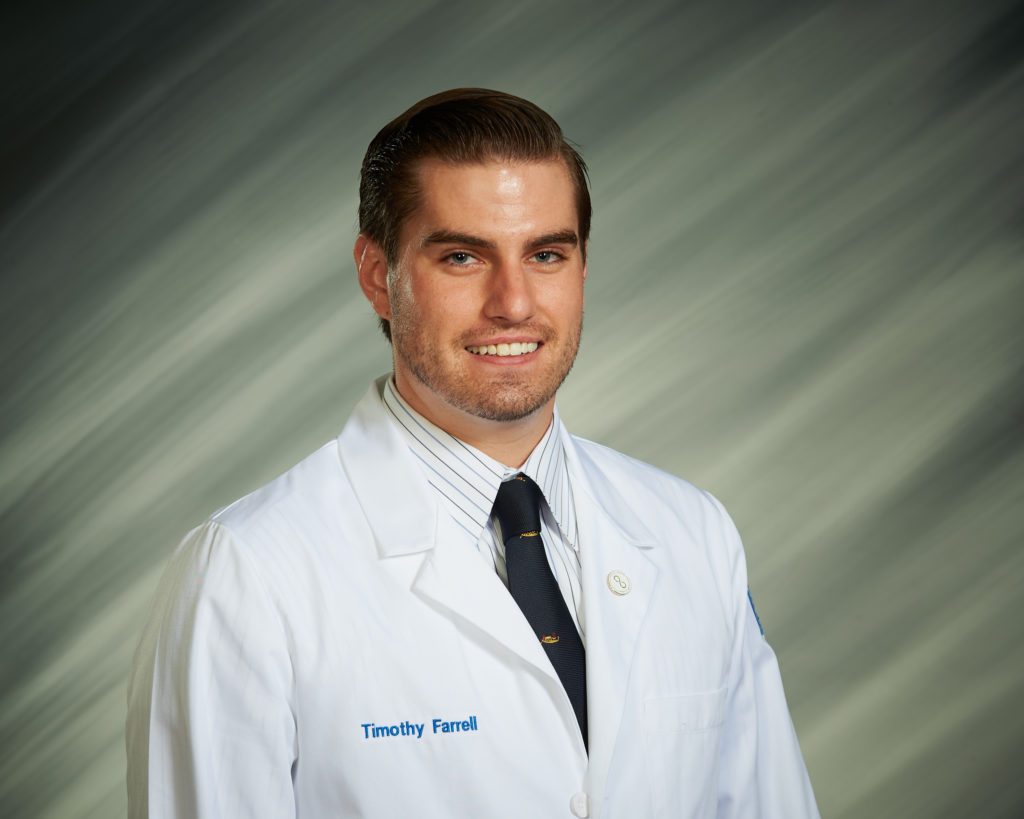
Tim Farrell is a third year medical student at Geisinger Commonwealth School of Medicine. Originally from Clarks Summit, Pennsylvania, Tim received his bachelor’s degree from Loyola University Maryland in Baltimore, MD. Currently a 2nd Lieutenant in the US Army, he enjoys listening to music, running, and spending time with his two dogs. He volunteers with the Cody Barrasse Foundation in the Organ Transplant Assistance Program, where he helps patients receive grant funding as they await their transplant surgery. He hopes to pursue a career in General Surgery.


