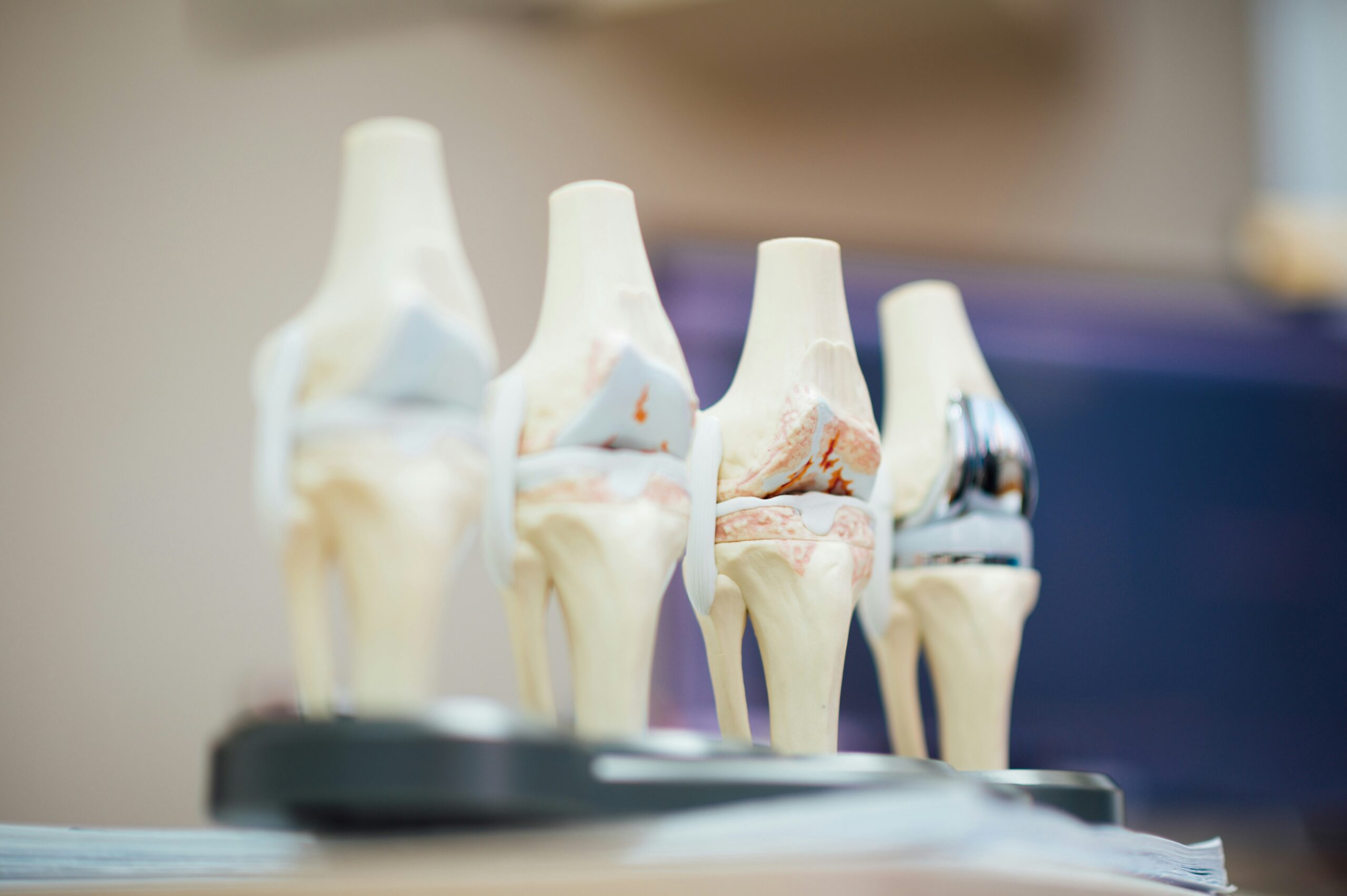
Patients often tell me that they would like to exercise but hesitate due to their knee or hip pain. They want to know what they should avoid, how to prevent and what is recommended to prevent or limit the progression of arthritis. Osteoarthritis (OA) is also known as degenerative arthritis. It is the most common form of arthritis in the knee. OA is usually a gradual, slow and progressive process of “wear and tear” to the cartilage in the joint which eventually wears down to the bony joint surface.
It is most often found in middle-aged and older people and in weight bearing joints such as the hip, knee and ankle. It causes gradual onset of pain, swelling and stiffness in the joint involved, especially after increased activity. While diet and exercise help, some people are more likely to develop OA based on previous trauma or injury, labor intensive occupations and genetics. Either way, we all get OA to some degree but there are a few things you can do to limit wear and tear to your joints.
However, OA is not an excuse to avoid exercise, but it is important to be smart about it. Regular exercise is essential to maintain a normal lifestyle for those with OA. However, if you make poor lifestyle choices, do the wrong exercise, use poor technique, or are too aggressive, you could flare-up your joints and do more harm than good.
Don’t Burn the Candle at Both Ends
Poor sleep can affect your joints. One study found that people with arthritis felt more pain after restless nights. One theory is that when you don’t sleep well, it triggers inflammation in your body, which may lead toOA over time.
Don’t Slouch and Slump
Posture matters. Sit up straight. When you slump in your chair, it puts more stress on your muscles and joints and tires them out. Two good posture stretches are making a double chin by bringing your head over your shoulders and the second is pinching your shoulder blades together.
Don’t Ignore Pain
The exercise mantra “no pain, no gain” may be appropriate for a young healthy athlete, however, it may prove counterproductive for most of us. It’s true that some muscle soreness is OK, but not if it lasts for days or if your muscles are swollen or too sore to move or to touch. Joint pain isn’t normal, so pay attention to it. If you think you overdid it, ease up on your exercises. If the pain won’t go away, check with your doctor.
Don’t Overdo Computer Time
It can literally be a pain in your neck -- and your elbows, wrists, back, and shoulders. The problem isn’t just bad posture, but that you hold it for too long. That overworks your muscles. It also puts pressure on the discs in your back. Set up an ergonomic workstation. If you’re in a soft chair, prop up your arms with cushions to take the load off your shoulders and your neck. Be sure to get up and move every hour.
Don’t Get Rigid and Repetitive in Your Exercise Routine
If you perform the same exercise, sport or activity every day, you use the same muscles and joints repeatedly. Remember, overtraining problems commonly occur in single sport athletes. Mix in fun sports and activities to break the monotony by adding fun activities such as golf, swimming, biking, skiing, hiking or playing tennis. Avoid weight bearing exercises two days in a row. Run one day, walk, swim or bike the next. Use the elliptical instead of the treadmill on various days. Limit intensity – only work out intensely 2-3 times out of 5 days per week.
Don’t Squat
Avoid squatting…deep squatting is bad for your hips and knees. Even when gardening, use a kneeling pad instead of bending down and squatting.
Don’t Smoke and Chew Tobacco
Nicotine from cigarettes and chewing tobacco cuts down on blood flow to your bones and to the cushioning discs in your back. It limits how much bone-building calcium your body can take in. It also breaks down estrogen, a hormone you need for bone health. And it slows new growth that thickens bones…which can lead to OA and osteoporosis.
SOURCES: WebMD, University of Pennsylvania
Visit your family doctor regularly and listen to your body.
EVERY MONDAY – Read Dr. Paul J. Mackarey “Health & Exercise Forum!” via Blog
EVERY SUNDAY in "The Sunday Times" - Read Dr. Paul J. Mackarey “Health & Exercise Forum!” in hard copy
This article is not intended as a substitute for medical treatment. If you have questions related to your medical condition, please contact your family physician. For further inquires related to this topic email: drpmackarey@msn.com
Paul J. Mackarey PT, DHSc, OCS is a Doctor in Health Sciences specializing in orthopedic and sports physical therapy in Scranton and Clarks Summit. Dr. Mackarey is in private practice and is an associate professor of clinical medicine at Geisinger Commonwealth School of Medicine. For all of Dr. Mackarey's articles, visit our exercise forum!
Part I of II
Patients often tell me that they would like to exercise but hesitate due to their knee or hip pain. They want to know what they should avoid, how to prevent and what is recommended to prevent or limit the progression of arthritis. Osteoarthritis (OA) is also known as degenerative arthritis. It is the most common form of arthritis in the knee. OA is usually a gradual, slow and progressive process of “wear and tear” to the cartilage in the joint which eventually wears down to the bony joint surface.
It is most often found in middle-aged and older people and in weight bearing joints such as the hip, knee and ankle. It causes gradual onset of pain, swelling and stiffness in the involved joint, especially after increased activity. While diet and exercise help, some people are more likely to develop OA based on previous trauma or injury, labor intensive occupations and genetics. Either way, we all get OA to some degree but there are a few things you can do to limit wear and tear to your joints.
Your joints, which link your bones together, are sensitive to heavy loads. Every pound on your frame puts 4 pounds of stress on your knees. It also strains your back, hips, and feet.
That causes wear and tear that can lead to damage, aches, and pain. A poor diet, which can lead to being overweight, can also be the source of inflammation. That can make all your joints, including in your hands, stiff, painful, and swollen.
Don’t Text Too Much
“Texting thumb” is a real thing. Your tendons can get irritated and lock your thumb in a curled position. All that looking down at your phone is just as bad for your neck and shoulders, too. Every inch your head drops forward raises the load on your muscles.
Don’t Wear High Heels Too Often
While they might look styl”n, the higher the heel, the more your weight tips forward. Your leg muscles have to work harder to keep your balance and alignment, which can cause pain. When heels go up, so does the twisting force in your knees. If you wear them every day, you increase your odds of developing OA.
Don’t Wear the Wrong Shoes
Old, worn-out shoes will not adequately support your feet and ankles. That’ll throw your knees, hips, and back out of whack. Also, make sure your sneakers are right for your sport. High tops for basketball, for example, can protect your ankles from sprains and flip flops or summer beach shoes are not meant for long distances…especially if you are over 50.
Don’t Crack Your Knuckles
That satisfying pop comes from tiny bubbles bursting in the fluid around your joints, or from the ligaments snapping against the bone. While it might not cause OA directly, one study showed that this habit may cause your hands to swell and weaken your grip.
Don’t Carry a Heavy Bag
Whether it’s a purse, backpack, or messenger bag, packing too much can cause neck, back and shoulder pain. Heavy weight on one shoulder throws off your balance and your walk. If you tend to carry things only on one side, the constant pull overstretches your muscles and tires out your joints.
Don’t Use Wrong Muscles for the Job
When you put too much load on little muscles, your joints pay the price. If you need to open a heavy door, for example, push with your shoulder instead of your fingers. When you lift something off the floor, bend at your knees and push up with your strong leg muscles, instead of your arms.
Don’t Sleep on Your Stomach
While it might help with snoring, it may not be best for the rest of your body. Lying on your belly pushes your head back, which compresses your spine. Your head also will face in one direction for longer stretches than if you sleep on your back.
Don’t Skip Stretching
Gentle, comfortable, active stretching on a regular basis can help strengthen your muscles and tendons. It also can make them more flexible. That allows your joints to move more easily and helps the muscles around them work better.
Don’t Skip Strength Training
Once you turn 40, your bones start to get a little thinner and more likely to break. If you build muscle with strength training, it slows bone loss and triggers new growth. So, you not only get stronger muscles, but denser bones, too. Together, they stabilize your joints so you’re less likely to get hurt. In fact, studies show that the stronger your leg muscles, the less stress on your knees.
SOURCES: WebMD, University of Pennsylvania,
Visit your family doctor regularly and listen to your body.
EVERY MONDAY – Read Dr. Paul J. Mackarey “Health & Exercise Forum!” via Blog
Next Week: Part II of II “Save Your Joints”
EVERY SUNDAY in "The Sunday Times" - Read Dr. Paul J. Mackarey “Health & Exercise Forum!” in hard copy
This article is not intended as a substitute for medical treatment. If you have questions related to your medical condition, please contact your family physician. For further inquires related to this topic email: drpmackarey@msn.com
Paul J. Mackarey PT, DHSc, OCS is a Doctor in Health Sciences specializing in orthopedic and sports physical therapy in Scranton and Clarks Summit. Dr. Mackarey is in private practice and is an associate professor of clinical medicine at Geisinger Commonwealth School of Medicine. For all of Dr. Mackarey's articles, visit our exercise forum!
NEW YEAR’S RESOLUTION: GET A “RUNNER’S HIGH” ON LIFE!
The number one New Year’s Resolution in the United States is to lose weight. A close second is to gain control over one’s life. One of the best ways to lose weight is thought diet and exercise. It can also be a very effective method to begin taking control of one’s life. This is especially true for those suffering from stress, anxiety and depression. This year make your New Year’s Resolution to “Get a Runner’s High on Life!”
Specifically, aerobic exercise (exercise that increases your heart rate for 30 minutes or more) such as walking, biking, running, swimming, hiking, elliptical & stepper machines to name a few, is the secret to “runner’s high.” This exercise euphoria is not limited to runners alone, but all who engage in aerobic exercise are more likely to experience high energy, positive attitude, and mental wellness – not to mention burn calories.
Physical activity, specifically aerobic exercise, while well known for its importance to one’s physical well-being has also been scientifically proven valuable for preventing and easing stress, anxiety and depression. Studies have found improvement in mental health for groups that engaged in aerobic running, jogging or walking programs, 30-45 minutes 3-5 days per week for 10-12 weeks when compared to a control group and a group in counseling.
EXERCISE FOR PHYSICAL HEALTH:
Loss or Maintained Body Weight
Reduces LDL /Raises HDL Cholesterol
Improves Circulation and Blood Pressure
Reduces Risk of Heart Disease
Prevents Bone Loss
Reduces Stress/Muscle Tension
Lowers Risk of Depression
Improves Sleep Pattern
Improves Strength and Flexibility
Improves Balance/Reduces Risk of Falls
Improves Immune System
Improves Pain Threshold
EXERCISE FOR MENTAL HEALTH:
Helps a person gain control over their lives
Increases self-esteem
Diverts attention away from worry, concern or guilt
Improves mood – with visible signs of improvement in physique & body weight
Increases sense of pleasure and satisfaction
Anger management – release pent-up frustration, anger and hostility
Increase in brain serotonin (natural mood elevator chemical in brain)
Increase in beta-endorphins (natural mood, stress & pain control chemical in brain)
Improvement in natural sleep patterns
HOW TO BEGIN EXERCISE TO GET THE “RUNNER’S HIGH” ON LIFE:
Consult your primary care physician. Be sure that your symptoms are not related to other health problems. Also, if you are using antidepressants or other medications discuss the impact it may have on your exercise program with your physician.
Recognize and fight stress, anxiety and depression symptoms that are contrary to or prohibit physical activity such as: fatigue, lack of energy, slow motor skills. Work hard to recognize and overcome these symptoms to begin an exercise program. An aerobic exercise routine should eventually lessen these symptoms.
Be realistic. Expect that aerobic exercise will take time to have a noticeable benefit. Do not get overly ambitious and set yourself up for failure.
Begin with an aerobic exercise program that is practical and destined to succeed. For example: inactive and deconditioned people should begin walking 5 minutes per day, 3-5 days per week for 1 week. Then, add 3-5 minutes each week until you attain 30-45 minutes per walk 3-5 times per week. Younger and fitter people can begin to walk for 15 minutes and continue until they attain 45-60 minutes per walk, 3-5 times per week. Remember, what seems impossible today will be easier and become routine in 3-4 weeks so JUST DO IT!
Find a pleasurable environment: a beautiful park (Nay Aug), a scenic lake (Lake Scranton), quiet countryside (rural farmlands of Dalton). Use a mall in inclement weather.
Find a friendly, uplifting group or individual to walk, talk and exercise with. This may be more appropriate for people feeling isolated or withdrawn. Others may enjoy the peace and quiet of exercising and meditating alone.
Be specific and compliant! Make a serious commitment. Keep a journal or exercise log. Mark a calendar. 30-45 minutes, 3-5 days per week – NO EXCUSES! Get and exercise buddy you can count on and help keep you compliant!
Make it fun! Mix it up. Walk 3 days, swim or bike 1-2 days, some days alone, some days with a buddy.
BE RELIGIOUS! Be religious about exercise BUT don’t get too compulsive!
EVERY MONDAY – Read Dr. Paul J. Mackarey “Health & Exercise Forum!” via Blog
EVERY SUNDAY in "The Sunday Times" - Read Dr. Paul J. Mackarey “Health & Exercise Forum!” in hard copy
This article is not intended as a substitute for medical treatment. If you have questions related to your medical condition, please contact your family physician. For further inquires related to this topic email: drpmackarey@msn.com
Paul J. Mackarey PT, DHSc, OCS is a Doctor in Health Sciences specializing in orthopedic and sports physical therapy in Scranton and Clarks Summit. Dr. Mackarey is in private practice and is an associate professor of clinical medicine at Geisinger Commonwealth School of Medicine. For all of Dr. Mackarey's articles, visit our exercise forum!
Happy Holidays Seniors! My gift to readers this holiday season is to offer some health tips for seniors. However, before I get accused of being a “Scrooge” about enjoying the food and drink associated with the season, please know that I was raised in an Italian kitchen. As such, it is fair to say that I have and will eat my fair share of the Italian Christmas Eve food celebration consisting of, but not limited to: Chianti wine, seafood antipasti, calamari, baccala, smelts, pasta with anchovies, seafood ravioli, cannoli, Italian cheesecake and Baci Perugina Dark Chocolate Hazelnut candy, cappuccino, espresso, sambuca and limoncello.
Overindulgence during the holidays causes many, including seniors, to make New Year's resolutions related to diet and exercise. But, this year, I propose that you incorporate healthy habits during the holiday season, and you may find that your resolutions are not as hard to keep. According to American Association of Retired Persons (AARP), seniors are considered those 50 years old and older. I will never forget how humbled I felt when I received my application to join AARP a few years ago. With this in mind, this year I offer healthy holiday tips for seniors, who are especially vulnerable to unhealthy holiday habits.
Every day, get out of the house for a walk to view the outdoor Christmas lights and decorations. Dress for the weather, walk with a companion, and take along a flashlight if necessary to illuminate your path and use caution to avoid falls on slippery sidewalks.
Combine shopping and walking.
In inclement weather, combine holiday shopping with your exercise. Indoor malls are great places to walk. Inquire with the mall management about walking clubs. Plan to shop early or late to avoid crowds. If you are planning on shopping in a particular store, park at the opposite end of the mall -- even if time is short, you will still get some exercise.
Routines are disrupted during the holidays and you may forget important medications. Make a special reminder to take your medications or order re-fills. If you are traveling, be sure to take enough medications with you in case of delays and have a copy of your prescriptions in case of loss. Be sure to bring a phone number for your doctor along with your health insurance cards, in case of emergency. Carry your medications in your carry-on luggage if you are flying.
Beginning your meal with healthy vegetables and salads will fill you up and reduce the temptation to over-indulge on high-fat, high-calorie foods. Taste your holiday favorites in small amounts to satisfy your palate.
According to Dr. Amy Anderson, internal medicine physician on the medical staff at Baylor University Medical Center," says holiday spices like cloves, thyme and sage can interfere by as much as 50 percent with the body's natural ability to utilize common drugs." Talk with your doctor or pharmacist about your medications and find out if there are any foods you should avoid while taking them.
If you have food allergies, ask about ingredients before you indulge. Be especially careful of home-baked goods if you have an allergy to tree nuts or peanuts. Those ingredients can be deadly if you are affected by these types of allergies.
If you suffer from allergic rhinitis, holiday decorations stored in the attic and basement can build up a coating of dust and mold that can trigger allergies. Some people may also need to rethink Christmas tradition and substitute an artificial tree.
The holiday season includes plenty of kissing and hand shaking. Getting a yearly flu shot and frequent hand washing are your best defense for avoiding the flu. If you are sick with a cold or flu, limit contact with others until you are well so you don’t infect others.
Holiday preparations and helping Santa means less sleep. Do your best to get to get at least 6-7 hours of sleep every night and avoid heavy foods, chocolate, caffeine and alcoholic beverages before bedtime. If you need to recharge, take a nap during the day.
EVERY MONDAY – Read Dr. Paul J. Mackarey “Health & Exercise Forum!” via Blog
EVERY SUNDAY in "The Sunday Times" - Read Dr. Paul J. Mackarey “Health & Exercise Forum!” in hard copy
This article is not intended as a substitute for medical treatment. If you have questions related to your medical condition, please contact your family physician. For further inquires related to this topic email: drpmackarey@msn.com
Paul J. Mackarey PT, DHSc, OCS is a Doctor in Health Sciences specializing in orthopedic and sports physical therapy in Scranton and Clarks Summit. Dr. Mackarey is in private practice and is an associate professor of clinical medicine at Geisinger Commonwealth School of Medicine. For all of Dr. Mackarey's articles, visit our exercise forum!
Guest Author: Paul Mackarey, Jr. PT, DPT is clinic director and partner at Mackarey & Mackarey Physical Therapy Consultants, Scranton and Clarks Summit, PA.
The 2025 Pennsylvania rifle deer season begins November 30th and continues through December 13, 2025. Opening day is considered a holiday in the state of Pennsylvania as approximately 750,000 hunters from age 12 to seniors (including myself) will hike through the woods in search of a whitetail.
I am a whitetail, turkey, small game hunter, and an avid outdoors enthusiast with great passion for mountain biking, kayaking, hiking and mountain climbing in our state and national parks. After an extended period away from hunting (in the off season), I am eager to be back in the woods. When possible, I try to make time to shed hunt and scout in preparation for the upcoming season. While I am active during the summer, I am not necessarily in “hunting shape” and certainly not acclimated to cold, wet and windy conditions. I offer health and safety tips for hunters based on the knowledge of experts in the field and my expertise as a health care provider. Good luck and be safe!
Common Health Problems for Hunters:
Chest Pain/Shortness of Breath – overweight and deconditioned people must be very careful when overexerting themselves in the woods while hunting. This is especially true for those with a history of heart disease. Make sure you take your medication and drink plenty of fluids 24 hours before and while hunting. Eat a good breakfast with a balance of protein and carbohydrates. A bagel with peanut butter is a good quick start. Pack healthy snacks and water to sustain you.
Knee Pain- in the front of the knee or kneecap is common with hunting. This can happen from excessive hiking on uneven or hilly terrain in the woods, especially if there is weakness in the leg muscles. When walking downhill try this simple trick to keep your knees safe. Slightly bend at the knees and bring your buttock back so your knees stay over (or slightly behind) your toes to reduce stress on the joint.
Neck, Lower or Middle Back Pain- can be caused by prolonged hiking with a heavy load or prolonged sitting in a tree stand in slouched positions, especially if one has tight hamstrings. Field dressing and carrying the deer out of the woods is also very stressful on the back. Take multiple breaks and stretch backwards, (the opposite direction of bending over to drag the deer). Also, consider where you want to position your hunt, avoid large hills that you may have to drag the deer up on the way out.
Shoulder Pain- can occur from recoil of a gun shot or the overhead activity of climbing a tree.
Hamstring Pain- can occur if the muscle is tight or weak. Prolonged walking, bending over and large steps over fallen trees can contribute to this problem. When free walking in the woods, look for the path of least resistance.
Ilio-Tibial Band Pain- when walking on the side of a hill there is a difference in the length of the legs. Overtime, this can lead to pain on the outside of the hip and leg.
Foot Numbness or Pain- can occur from prolonged squatting or poor fitting shoes/boots. However, lower back pain can also be associated with these symptoms.
Hand Numbness or Pain- can be caused by repeated recoil of the gun on the shoulder. Also, this may be associated with prolonged pressure of a shoulder strap or leaning on something under the arm.
Preparing Your Body for Hunting:
Prevention is the best management of most musculoskeletal and safety problems associated with hunting. First, one can prevent many of the above problems through proper fitting of equipment, clothing and shoes/boots.
Fitness - Be sure to maintain a fairly good fitness level in order to hunt safely. Begin an exercise and walking program 2-3 months before hunting season. If you are a beginner, start slowly. Warm up and slowly walk for 10 to 15 minutes and build up over time. Slowly add hills to your walking program.
Clothing - Wear your hunting clothing, such as boots to break them in while walking for exercise. Drytech clothing instead of cotton can keep you warm and wick moisture away from the body.
Move & Stretch - As hunters, we sit in our stand or blind and stay still for long periods of time in cold temperatures. This results in a cold and stiff body. When leaving your setup, give your body time to wake up before you start hiking out. Bend the knees or perform small squats repeatedly to get blood and warmth back into the legs. Stretch your spine backwards (the opposite of sitting) to prepare your spine for your heavy pack and do some heel raises for the ankles.
Strength Exercises - Work on the strength and flexibility of the quadriceps, calf and gluteal muscles. Instead of using the elevator, climb stairs throughout the day to work these muscles. Be careful not to progress too quickly because a drastic change from inactivity to over activity in a short period of time can create problems.
Be Aware - Know your limitations and adapt to them. Injuries most commonly occur when we overestimate what our body can do or choose to push through pain. Listen to your body, if you have pain, stop and modify your activity. In addition, scout areas that are more easily accessibly in the woods that will still attract deer. This will lead to less stress on your body and when successful, you have an easier drag!
Use technology to your advantage. Using hunting apps and maps such as HuntWise, OnX or HuntStand, can help give you an idea of the terrain you will be exposed to prior to entering the woods. It will be easier to map out a less strenuous approach into the woods and minimize the load you place on your body.
Remember, hunting should be fun! Pain from poorly fitted and improperly maintained equipment and clothing can be avoided with good planning. Moreover, injury and death from inactivity and poor fitness is also preventable.
Visit your doctor regularly and listen to your body. Keep moving, eat healthy foods, exercise regularly, and live long and well!
EVERY MONDAY – Read Dr. Paul J. Mackarey “Health & Exercise Forum!” via Blog
EVERY SUNDAY in "The Sunday Times" - Read Dr. Paul J. Mackarey “Health & Exercise Forum!” in hard copy
This article is not intended as a substitute for medical treatment. If you have questions related to your medical condition, please contact your family physician. For further inquires related to this topic email: drpmackarey@msn.com
Paul J. Mackarey PT, DHSc, OCS is a Doctor in Health Sciences specializing in orthopedic and sports physical therapy in Scranton and Clarks Summit. Dr. Mackarey is in private practice and is an associate professor of clinical medicine at Geisinger Commonwealth School of Medicine. For all of Dr. Mackarey's articles, visit our exercise forum!
November is National Alzheimer’s Disease Awareness Month. It is appropriate that it is also National Family Caregivers Month, since many people afflicted with Alzheimer’s are physically well and often rely on caregivers. It would be very unusual to find a person whose life has not been affected by someone with Alzheimer’s disease (AD). AD is a form of dementia. It is sometimes referred to as Senile dementia/Alzheimer’s type (SDAT). Currently, more than 4 million people in the USA have AD. Approximately 10% of all people over 70 have significant memory deficits. The number doubles each decade after 70. The risk increases with age and family history for the disease.
AD is a progressive degenerative disease of the brain that affects memory and thought process. Memory impairment is the hallmark of this disease. Also, those suffering from AD present changes with the following: language, decision-making, judgment, attention, and other personality or aspects of mental function. AD progresses differently in each case.
Two types of AD have been identified, early onset and late onset. In early onset, symptoms appear before the age of 60 and progress very rapidly. It accounts for 5-10% of all cases. Autosomal dominant inherited mutations have been found in early onset AD.
The cause of AD is not completely understood; however, most experts agree that both genetic and environmental factors are involved. It is important to rule out other medical causes before a final diagnosis of AD can be made. Only a post-mortem microscopic examination of brain tissue can confirm the diagnosis. Structural and chemical parts of the brain disconnect as the brain tissue shows twisted fragments of protein that clogs up the nerve. Clusters of dead and dying nerve cells block the transmission of information and communication from one nerve cell to the next. AD causes a disconnection of areas of the brain that normally work together.
RISK FACTORS:
Family History; Age
High Blood Pressure – over a long period of time
History of Head Trauma
High Levels of Homocysteine (a chemical in the body related to heart disease and depression)
Female Gender – as women live longer
The Greater Boston Physicians for Social Responsibility and the Science and Environmental Health Network offer the following guidelines to reduce the Risk of Developing AD:
Practice Good Nutrition All of Your Life
Provide and teach youngsters good eating habits. High calorie foods and drinks should be discouraged to prevent obesity and diabetes.
Eat Lots of Fresh Fruit and Vegetables
Fruits and vegetables, especially those that are deep green, provide essential antioxidants, vitamins, and other important micronutrients. Many contain healthy omega-3 fatty acids.
Avoid Saturated and Trans Fat. Use Vegetable Oils Instead
A low-fat, plant-based diet with small amounts of dairy, lean meat and chicken is preferred. Avoid frequent use of oils high in omega-6 such as corn, safflower, sunflower, and peanut oils.
Eat Foods High in Omega-3s
Eat fish at least once a week. For those who do not like fish, try fish oil. Limit use of fish that are high in mercury and PCB’s such as: swordfish, king mackerel, albacore and fresh tuna. Less contaminated fish are: haddock, Pollock and wild Alaskan salmon.
Avoid Routine Consumption of Sugar
Table sugar, corn syrup, maple syrup, honey high in fructose cause rapid blood sugar elevation which is linked to obesity, type II diabetes, and heart disease.
Consume Low-Glycemic Carbohydrates
Whole grains and legumes (chick peas and lentils) can help prevent sudden increases in blood sugar. Other examples are: brown rice, barley, oats, rye, buckwheat, fruits, non-starchy vegetables, pasta, winter squashes and tubers (yams, sweet potatoes).
Get Food From Local and Organic Sources
Local growers and Co-ops tend to offer fresher foods with higher levels of nutrient and less pesticide use. NEPA has some great seasonal local farmer markets.
Modest Consumption of Alcohol
Evidence supports the use of one-half to two drinks per day for adults. Red wine and green tea are recommended. Some studies show that caffeine may reduce the risk of Parkinson’s and AD.
Avoid Food Additives, Such as Aluminum
While the evidence of the danger of cooking in aluminum pots may not be valid, recent evidence suggests that dietary aluminum may increase the risk of AD. For example, some baking powders, pancake and waffle mixes contain high levels of aluminum.
Reduce Exposure to Toxicants
Toxic chemicals in the home, workplace and community can increase the risk of AD. Lead, solvents used in building and remodeling, and lawn and garden chemicals may be harmful.
Increase Physical Activity
30 minutes of moderate aerobic exercise each day is very beneficial for physical and emotional wellness. It improves blood flow, releases endorphins and prevents obesity.
Increase Social Activity
Social activity on a regular basis has been found to reduce the risk of AD. Volunteer, join a club, play a sport or game with a group, take classes and keep in touch with friends and family.
Reduce Stress
Technology has put us on sensory overload. We must learn a new technological skill every week to keep up. Demand for immediate communication increases daily. We cannot escape for a moment. Make time every day to relax, breathe deeply, listen to relaxing music, exercise or sit quietly.
Exercise Your Brain
Some studies show that maintaining a healthy mind requires some work. Do crossword puzzles, word games, board games, and read books. Current wisdom suggests that learning something new is the most important thing to keep your mind healthy…time to learn to play the piano!
Source: The HealthCentralNetwork, Inc
EVERY MONDAY – Read Dr. Paul J. Mackarey “Health & Exercise Forum!” via Blog
EVERY SUNDAY in "The Sunday Times" - Read Dr. Paul J. Mackarey “Health & Exercise Forum!” in hard copy
This article is not intended as a substitute for medical treatment. If you have questions related to your medical condition, please contact your family physician. For further inquires related to this topic email: drpmackarey@msn.com
Paul J. Mackarey PT, DHSc, OCS is a Doctor in Health Sciences specializing in orthopedic and sports physical therapy in Scranton and Clarks Summit. Dr. Mackarey is in private practice and is an associate professor of clinical medicine at Geisinger Commonwealth School of Medicine. For all of Dr. Mackarey's articles, visit our exercise forum!
October is National Breast Cancer Awareness Month and there is good news to report!
A recent study in the Journal of the American Medical Association from Harvard has found that regular exercise can improve the survival of patients with breast cancer. I have discussed these findings with local physician, Dr. Christopher Peters of Northeast Radiation Oncology Center and he says that he regularly councils his patients about the value of exercise in the recovery from breast cancer. As found in the study, he recommends aerobic exercise such as walking and/or biking and mild resistance exercise. He also encourages patients to enroll in a formal rehabilitation program, especially to prevent a frozen shoulder if invasive surgery was performed.
Previous studies have shown many benefits of exercise for breast cancer patients including improving immune functioning and controlling depression. However, new research recently presented at the American Association for Cancer Research annual meeting was the first report to conclude that physical exercise may improve survival in breast cancer patients. Additional studies have shown other benefits of exercise. For example, a study conducted at Vanderbilt University found that women who had high activity levels throughout life were less likely to develop endometrial cancer. At the Hutchinson Cancer Research Center in Seattle, researchers found that exercise with moderate intensity can reduce serum markers of inflammation (C-reactive protein), which, when elevated, are associated with chronic disease and poor cancer survival.
In the current study, conducted at Harvard University, researchers compared survival rates in women with breast cancer with exercise levels in terms of metabolic equivalent (MET) hours per week. While women with high activity levels of exercise had the best outcomes, even women with moderate exercise benefited.
Benefits of exercise in women with breast cancer:
May increase breast cancer survival
Lessen risk of endometrial cancer
Improved C-reactive protein levels
Improve autoimmune function
Control Depression
Psycho-Social Value
builds confidence, fosters control, develops new skills
promotes health mind, body, & spirit
In conclusion, current research supports the fact that exercise may improve breast cancer survival. The following guidelines are proposed:
Medical Clearance
Talk to your physician to get clearance for exercise
Remember, each patient must be individually evaluated by their physician to determine the extent of their problem and the appropriateness for exercise. Once medically cleared, seek the advice of a physical therapist to assess your needs and specifically design a program for you.
Aerobic Exercise
3-5 days per week
Moderate intensity
20 to 60 minutes
Strength Training
2-3 days per weekLight to moderate weight
FLEXIBILITY EXERCISES:
Flexibility Exercises involve moving the arms, legs and trunk through comfortable range of motion to give you more mobility in order to improve your ability to perform daily activities such as tucking in a shirt, tying shoes or fastening a bra. Best if performed after strength exercises because the muscles and joints will be warm and limber. Always perform slowly with slight stretch sensation and no pain. No bouncing or overstretching!
Examples of Flexibility Exercises for the Upper Body:
These exercises are to be performed while sitting in a chair with a backrest, slowly, 5 repetitions, 3-5 times per week.
To Be Performed While Sitting In A Chair With A Backrest:
Shoulder Raise – clasp hands together, raise arms up to forehead, then above head, as high as comfortably possible
Hands Behind Head – raise arms behind head by first touching ears, then back of head
Hands Behind Back – bring arms behind back by first touching the side pocket, then back pocket and toward small of back as comfortably possible
Examples of Flexibility Exercises for the Lower Body:
To Be Performed While Lying On Back In Bed:
Knees to Chest – bring knee toward chest using hands
Right Leg 5 Times – Left Leg 5 Times - Both Legs 5 Times
Leg Spread – Spread legs apart by sliding heels on bed
Leg Cross – Bring legs together touch by sliding heels on bed
Gas Pedals – pump ankles up and down like gas pedal
BALANCE EXERCISES:
Balance Exercises involve strengthening muscles that keep the body upright and stable in standing in order to improve your ability to perform daily activities without falling. According to the NIH, 300,000 US hospital admissions for broken hips occur each year due to falls. Check with your physician if you have a history of dizziness before performing these exercises on your own. Best if performed with someone at home or some assistance. Always use a countertop or back of chair to hold onto for support.
Examples of Balance Exercises:
Sitting Squat – Squat up and down in a chair
First use both arms to assist, then one arm.
Standing March – March legs up and down while holding onto countertop
Standing Scissors – Bring leg out and cross over like a scissors one leg at a time
Standing Squat – Squat down by bending at hips and knees 20-30 degrees while holding onto countertop
Dance – Slow dancing with a partner is great fun and a very helpful exercise to improve balance.
ENDURANCE EXERCISES:
Endurance Exercises involve any activity such as walking, swimming, biking or raking leaves that elevates your heart rate and breathing for an extended period of time. Check with your physician if you have a history of heart problems or dizziness before performing these exercises on your own. Best if performed with someone at home or some assistance. Start off slowly for only 5 minutes and add 1-2 minutes each week or 2. Wear good and comfortable shoes – no heels!
Examples of Endurance Exercises:
While not all of these endurance exercises may be appropriate for you, one or two of these may offer a good starting point.
Walk Around the House – Start walking around the house for 1-2 minutes nonstop
Every 1-2 hours. Then, add 1-2 minutes every week.
Static Marching – hold onto the countertop or back of chair and march in place for 30 seconds.
Rest 1-2 minutes and repeat. Do 5 cycles. Add 5-10 seconds every week.
Climb the Steps – If you can do so safely, use the steps for exercise 1-2 times per day. Then, add 1-2 times per day.
Walk the Mall/Treadmill – If you are able to get out of the house and can tolerate more extensive endurance exercises, get out and walk the malls or use a treadmill.
Recumbent Bike – If balance is a problem, but you can tolerate more extensive endurance exercise, use a recumbent bike (a bike with a backrest)
Visit your doctor regularly and listen to your body. Keep moving, eat healthy foods, exercise regularly, and live long and well!
EVERY MONDAY – Read Dr. Paul J. Mackarey “Health & Exercise Forum!” via Blog
EVERY SUNDAY in "The Sunday Times" - Read Dr. Paul J. Mackarey “Health & Exercise Forum!” in hard copy
This article is not intended as a substitute for medical treatment. If you have questions related to your medical condition, please contact your family physician. For further inquires related to this topic email: drpmackarey@msn.com
Paul J. Mackarey PT, DHSc, OCS is a Doctor in Health Sciences specializing in orthopedic and sports physical therapy in Scranton and Clarks Summit. Dr. Mackarey is in private practice and is an associate professor of clinical medicine at Geisinger Commonwealth School of Medicine. For all of Dr. Mackarey's articles, visit our exercise forum!
October is National Physical Therapy Month! The American Physical Therapy Association (APTA) would like to recognize the thousands of physical therapists as dedicated health care providers. Moreover, physical therapists would like to thank the public for allowing us to participate in your health and wellness. While PT’s may not save lives…we do save LIFESYLES!
This column will address a question that is frequently asked by people of all ages and activity levels…stretching. First, it is important to keep in mind that stretching should NEVER be performed without warming up your body and muscles first. This can be done by running slowly in place or around the block for 5-10 minutes. Second, stretching should NEVER be painful. Third, a good stretch should be performed slowly and feel like slight tension in the muscle. NEVER bounce or jerk. First, perform the stretches by actively moving your muscles slowly and deliberately 5-10 times. Then, hold the stretch for 5-10 seconds, repeat 5-10 times, 2-4 times per week.
Remember, flexibility is only one aspect of complete health and wellness. Strength training, cardiovascular fitness, meditation and stress management and proper nutrition are also necessary for a healthy lifestyle. Also, be careful not to overstretch before competition as it may weaken the muscle.
10 MOST COMMON STRETCHES:
CALF STRETCH
Stand with your feet facing a wall shoulder width apart.
Step your right foot back keeping it facing forward.
Bend your left knee and keep the right knee straight
Lean forward and push against a wall for the best stretch, keeping heels on the floor.
Feel the stretch at the back of your right leg below the knee
Repeat on the left
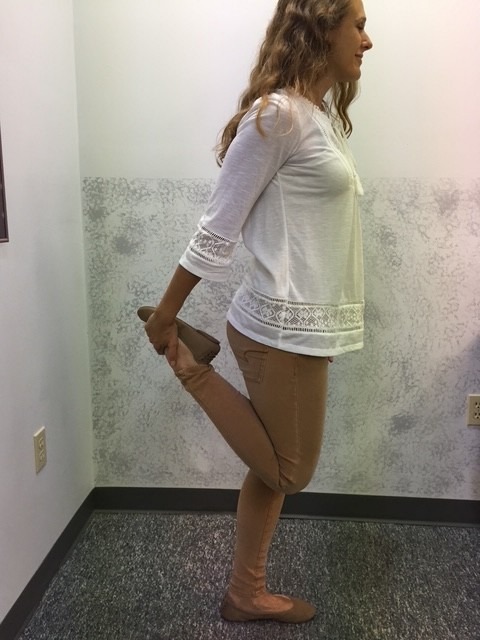
QUAD STRETCH
Stand with your left arm holding on to a stable object for balance.
Bend your right knee and bring the heel up toward your butt by pulling up/back with your right hand.
Feel the stretch at the front of your right thigh.
Repeat on the left
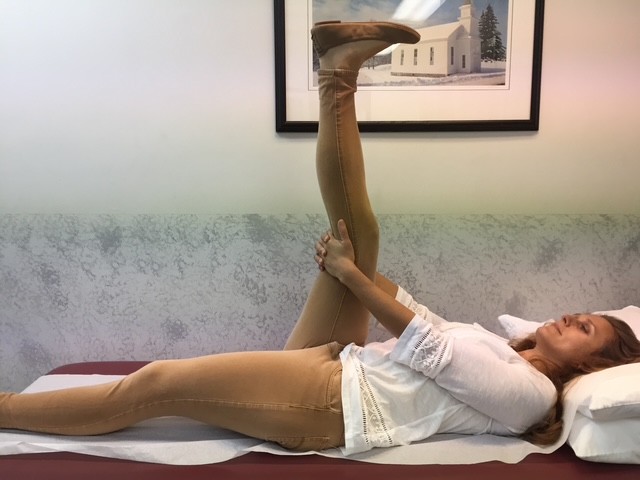
HAMSTRING STRETCH
Lying on your back, clasp the back of your right knee
Straighten out your right knee slowly up toward the sky
Feel the stretch at the back of your right thigh.
Repeat with your left leg straight.
GROIN STRETCH
Sit with your legs bent with heels together. (Indian Sit)
Hold your ankles or feet with both hands.
Keep your back straight and stomach in.
Push your knees toward the floor.
Feel the stretch on the inside of your thighs.
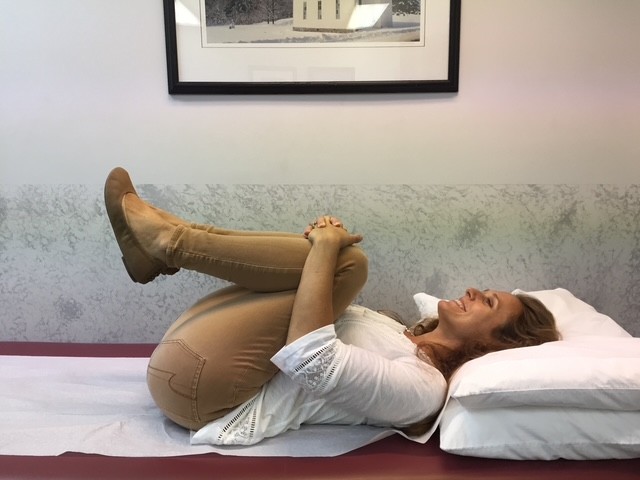
LOW BACK FLEXION STRETCH
Lie on your back and raise your knees to your chest.
Hold the knees with both your hands.
Feel the stretch at the bottom of your back.
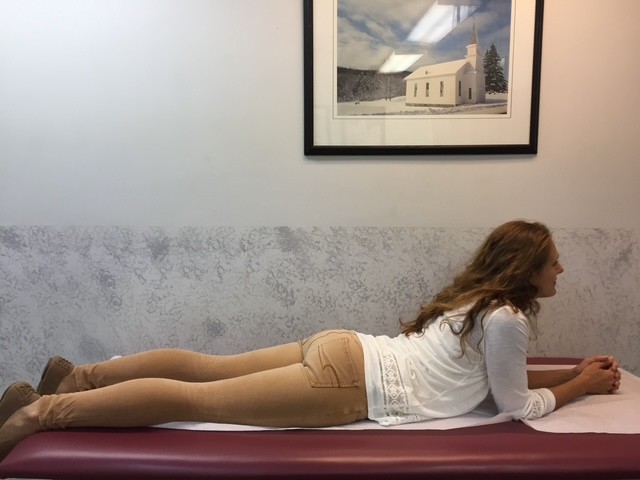
LOW BACK EXTENSION STRETCH –
Lie on your belly and prop up on your forearms
Hold this position and inhale and exhale
Feel the stretch in the small of your back
TRUNK SIDE STRETCH
Stand with your left hand on your left hip and your right arm above your head.
Bend to the left by sliding your left hand toward your left knee without leaning forward or back.
Feel the stretch on your right side.
Repeat with your left arm.
TRUNK ROTATION STRETCH
Stand upright with feet shoulder width apart
Cross arms over chest and turn to the right with your upper trunk
Keep lower body facing straight
Feel the stretch on the left lower back and trunk
Repeat turning to the left
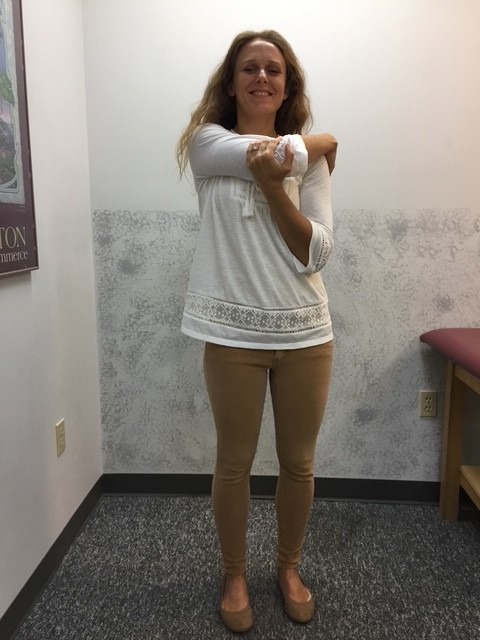
SHOULDER STRETCH
Take your right arm across your chest.
Use your left hand to pull your right elbow across your chest.
Keep your body facing forward.
Feel the stretch on the back of your right shoulder.
Repeat with your left arm.
CHEST STRETCH
Stand facing a corner with feet 12 inches away and put both arms up in a “T” position
Lean into wall with chest and keep feet away from wall
Feel the stretch in your biceps and chest.
MODEL: Sarah Singer, PTA, Mackarey Physical Therapy
EVERY MONDAY – Read Dr. Paul J. Mackarey “Health & Exercise Forum!” via Blog
EVERY SUNDAY in "The Sunday Times" - Read Dr. Paul J. Mackarey “Health & Exercise Forum!” in hard copy
This article is not intended as a substitute for medical treatment. If you have questions related to your medical condition, please contact your family physician. For further inquires related to this topic email: drpmackarey@msn.com
Paul J. Mackarey PT, DHSc, OCS is a Doctor in Health Sciences specializing in orthopedic and sports physical therapy in Scranton and Clarks Summit. Dr. Mackarey is in private practice and is an associate professor of clinical medicine at Geisinger Commonwealth School of Medicine. For all of Dr. Mackarey's articles, visit our exercise forum!
PREVENT STRESS FRACTURES
It is two weeks away from the 28th Steamtown Marathon. After training all spring and summer for the first seven Steamtown Marathons, not a Columbus Day Weekend goes by without my thoughts of this great event.
I would like to introduce this topic with some marathon history. In 490 B.C. Athens was under attack by the Persians and was outnumbered more than two to one. The Athenians fought bravely and defeated the enemy in the town of Marathon. The victory kept the intruders 26 miles away from Athens. To keep the anxious citizens of Athens calm, leaders immediately ordered a foot soldier, Phedippides, to run to the capital city to share the news. Phedippides ran, in full armor, for 26 miles from Marathon to Athens, delivered the message and died immediately. Now, people do the same thing of their own free will!
Each year at this time, dozens of runners preparing for the Steamtown Marathon come to my office with severe shin pain known as shin splints. Unfortunately, in many of these athletes, this problem can lead to a much more severe and advanced problem with shin splints called a stress fracture.
What is a stress fracture?
A stress fracture is fatigue damage to bone with partial or complete disruption of the cortex of the bone from repetitive loading. While standard x-rays may not reveal the problem, a bone scan, and MRI will. It usually occurs in the long bones of the leg, mostly the tibia but also the femur (thigh) and foot. Occasionally, it occurs in the arm.
Who is at risk?
10-21% of all competitive athletes are at risk for stress fractures. Track, cross country and military recruits are at greatest risk. Females are twice as likely as males to have a stress fracture. Other athletes at risk are: sprinters, soccer and basketball players, jumpers, ballet dancers are at risk in the leg and foot. Gymnasts are also vulnerable in the spine while rowers, baseball pitchers, golfers and tennis players can experience the fracture with much less frequency in the ribs & arm.
The problem is much more prevalent in weight bearing repetitive, loading sports in which leanness is emphasized (ballet, cheerleading) or provides an advantage (distance running, gymnastics).
Stress fractures usually begin with a manageable, poorly localized pain with or immediately after activity such as a shin splint. Over time, pain becomes more localized and tender during activity and then progresses to pain with daily activity and at rest.
Causes of Stress Fractures:
Overuse, Overload, Over training – is the number one cause. Running too many miles with too much intensity with too much frequency is the perfect formula.
Inadequate Fitness Level – or activity level prior to the stress fracture. For example, the high school runner takes the summer off and then quickly accelerates his/her program to quickly for cross-country in August/September.
Poor Biomechanics – when your feet hit the ground the forces are absorbed and transferred to the rest of the body. If the biomechanics of feet are not perfect, then the forces are not absorbed, and another body part bears too much force. For example, flat or pronated feet poorly absorb the shock and pull the tendons of the foot and shin.
Recent Change in Training Schedule – sudden increased intensity or speed
Recent Change in Running Surface – sudden change to a hard or soft surface
Recent Change in Footwear – shoes too hard or too soft, too much control or too little control, too much pronation or too much supination
Overweight – running with an extra 10 pounds and attempting to return to running as a method of weight loss
Underweight – the underweight female athlete is at high risk for stress fractures. If underweight and have a history of menstral irregularities or and eating disorder, the risk of stress fracture increases significantly
History of Stress Fractures – makes the athlete two times as likely to have another
Treatment & Management:
Alternate Training – cross train with non-weight bearing activities: bike, swim, elliptical
Gradually Build Up Fitness Level – wean into activity 1-2 miles, then add ½ mile at a time
Correct Biomechanics - Orthotics, Running shoes, see a Podiatrist
Gradual Change in Training Schedule
Gradual Change in Surfaces – ½ run on soft surface, ½ run on hard surface
Gradual Change in Footwear – walk in new shoes first, then run 1-2 miles
If Overweight – gradual exercise with diet, not too much too quickly
Mix run & walk every 10 minutes
If Underweight – improve diet maintain healthy body fat%
Consult Family Physician – early management often involves immobilization, rest, pain medicine 4-6 weeks for healing.
non weight bearing cross training such as the recumbent bike, swimming, elliptical
physical therapy modalities such as ultrasound, cold with electrical stimulation, biomechanical taping or orthotic supports, and exercises for foot, ankle muscles.
Visit your doctor regularly and listen to your body.
Read Health & Fitness Forum Next Monday/Sunday: Preparing Your First Aid Kit For the Steamtown Marathon
EVERY MONDAY – Read Dr. Paul J. Mackarey “Health & Exercise Forum!” via Blog
EVERY SUNDAY in "The Sunday Times" - Read Dr. Paul J. Mackarey “Health & Exercise Forum!” in hard copy
This article is not intended as a substitute for medical treatment. If you have questions related to your medical condition, please contact your family physician. For further inquires related to this topic email: drpmackarey@msn.com
Paul J. Mackarey PT, DHSc, OCS is a Doctor in Health Sciences specializing in orthopedic and sports physical therapy in Scranton and Clarks Summit. Dr. Mackarey is in private practice and is an associate professor of clinical medicine at Geisinger Commonwealth School of Medicine. For all of Dr. Mackarey's articles, visit our exercise forum!
Here are 10 most common exercise myths!
No Pain, No Gain.
FALSE – Why pain is different than discomfort…
Muscle soreness and “feeling the burn” can occur during a normal healthy exercise routine. However, you should never experience sharp, deep, intense, or lingering pain during or after exercise. In fact, if the soreness lasts more than 24-48 hours, then you did more damage than benefit to your muscles and other tissues and it is time to scale back and take time off. If necessary, use RICE (rest, ice compression and elevation). It is important to get in tune with your body and learn the difference between muscle strain and fatigue, discomfort and pain from soft tissue damage from overuse and overload. Find the proper amount of weight and repetitions and gradually increase over time.
Always Stretch Before You Exercise.
FALSE – This is not always the best advice
There is no solid evidence that stretching alone before a sport or activity prevents injury. In fact, over stretching may be counterproductive before a sport as it may weaken the muscle. The current wisdom on the matter is; never stretch a cold muscle. Instead, warm up for 5-10 minutes by actively moving the extremities and light jogging or biking and THEN lightly stretch the arms, legs, back etc. More vigorous stretching should be performed to improve the flexibility of tight muscles (ie calf and hamstring muscles) and best done after your workout but not before a sporting activity (tennis, basketball, etc.).
Lifting Weights Will Make You Bulky.
FALSE – Depends on your hormones
It is very unlikely that women and prepubescent males will bulk up from lifting weights…especially light weights (blame or thank hormones). It will, however, increase metabolism and fat burning efficiency which can lead to weight loss and good muscle tone. Stick with low resistance and high repetitions for best results.
With the Correct Program, Spot Reduction Can be Achieved
FALSE – It is not possible to target an area of the body to burn more fat
It is very common for women to ask for a specific exercise to reduce the fat in their buttocks, thighs, and abdomen. Regretfully, it is not possible to target weight loss in these areas or other body parts. In fact, when you lose weight through diet and exercise, the caloric expenditure will be evenly distributed throughout the body. However, once the adipose tissue in a specific part of the body such as the abdomen is reduced from general weight loss, targeting the area with exercises specific to that muscle group will improve the tone and definition for a leaner look in that region.
If you don’t have 45-60 Minutes to Exercise, Don’t Bother.
FALSE – The research on this topic does not support it
Sure, it would be great to dedicate 60 minutes 5 -6 days a week for exercise. But for most of us who work and raise a family it is not practical. The good news is that the research supports 30 minutes of exercise 3-5 days a week. Moreover, evidence shows that 10 minutes, three times a day, 5 days per week will help you attain the 150 minutes a week supported in most exercise studies.
If you have Arthritis, Exercise will make it worse.
FALSE – There is no evidence to support this…but it supports the opposite.
Most people with the most common form of arthritis, osteoarthritis, feel better when they are moving. That is not to say that they don’t have increased symptoms when they OVERDO it. An exercise program specifically designed for a person’s problems and limitations will improve their symptoms and function. For example, if an individual has arthritis in their knees, they should use an exercise bike (partial weight bearing) or swim (buoyancy effect of water) instead of walking or running (full weight bearing) for aerobic exercise. Furthermore, they would do far better with light cuff weights in a sitting or lying position to strengthen their legs than performing squats or lunges. It is important to remember, the weight gain and joint weakness and stiffness associated with a sedentary lifestyle will do more harm to an arthritic joint than a proper exercise program.
You Need a Sports Drink When you Exercise
FALSE – Not unless you are planning a killer workout
The number one reason most of us exercise is to lose or control body weight. High calorie sports drinks are counterproductive and unnecessary. If you do not plan on exercising for more than 60 minutes, good old fashion H2O is more than adequate. However, if you plan to do a “killer” workout for more than 60 minutes and may incorporate a high intensity interval training (HIIT) program, than a sports drink with electrolytes and other nutrients, may be of value.
Exercise Machines are Better than Free Weights
FALSE – For most of us, effective resistance training is not about the equipment
It is safe to say, caveman was pretty fit and strong despite the fact that he never went to a gym and lifted weights. He did however, lift, push, pull, and carry heavy stones, timber, and animals for day-to-day survival. So too, it is for modern man, the body does not distinguish between the resistance provided by a elastic band, dumbbell, or cable with pulleys and weight stacks. As long as the basic principles of strength training are applied, (isolating a muscle or muscle group, loading the muscle with enough force to bring it to fatigue without causing tissue damage, and allowing for adequate rest and recovery) than the muscle will gain strength regardless of the type of resistance.
Running is Better Than any other Form of Aerobic Exercise
FALSE – Don’t tell that to competitive swimmers
First, let me confess that I love to run and up until recently, I ran almost daily. However, now that I am over 60, I had to find new forms of aerobic exercise which would be kinder and gentler to my joints. So, I mix it up between biking (indoors and outdoors, recumbent and upright), brisk walking or hiking, elliptical and stepper and swimming laps. Again, like the caveman weightlifting example, the body (heart and lungs) does not know what is causing an increase in heart rate for 30, 45 or 60 minutes, it only knows that it must respond to allow the body to function under this stress. And, in the process it becomes conditioned to the point that it will work much more efficiently when not under stress with a lower heart and respiratory rate and blood pressure at rest.
Those over 50 would be well-advised to engage in low-impact aerobics on a regular basis. For example, if you want to run two to three days per week, do not run two days in a row and consider performing low impact exercise in between. Some examples of low impact aerobics are walking, treadmill walking, swimming, elliptical trainer, and an exercise or road bike.
If You Never Stop Exercising than you won’t have to adjust your exercise program as you age.
FALSE - Why Change is Necessary with Age…
For many years, I have repeatedly preached about the value of engaging in an active lifestyle throughout life. It is especially important to be active as one gets older to maintain mobility and independence. However, many take this advice to an extreme and refuse to accept the inevitable changes that occur in the body with age. They run, jump, lift and throw like a teenager and often fail to modify their activity or exercise regimen appropriately for their age.
Consequently, they suffer from multiple injuries, including muscle tears, tendonitis, bursitis, impingement, and advanced osteoarthritis. Keep in mind, everyone ages differently. One person at 60 years of age may be the equivalent of another at 50. However, change with age is inevitable, so be kind to your body…it’s the only one you have! It is always prudent to consult your physician and physical therapist for a program designed specifically for your needs.
EVERY MONDAY – Read Dr. Paul J. Mackarey “Health & Exercise Forum!” via Blog
EVERY SUNDAY in "The Sunday Times" - Read Dr. Paul J. Mackarey “Health & Exercise Forum!” in hard copy
This article is not intended as a substitute for medical treatment. If you have questions related to your medical condition, please contact your family physician. For further inquires related to this topic email: drpmackarey@msn.com
Paul J. Mackarey PT, DHSc, OCS is a Doctor in Health Sciences specializing in orthopedic and sports physical therapy in Scranton and Clarks Summit. Dr. Mackarey is in private practice and is an associate professor of clinical medicine at Geisinger Commonwealth School of Medicine. For all of Dr. Mackarey's articles, visit our exercise forum!