SPEND TIME OUTDOORS – IT IS HEALTHY!
IT HAPPENED! SPRING HAS FINALLY SPRUNG…SO GET THE HECK OUTSIDE! Research shows that spending time outdoors has many positive effects on your health. While there are many year round activity options, in Northeastern Pennsylvania our short-lived summer is the inspiration to “suck the marrow out of a sunny day!” Summer in NEPA is enjoyed in many ways such as; walking, running, hiking, biking, golfing, playing tennis or bocce, horseback riding, boating, kayaking, and swimming. Studies show that even less vigorous activities such as; fishing, picnicking camping, barbequing or reading a good book on the porch are healthier than being indoors.
It is reported that Americans spend 90% of their lives indoors and that number increases with age. Worse yet, for some, venturing outdoors is considered risky behavior with fear of the sun, ticks, wind, mosquitoes and other creatures of God. Well, the truth of the matter is the risk of being one with nature is far less than the ill effects of a life stuck indoors. Please consider the following benefits of spending time outdoors.
Nature’s Vitamin D – Current research suggests that Vitamin D (The Sunshine Vitamin), may offer significant disease prevention and healing powers for osteoporosis, some forms of cancer and heart disease. Of all the methods of getting an adequate amount of Vitamin D, none is more fun than spending time outdoors in the sunlight. It seems that the health concerns of ultraviolet light, sun burn and skin cancer have created an overreaction to the point of Vitamin D deficiency in many. Balance and common sense go a long way. One can attain normal levels of Vitamin D by being outdoors in the sun and exposing their arms and legs for 10 -15 minutes a few times per week. Additional time in the sun warrants sunscreen and Vitamin D supplements can be used if necessary.
Increase Activity Level – While exercising indoors in a gym is valuable, research shows that time spent indoors is associated with being sedentary and being sedentary is associated with obesity, especially in children. Some studies show that children in the United States spend an average of 6 ½ hours per day with electronic devices such as computers, video games and television. It is also reported that a child’s activity level more than doubles when they are outdoors. So, get out of the office, house and gym as often as possible. Consider weight training at the gym and doing cardio by walking, biking or running outdoors.
Improved Mental Health – It is well documented that light affects mood. So, unless you live in a glass house or a light box, getting outdoors is important to your mental health. Furthermore, studies show that exercising outdoors in the presence of nature, even for as little as 5- 10 minutes has additional mental health benefits. For those less active, read or listen to music in a hammock or lying in the grass.
Improved Concentration – Richard Louv, author of the book, “Last Child in the Woods,” coined the term, nature-deficit disorder.” This term is supported by research that found children with ADHD focus better when outdoors. Furthermore, it was discovered that these children scored higher on concentration tests following a walk in the park than they did after a walk in their residential neighborhoods or downtown areas, showing the benefit of the “green outdoors.”
Improved Health and Healing – Researchers at the University of Pittsburgh found that patients recovering from surgery recovered faster with less pain and shorter hospital stays when they were exposed to natural light. Next time you’re recovering from an illness, discuss this with your physician.
Improved Breathing – In general, breathing fresh air is good for you. Some exceptions might be those with severe allergy problems when the pollen count is high. In spite of this, it may be better to take allergy medicine and enjoy the benefits of being outdoors than to be stuck inside. Many pulmonologists believe people with pulmonary problems would benefit from outdoor activities such as a 10-15 minute walk because they are prone to osteoporosis and Vitamin D deficiency. Local pulmonologist, Dr. Gregory Cali, DO, agrees and also adds that studies do not show that high humidity is dangerous for respiratory patients but it may be uncomfortable. In cold temperatures, those with pulmonary problems must avoid directly breathing cold air by covering up their mouths when walking outdoors. Overall, the benefits far outweigh the risks.
Read “Health & Exercise Forum” – Every Monday. This article is not intended as a substitute for medical treatment. If you have questions related to your medical condition, please contact your family physician. For further inquires related to this topic email: drpmackarey@msn.com
Paul J. Mackarey PT, DHSc, OCS is a Doctor in Health Sciences specializing in orthopaedic and sports physical therapy. Dr. Mackarey is in private practice and is an associate professor of clinical medicine at GCSOM.
LYME DISEASE! OUTDOOR ENTHUSIASTS BE AWARE!
“Health & Exercise Forum” regularly promotes active lifestyles and outdoor activities. However, being one with nature is not without its risks and attracting ticks which can lead to Lyme disease is one of them. Over the last few years, I have been amazed by how many ticks I find on my clothing and skin after being outdoors…year round! Last winter, for example, we had an unexpected warm-up in February, and with temperatures ranging from 30 degrees in the morning to 60 degrees in the afternoon, I decided to ski in the morning and snow-shoe on the trails at Lackawanna State Park in the afternoon. Due to snow cover, I occasionally wandered off the trail and hiked through some brush. Later that evening, I discovered a tick on my neck, despite showering, wearing winter clothing and it being outdoors in FEBRUARY! It is no small wonder why some experts blame climate change on the dramatic increase in cases of Lyme disease…the research supports it! Later that summer, while I was not formally diagnosed with Lyme disease, I did suffer from symptoms associated with the disease for about 8 weeks. This experience has caused me to pause and take precautions when I garden, kayak, hike, mountain bike or engage in any outdoor activity that takes place near brush or wooded areas.
According to the Centers for Disease Control (CDC), approximately 300,000 cases of Lyme disease occur each year in the United States. Lyme disease is a bacterial infection caused by the bite of an infected deer tick and most prevalent in wooded and grassy areas of the New England, Mid-Atlantic and upper Midwest States. A heightened awareness and preventative measures are recommended for those who live, work, play, camp, hike, or bike in these areas.
1. Know Where the Ticks Live
Ticks thrive in moist and humid environments, especially in and near wooded and grassy areas. Wear long sleeve shirts and long pants with socks when spending extended periods of time in risky environments.
2. Stay on the Trails
When walking, hiking, or biking, stay in the middle of the trail and avoid the brush.
3. Use Repellent
The CDC recommends repellent containing 20% or more DEET, Picaridin, or IR3535 on exposed skin. Use products with 0.5% permethrin on clothing, boots, pants, socks, tents and other gear. Visit the Environmental Protection Agency (EPA) for more information about product safety.
4. Control Ticks in Your Yard and Living Space
Keep your yard free of tall grasses and brush and use gravel or wood chips as a barrier. Mow the grass often and remove leaves quickly. Place playground equipment and toys in dry sunny area and away from brush and high grasses. Don’t feed or encourage deer to visit your living area. Chemical treatment for your yard and outdoor living space is available but should be used with caution and as a last resort.
5. Treat Your Pets
Use flea and tick treatments regularly on your pets such as Advantage IIR or Frontline PlusR and others. Ask your veterinarian for recommendations.
6. Perform Tick Checks
After being outdoors, perform a tick check. Use a mirror or family member to help you check hard to view areas. Also, carefully examine your clothing and pets for ticks before entering your home. Drying your clothing in the dryer on high heat will kill ticks.
The CDC recommends that you closely check these areas for ticks:
7. Remove Clothes and Shower
As soon as you enter your home (preferably through a mud room or basement), remove your clothes and take a shower.
8. Remove Ticks Immediately and Carefully
If you find an attached tick use a fine-tipped tweezers and carefully remove it as soon as possible. If a tick is attached to your skin for less than 24 hours, your chance of getting Lyme disease is very unlikely.
9. Be Alert For Signs or Symptoms
If you find a tick, keep an eye on the area for a few weeks. Look for signs or symptoms of Lyme disease such as rash or fever and contact a healthcare professional if you are suspicious.
10. Know the Signs and Symptoms of Lyme Disease
Some or all of these symptoms can be associated with Lyme disease and you should contact your physician if you are suspicious: Skin Rash, Fever and Chills, Fatigue, Muscle and Joint Pain/Ache, Headache.
In conclusion, it is well-documented that Lyme disease is on the increase, due in part to warmer winters in the mid-Atlantic and northeast US. However, while experts are encouraging people in risky areas to take precautions during the spring and summer months, they are also encouraging parents not to limit outdoor activities for children and others. Keep in mind that spending too much time indoors is far worse for your health than the risk of contracting Lyme disease in the long run. And, even if you are bitten by a tick, you only have a 100 to 1000 chance of contracting the disease.
SOURCES:
www.cdc.gov>lyme
www.epa.gov>insect-repellents
This article is not intended as a substitute for medical treatment. If you have questions related to your medical condition, please contact your family physician. For further inquires related to this topic email: drpmackarey@msn.com
Paul J. Mackarey PT, DHSc, OCS is a Doctor in Health Sciences specializing in orthopaedic and sports physical therapy. Dr. Mackarey is in private practice and is an associate professor of clinical medicine at Geisinger Commonwealth School of Medicine.

Antonio Adiletta, MD3
Ways to Treat and Prevent Progression of Osteoarthritis: Part 3 of 3
Special Feature “ Health & Exercise Forum” with Geisinger Commonwealth School of Medicine the 3rd Monday of every month!
Guest Columnist: Antonio Adiletta, MD3
Antonio Adiletta, MD3 is a third year medical student at Geisinger Commonwealth School of Medicine from Lancaster, PA. During his first two years, he served as President of his class and helped create a General Surgery Interest Group. He is currently interested in Orthopedic Surgery.
Two weeks ago, in Health & Exercise Forum, Antonio Adilettta, MD3, GCSOM presented Osteoarthritis Part I and discussed the most common causes and areas of the body affected by osteoarthritis. Last week in part two, he discussed 3 of the 5 most effective methods of prevention and treatment and this week, part three we will present the last two of the most effective methods.
You may not realize, but osteoarthritis (OA) is more common than you think, affecting people like President George. W. Bush and First Lady Barbara Bush, who got hip replacements at age 76 and 72, respectively. Moreover, the Piano Man, Billy Joel had double hip replacements at age 61 and joked afterward saying, “I got a double hip replacement, and now I’m twice as hip as I used to be.”
Osteoarthritis, also known as degenerative joint disease and wear and tear arthritis, is the most common type of arthritis affecting approximately 27 million Americans. Osteo refers to bone, while arth comes from the Greek word arthron, which means articulation, or joint. Finally, itis, a commonly used medical term, refers to inflammation. OA is caused by damage to the cartilage, the rubber-like padding that protects the ends of bones at the joints.
As previously discussed, prevention and management of OA includes exercise, weight loss and protection of your joints. However, it is also important to manage your occupational risks and, in some cases, consider medications and surgical procedures.
Certain jobs may predispose you to the development of OA. This includes jobs that require repetitive motion like kneeling, lifting, twisting, or walking every day. It has been shown that there is an increased risk of OA of the knee, hip, and fingers in workers who carry heavy loads as part of their daily job. Some common jobs include construction working or lumbar working. Lifting heavy objects improperly and without the correct assistance can lead to joint damage. Osteoarthritis can develop over years, slowly day by day, if constant damage is being done to your joints.
There are ways this day to day joint damage can be prevented. It’s recommended that you attempt to rotate different work jobs to prevent the repetitive insult to your joints. If possible take breaks when you feel like you are injuring your joints, use assistive devices, or ask for help. In summary, it is important to practice safe ways of working to prevent the repetitive damage that occurs. Here’s a short list of things you can do.
There are a variety of anti-inflammatory medications that can be prescribed by your doctor to help with joint pain. Talk with your doctor about the use of acetaminophen, NSAIDs, COX-2 inhibitors and other analgesics that can help relieve your joint pain. Tell your doctor if you’ve ever had GI upset or have kidney or liver problems before taking these medications. Another option is glucocorticoid (steroid) injections. This injection is most beneficial to OA patients with one or a few joints that continue to cause pain despite oral medication therapy. With proper injection technique and medication intervals, side effects are minimal. Tell your doctor if you have diabetes before getting a steroid injection as it can raise your blood sugar.
Surgery is considered in patients who continue to have debilitating pain despite treatments with nonpharmacological and pharmacological therapies. In many cases, surgery is considered a last resort when the patient cannot tolerate the joint pain any longer and all other treatment modalities have been exhausted. All patients are different and have unique injuries and circumstances, so it’s important to talk with your doctor about what kind of treatment is best for your situation and goals in life. Partial and total joint replacements are surgical options to repair a damaged joint. Patients who undergo surgery often experience substantial improvements in pain and physical ability. According to the literature patients usually experience maximal improvement in the first 3 to 6 months after surgery. Talk with your doctor about your goals and concerns in finding the appropriate surgical treatment that best fits your wishes.
Medical Contributor: John Doherty, MD, Geisinger Orthopedics, Scranton, PA
Read Dr. Mackarey’s Health & Exercise Forum – every Monday. This article is not intended as a substitute for medical treatment. If you have questions related to your medical condition, please contact your family physician. For further inquires related to this topic email: drpmackarey@msn.com
Paul J. Mackarey PT, DHSc, OCS is a Doctor in Health Sciences specializing in orthopaedic and sports physical therapy. Dr. Mackarey is in private practice and is an associate professor of clinical medicine at Geisinger Commonwealth School of Medicine.
Antonio Adiletta, MD3
Ways to Treat and Prevent Progression of Osteoarthritis: Part 2 of 3
Special Feature “ Health & Exercise Forum” with Geisinger Commonwealth School of Medicine the 3rd Monday of every month!
Guest Columnist: Antonio Adiletta, MD3
Antonio Adiletta, MD3 is a third year medical student at Geisinger Commonwealth School of Medicine from Lancaster, PA. During his first two years, he served as President of his class and helped create a General Surgery Interest Group. He is currently interested in Orthopedic Surgery.
Last week in Health & Exercise Forum, we discussed the most common causes and areas of the body most affected by osteoarthritis. This week we will present the 3 of the 5 most effective methods of prevention and treatment and next week, part three will conclude with the last two methods.
Osteoarthritis, (OA) also known as degenerative joint disease and wear and tear arthritis, is the most common type of arthritis affecting approximately 27 million Americans. OA is caused by damage to the cartilage, the rubber-like padding that protects the ends of bones at the joints. While living with OA can be challenging, there are things you can do to prevent and manage the problem such as exercise, weight loss and joint protection.
It may seem confusing that exercise could be a recommended treatment for a disease known as the “wear and tear” arthritis, but research has shown that people with OA can and should exercise. The benefit of exercise is multifold for your joint pain. Exercise will help strengthen the muscles that stabilize your joint, increase range of motion, and decrease stiffness, all while benefiting your overall health and contributing to weight loss.
Flexibility: OA can cause your joints to become stiff and painful to move. Starting to lightly stretch your painful joints more and more each day will help to increase your range of motion. Work your way up every day to being able to stretch your joint through its full span of motion.
Cardio: Exercise that gets your heart beating will promote general physical fitness. This, in turn, can improve your mood, decrease your chance of developing diabetes, increase blood flow to damaged joints that will improve healing, and maintain a healthy weight.
It is recommended to exercise for either 150 minutes of moderate-intensity exercise or 75 minutes of vigorous-intensity exercise per week. A standard way to access intensity is to follow the “220-age” rule for heart rate. Age-predicted maximum heart rate is 220 minus your age. If you are 50, for example, the average maximum heart rate is 220- 50 = 170. This can be used to access your intensity level while you are exercising by checking your pulse when you are done.
Strength: Exercise that strengthens the muscles that support your painful joint. By improving the strength of your muscles, you are also stabilizing, supporting, and protecting your joint. Ask your doctor, physical therapist, or research ways to strengthen the muscles of your affected joint.
It is prudent to begin slowly when trying new exercises or exercising for longer than usual. It is important to listen to your body and to not do things that aggravate your joint. Be sure to see your doctor or physical therapist for an individualized recommendation on how you can strengthen your joint and decrease pain interfering with your daily activities. Exercise will also help with our next tip, weight loss.
Being overweight is known to be a major contributing factor to the development of OA. The good news is that it’s something that can be worked on! Weight loss will decrease the stress on your joints, relieve pain, and help prolong the need for drastic measures such as surgery. The problem is that being overweight puts an increased amount of stress on your joints especially the knee. When a person walks it is estimated that a force three to six times the person's body weight is applied to the knee. That means that any increase in body weight will increase the stress on your knees by 3 to 6 times per pound; underscoring the importance of preventing weight gain and striving to lose weight.
Interestingly, it has been shown that people who are overweight are also at an increased risk of developing hand OA; therefore it’s suspected that there are circulating systemic factors contributing as well. So weight gain does more than increasing the stress on your joints and it may contribute in an insidious way.
An easy way to learn how much weight you need to lose is to look up your body mass index (BMI). This can be done easily by looking up a BMI calculator online or asking your doctor. Overweight is a BMI of 25-29.9 while obesity is a BMI of 30 or greater. It is important to know where you stand because women who are overweight have a 4 time increased risk of developing OA while men have 5 times increased risk. Weight loss is so effective in decreasing OA that it has been shown that if a woman of average height loses 11 pounds she decreases her risk of developing OA by greater than 50%! Losing weight is an effective and essential part of decreasing the progression of OA and relieving your joint pain.
While exercise is an essential part of weight loss, eating right is just as important. The importance of exercise was talked about in our first tip. It is important to cut back on dietary fat and total calorie intake. Talk to your doctor about ways to improve healthy eating or talk to a dietitian.
When a joint experiences major injury it can be left susceptible to OA. Fractures to the bone, or tears to ligaments that help stabilize the joint such as the anterior cruciate ligament (ACL) or meniscus in the knee and the labrum (the rim of cartilage in your hip socket) in the hip, can lead to premature OA. Injuries during physical activity or other accidents can cause damage to the cartilage in your joints. If these injuries are not taken care of they can lead to permanent alterations in the way your joint move and this can lead to more cartilage destruction. Therefore it is important to wear the correct protective gear and be cautious when playing sports or exercising.
Injuries can be avoided by taking care of your body and taking the right precautions. Warming up before strenuous activity, stretching, and knowing your limits are some ways that you can help prevent injury. Be sure you are using exercise equipment properly and are practicing safe ways to exercise or play sports. It is important to seek treatment if you think you have injured something in your joints. Injuries that are not treated properly can lead to improper healing and further damage. The earlier you seek treatment, the earlier you can begin on the proper road to recovery.
NEXT WEEK: Part 3 of 3: Ways to Prevent and Treat Osteoarthritis
Medical Contributor: John Doherty, MD, Geisinger Orthopedics, Scranton, PA
Read Dr. Mackarey’s Health & Exercise Forum – every Monday. This article is not intended as a substitute for medical treatment. If you have questions related to your medical condition, please contact your family physician. For further inquires related to this topic email: drpmackarey@msn.com
Paul J. Mackarey PT, DHSc, OCS is a Doctor in Health Sciences specializing in orthopaedic and sports physical therapy. Dr. Mackarey is in private practice and is an associate professor of clinical medicine at Geisinger Commonwealth School of Medicine.
Antonio Adiletta, MD3
Five Effective Ways to Prevent Joint Pain Caused by Osteoarthritis: Part 1 of 3
Special Feature “ Health & Exercise Forum” with Geisinger Commonwealth School of Medicine the 3rd Monday of every month!
Guest Columnist: Antonio Adiletta, MD3
Antonio Adiletta, MD3 is a third year medical student at Geisinger Commonwealth School of Medicine from Lancaster, PA. During his first two years, he served as President of his class and helped create a General Surgery Interest Group. He is currently interested in Orthopedic Surgery.
You may not realize, but osteoarthritis (OA) is more common than you think, affecting people like President George. W. Bush and First Lady Barbara Bush, who got hip replacements at age 76 and 72, respectively. Moreover, the Piano Man, Billy Joel had double hip replacements at age 61 and joked afterward saying, “I got a double hip replacement, and now I’m twice as hip as I used to be.”
Osteoarthritis, also known as degenerative joint disease and wear and tear arthritis, is the most common type of arthritis affecting approximately 27 million Americans. Osteo refers to bone, while arth comes from the Greek word arthron, which means articulation, or joint. Finally, itis, a commonly used medical term, refers to inflammation. OA is caused by damage to the cartilage, the rubber-like padding that protects the ends of bones at the joints. Normally functioning cartilage allows bones to glide over each other and also serves to absorb impact from physical activity. In OA the surface layer of the cartilage becomes damaged, exposing the bones to one another. Once the cartilage is gone there is nothing separating bone from bone. Thus, bones, with nothing separating them, start to rub against each other and causes pain, swelling, and loss of motion of the affected joint.
There are many kinds of arthritis, how do you know if you have OA? Pain is the first thing people notice in their affected joint. The joint pain tends to get worse with activity or weight-bearing and will go away with rest. The pain experienced is commonly described as sharp, intermittent, and unpredictable. As the disease progresses, the pain becomes more constant and aching. Late in the course of the disease, the pain is brought on by minimal activity and may even occur at rest.
Another common type of arthritis is called Rheumatoid arthritis (RA). This form of arthritis tends to affect people at a younger age compared to OA. In RA the person’s immune system attacks the joints, causing pain, inflammation, joint damage, and eventually malformation. This is not the case in OA where wear and tear or damage is the cause of pain. Furthermore, persons affected by RA complain of being tired, feeling sick, and having a fever. Another major difference between OA and RA is that joints affected by RA are symmetrical; this means that if one knee is affected, the other knee is too. In OA the joint affected is commonly only on one side of the person’s body; such as the right knee or left hip. The final major difference is that people who have RA say that their joint pain will actually improve with physical activity; where people with OA say that the pain gets worse.
There are a few common joints that are affected by OA. These joints include the knee, hip, lower back, neck, and the ends of the finger. For people with OA, these joints become painful and stiff. The joint that is causing pain may get worse with increased activity or may become stiff when it is in one position for a long period of time. Here are some common places that people feel pain from osteoarthritis.
Knees: The knees are a very common joint affected by OA. You may experience stiffness, swelling, and pain that make it difficult to walk, climb, or get in or out of a chair. People with knee osteoarthritis say that the pain can either be localized or diffuse. They report having difficulty climbing upstairs or walking short distances.
Hips: The hips are also a common joint affected by OA. Symptoms of this joint include pain and stiffness, with pain sometimes being experienced in the groin, inner thigh, or buttocks. The pain and symptoms of hip OA may make it difficult to dress, put on shoes, or do other daily activities.
Hands: Osteoarthritis of the hands has been found to be hereditary. That means, for example, if your mother or grandmother had OA in their hand then you are at a greater risk of developing it. People say that their fingers become painful and stiff and that gripping objects becomes difficult. Bony growths in the fingers make the knuckles bigger and swollen and can make it difficult to put a ring on or off.
Spine: OA of the spine tends to present itself as stiffness in the neck or the lower back. Sometimes, arthritis can cause compression of the nerves exiting the spinal cord and can cause weakness, tingling, or numbness of the arms or legs.
Medical Contributor: John Doherty, MD, Geisinger Orthopedics, Scranton, PA
NEXT WEEK: Part 2 of 3: Ways to Prevent and Treat Osteoarthritis
Read Dr. Mackarey’s Health & Exercise Forum – every Monday. This article is not intended as a substitute for medical treatment. If you have questions related to your medical condition, please contact your family physician. For further inquires related to this topic email: drpmackarey@msn.com
Paul J. Mackarey PT, DHSc, OCS is a Doctor in Health Sciences specializing in orthopaedic and sports physical therapy. Dr. Mackarey is in private practice and is an associate professor of clinical medicine at Geisinger Commonwealth School of Medicine.
STUCK IN AN EXERCISE RUT? Part 2 of 2
PEOPLE WILL OFTEN ASK ME, “IS THERE SUCH A THING AS AN EXERCISE RUT?” THEY WANT TO KNOW WHY THEY DO NOT SEEM TO BE IMPROVING WITH THEIR EXERCISE PROGRAM…they exercise 3-4 times a week for 30 to 45 minutes and they feel frustrated and STUCK in a rut.
The purpose of this column will be to offer suggestions on how to improve or get more out of a “stale” exercise program. Last week’s column offered tips to improve a stale cardiovascular and strength program. This week we will discuss flexibility and functional training tips and include the components necessary for a healthy mind, body and spirit connection.
Flexibility training involves the careful stretching of the muscles, tendons and joints to improve the range of motion in order to safely perform daily activities and sports without injuring or tearing soft tissues. It is probably the most neglected part of the fitness program. However, while the amount of inherent flexibility varies for each person, a minimal range is necessary as it relates to daily activities and sports. For example, as you age it is important to have enough flexibility in your back, hips and knees to wash your feet, put shoes and socks on. Flexibility exercises should always be performed after a warm –up activity and done slowly and gently. There are two types of flexibility exercises; dynamic and static. Dynamic stretching is performed with movement such as pushing the ankle up and down like a gas pedal. Passive stretching is performed using an outside force such as using a towel to pull the ankle up in order to stretch the calf. Dynamic should be performed before an activity (before running or playing tennis) and static performed after the activity is over in order to increase range of motion for future activities.
Improving a Flexibility Training Program:
In order to prevent an exercise program from getting stale, one must incorporate all aspects of wellness…a healthy mind, body and spirit!
In conclusion, it is easy for fitness enthusiasts to get so focused on maintaining a routine that they allow their program to become stale and ineffective. It is essential to reassess and update your program to prevent stagnation.
Make sure the routine has all three fundamental components of a well-balanced exercise program; cardiovascular, strength and flexibility training. Moreover, to be truly healthy, one must work toward a “Healthy Mind, Body, and Spirit. Therefore, in addition to traditional exercise one must incorporate the following: nutrition; meditation, relaxation techniques, yoga, core fitness; functional/sports specific training; leisure sports and activities
In order to prevent an exercise program from getting stale, one must incorporate all aspects of wellness…a healthy mind, body and spirit!
While each component offers its own specific benefit, the combination of all three cooperatively provides unique value. Too often, fitness enthusiasts concentrate on the exercises they LIKE or are good at more than the ones they NEED.
Sources: National Institutes of Health; American Council on Exercise
Model: Mariah Morrison
EVERY MONDAY – Read Dr. Paul J. Mackarey “Health & Exercise Forum!”
This article is not intended as a substitute for medical treatment. If you have questions related to your medical condition, please contact your family physician. For further inquires related to this topic email: drpmackarey@msn.com
Paul J. Mackarey PT, DHSc, OCS is a Doctor in Health Sciences specializing in orthopaedic and sports physical therapy. Dr. Mackarey is in private practice and is an associate professor of clinical medicine at Geisinger Commonwealth School of Medicine
STUCK IN AN EXERCISE RUT? Part 1 of 2
PEOPLE WILL OFTEN ASK ME, “IS THERE SUCH A THING AS AN EXERCISE RUT?” THEY WANT TO KNOW WHY THEY DO NOT SEEM TO BE IMPROVING WITH THEIR EXERCISE PROGRAM…they exercise 3-4 times a week for 30 to 45 minutes and they feel frustrated and STUCK in a rut. While initially responding favorably to exercise, after 6 -9 months or more, they do not notice progress in weight loss, strength, tone, endurance or daily function.
The purpose of this column will be to offer suggestions on how to improve or get more out of a “stale” exercise program. Step one is to build an exercise program that is grounded in the basics. Step two, which begins after the basics have been mastered, includes the components necessary for a healthy mind, body and spirit connection and translates into functional activities of daily living including work and leisure sports.
Make sure your routine has all three fundamental components of a well-balanced exercise program; cardiovascular, strength and flexibility training. While each component offers its own specific benefit, the combination of all three cooperatively provides unique value. Too often, fitness enthusiasts concentrate on the exercises they LIKE or are good at more than the ones they NEED. A well-balanced program includes what you like and need! In fact, recent studies show that those performing all three components surpassed those performing one or any combination of two of the training types when tested for efficient oxygen uptake (VO2 Max), production of HDL (good cholesterol), lower body fat percentage, and lower blood glucose levels.
Cardiovascular exercise is any activity that raises your heart rate and respiratory rate. This type of exercise strengthens the heart muscle and the muscles that assist in breathing. When these muscles are stronger, they in turn work more efficiently to deliver oxygen to your muscles and other parts of the body. Ultimately, these oxygenated muscles can work harder and longer to burn fat during exercise and at rest.
Examples of Cardiovascular Exercises: Running, Brisk Walking, Swimming, Biking, Rowing, Elliptical Training and Stepper Training. Most experts recommend at least 30 minutes of sustained cardio, 3-4 days per week. However, recent studies support the notion of performing 10-15 minutes, twice daily, 4 days per week. For those “stuck” in a fitness rut, to advance your program, cardio should be performed 5-6 days per week for 45-60 minutes.
Improving a Cardio Training Program:
• Alternate Types of Cardio: run walk one day, bike the next, and use the stepper or elliptical a third day.
• Alternate Direction: when using equipment that allows changing direction such as the elliptical or treadmill, go forward for 5 -10 minutes then backwards for 3-5 minutes, even if you have to slow the speed down.
• Alternate Intensity: interval training for cardio can be invaluable to improve benefits. Interval training includes performing 1, 2 or 3 minute bursts of high intensity cardio followed by a 2 or 3 minute recovery at a slower speed and lower resistance. 15 to 20 minute intervals should always begin with a warm-up and end with a cool down.
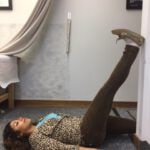
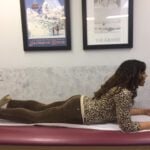
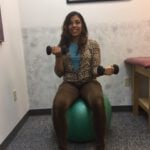
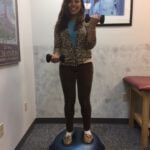
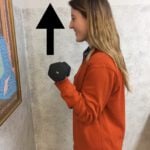
Strength training is an activity that provides any type of resistance to muscle contraction to build strength in the muscle. The resistance can be without movement against an immovable object such as pushing against a wall (isometric) or with movement such as lifting up or lowering a weight down against gravity (isotonic/dynamic). There are two types of isotonic muscle contraction; concentric, which involves raising the weight against gravity as the muscle shortens and eccentric which involves lowering a weight against gravity as the muscle lengthens. A standing biceps curl is an example that incorporates both concentric and eccentric contractions. A progressive strength training program includes all three types of muscle contraction. By using the classic bicep muscle curl these photos will demonstrate all three types of muscle contraction:
Improving a Strength Training Program:
Incorporate the use of all three types of muscular contractions in the program.
Perform one set of exercises using isometrics as a warm up followed by a typical weight training program. Then, consider performing one set using only eccentrics (lowering the weight). To do so, a training partner may be necessary to help lift the weight up before it is lowered eccentrically.
Vary the Weight: warm up with lighter weight and gradually progress.
Vary the Speed: one day lift and lower to a 10 count and the next increase the speed to a 2 count – even if requires using a lower weight.
Vary the Types of Resistance. Mix up the routine with exercise bands, dumbbells, weight lifting machines and weighted balls. Also, incorporate using the weight of your body (push ups, planks, lunges).
Vary Body Parts. One day exercise the upper body and the next the lower body. Include core exercises for both.


Sources: National Institutes of Health; American Council on Exercise
Model: Heather Holzman
EVERY MONDAY – Read Dr. Paul J. Mackarey “Health & Exercise Forum!” Next Week: Read Stuck in an Exercise Rut…Part II of II
This article is not intended as a substitute for medical treatment. If you have questions related to your medical condition, please contact your family physician. For further inquires related to this topic email: drpmackarey@msn.com
Paul J. Mackarey PT, DHSc, OCS is a Doctor in Health Sciences specializing in orthopaedic and sports physical therapy. Dr. Mackarey is in private practice and is an associate professor of clinical medicine at Geisinger Commonwealth School of Medicine
NEW RESEARCH DEMONSTRATES CERTAIN TYPES OF EXERCISE MAY HAVE ANTI-AGING PROPERTIES

Dr. Gino Mori, traversing Zion National Park with trekking poles.
This column is dedicated to my friend and mentor, Dr. Gino Mori, who sent me this research study as a contribution to my column to raise the level of awareness and improve the health and wellness of the people of NEPA. Dr. Gino, who recently turned 85 years young, is the consummate “Renaissance Man,” who strives to challenge himself to be better; physically, spiritually and intellectually! Thank you Dr. Gino!
The deterioration and degeneration of the body associated with the aging process is well-documented and the musculoskeletal system is no exception. As we age, weight bearing joints of the lower body (hips and knees) frequently suffer from wear and tear degeneration. Loss of muscle mass and strength is also common with age. Specifically, damage to older muscles has been found to regenerate slowly and incompletely and the problem runs as deep as the cellular level as the mitochondria diminish in quality and quantity. However, there is good news: a recent study published this spring in Cell Metabolism suggests that certain types of exercise can actually regenerate and reverse the aging mitochondria.
As popular and common as exercise is, little is known about the influence and impact it has at the cellular level. A research team at the Mayo Clinic decided to answer this question and conducted an experiment to determine the cellular effects of different types of exercise on aging muscles.
THE STUDY
The Mayo team chose 72 men and women and separated them into two groups; 30 and under and older than 64. All subjects were healthy but sedentary. Pre test analysis was performed for blood sugar levels, gene activity, muscle cell mitochondrial health, and aerobic fitness level. Subjects from the 30 and under group and the over 64 group were randomly assigned to one of four research groups. Group One: Vigorous weight training 3-5 times per week, Group Two: Interval aerobic exercise on a stationary bike (pedaling hard and fast for four minutes followed by a recovery at a slow pace for three minutes then repeating the sequence 3 or more times) 3 times per week, Group Three: Moderate aerobic exercise on a stationary bike for 30 minutes 2-3 days per week and light weight lifting on the other 2-3 days, Group Four: Control group who did not exercise. After 12 weeks, lab tests were repeated and data compiled and analyzed.
THE RESULTS
In the 30 and under group as well as the over 64 group, all three experimental groups improved in fitness level and blood sugar regulation. As expected, Group One, the vigorous weight training group, showed the greatest gains in muscle mass and strength. Also, not surprisingly, Group Two, the interval training group, had the greatest gains in endurance. However, the most unexpected results came when retesting the muscle cells by biopsy. Only group two, the interval aerobic exercise group demonstrated the most significant improvement in the activity levels of their genes in both the young and older groups, when compared to the vigorous weight training and moderate exercise groups. Moreover, the positive improvements in the genes of the older group far surpassed that found in the younger group. For example, in the younger group, 274 genes improved compared to 170 genes in the moderate exercise and 74 in the vigorous weight training. In the older group, 400 genes were improved in the interval aerobic group while 33 for weight training and 19 for moderate exercise groups.
CONCLUSION
It is well know that loss of muscle mass and strength is common with age. Specifically, older muscles have been found to regenerate slowly and incompletely and the problem runs as deep as the cellular level as the mitochondria diminish in quality and quantity. However, this study suggests that interval aerobic exercise can actually regenerate and reverse the aging mitochondria. Healthier mitochondria are able to produce energy for muscle cells to function at a higher level.
TAKE HOME
Interval aerobic exercise can have anti-aging effects. In fact, the older your muscles, the more you will benefit from, not just moderate exercise, but more vigorous interval aerobic exercise. Furthermore, interval training may be applied, not only to aerobic exercise, but to weight training for the upper and lower body. According to the American College of Sports Medicine, high intensity interval training, also called HIIT workouts, involves a repetition of a series of high-intensity exercise (aerobic or weight training) for a specific period of time (3-5 minutes) followed by a specific period of rest or low-intensity exercise (1-3 minutes). The intensity can be increased by speed or resistance. HIIT workouts have been associated with increased caloric expenditure with less exercise time, as well as improved strength and endurance. Most recently, it has been found to improve cell energy in the aging population. However, do not attempt to increase the intensity of your exercise program without consulting with your physician first. Once medially approved, consult with a doctor of physical therapy to create a program specifically designed for you.
Therefore, if your gene pool is questionable like most of us, don’t use that as an excuse. There are things you can do to have a positive impact on your DNA to live longer and healthier…one of them is EXERCISE!
Visit your doctor regularly and listen to your body.
Keep moving, eat healthy foods, exercise regularly, and live long and well!
NEXT MONDAY – Read Dr. Paul J. Mackarey “Health & Exercise Forum!”
This article is not intended as a substitute for medical treatment. If you have questions related to your medical condition, please contact your family physician. For further inquires related to this topic email: drpmackarey@msn.com
Paul J. Mackarey PT, DHSc, OCS is a Doctor in Health Sciences specializing in orthopaedic and sports physical therapy. Dr. Mackarey is in private practice and is an associate professor of clinical medicine at GCSOM.
While there is no cure for osteoporosis, being proactive can prevent, slow or stop the progression of this disease. As discussed in last week’s column, a healthy lifestyle, avoiding smoking and excessive alcohol use, a well - balanced diet – rich in calcium and vitamin D, and weight –bearing exercises – such as walking and weight training are essential in the prevention and treatment of this disease.
All of the following exercises can be performed at home without purchasing any equipment except exercise bands.
• Weight Bearing Aerobics – Walking, Hiking, Jogging
An exercise that requires you to support the weight of your body through your bones is an essential component of a program designed to prevent osteoporosis. Therefore, swimming and biking, while good forms of aerobic exercise, are not as valuable as walking, hiking, light jogging, cross-country skiing, and elliptical and stepper machines. (3-5 times per week 30-45 minutes)
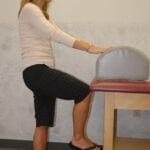
• Standing Hip Hikes (Photo 1)
Face a countertop and hold onto it with both hands. Hike your hip and knee up to 90 degrees as if you are marching. Hold the position for 3-5 seconds on one leg and lower slowly. Repeat this on the other leg and alternate 10 times.
• Standing Hip Scissor Kicks (photo 2)
Face a countertop and hold onto it with both hands. Lift your leg up 30 degrees as if you are spreading your legs apart. Hold the position for 3-5 seconds on one leg and lower slowly to cross over the middle. Repeat this on the other leg and alternate 10 times.
• Standing Squats (photo 3)
Face a countertop and hold onto it with both hands. Bend your hip and knee down to 45 degrees to a squatting position. Hold the position for 3-5 seconds on both legs and return to standing slowly. Repeat this 10 times. Once strong enough try on one leg at a time and alternate.
• Step Ups
Slowly climb steps by marching and hold one leg at the peak of each step for 2-3 seconds. Repeat slowly going down steps. Use two rails in the beginning until strong enough to use one or none.
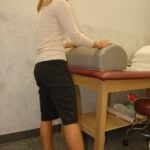
• Standing Wall/Countertop Push – Ups (photo 4a, 4b)
Face a countertop and hold onto it with both hands. Bend your elbows down to 45 degrees to a push-up position. Hold the position of 3-5 seconds. Then, straighten elbows slowly. Repeat this 10 times. Once strong enough try on one arm at a time and alternate. Also, focus on trunk core stabilization while performing this exercise by keeping trunk stable.
• Chair Push – Ups (photo 5)
Sit in a chair with arm rests. Get out of chair using arm rests to extend elbows like a push-up. Hold the position for 3-5 seconds and return to sitting by bending elbows slowly. Repeat this 10 times. Also, focus on trunk core stabilization while performing this exercise by keeping trunk stable.
• Shoulder Shrugs (Photo 6)
Stand with both feet on exercise band. Hold band in both hands and slowly shrug shoulders up toward ears. Lower slowly. Also, focus on trunk core stabilization while performing this exercise by keeping trunk stable.
• Bicep Curls (Photo 7)
Stand with both feet on exercise band. Hold band in both hands and slowly bend elbows up toward shoulders. Lower slowly. Also, focus on trunk core stabilization while performing this exercise by keeping trunk stable.
• Trunk Rows/Lats (Photo 8)
Stand and face door. Attach exercise band to inside door knob and hold in both hands. Pinch shoulder blades together while performing a “row the boat” movement. Return slowly. Also, focus on trunk core stabilization while performing this exercise by keeping trunk stable.
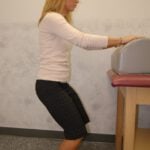
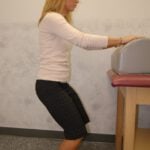
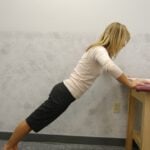
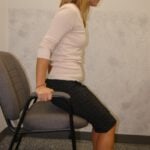
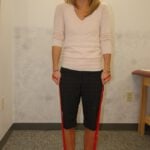
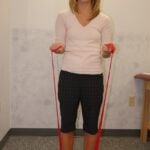
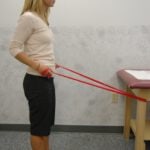
Photos: Jen Hnatko, Model: Dominique DelPrete
NEXT MONDAY – Read Dr. Paul J. Mackarey “Health & Exercise Forum!”
This article is not intended as a substitute for medical treatment. If you have questions related to your medical condition, please contact your family physician. For further inquires related to this topic email: drpmackarey@msn.com
Paul J. Mackarey PT, DHSc, OCS is a Doctor in Health Sciences specializing in orthopaedic and sports physical therapy. Dr. Mackarey is in private practice and is an associate professor of clinical medicine at GCSOM.

Ian Coote, MD3
Special Feature “ Health & Exercise Forum” with Geisinger Commonwealth School of Medicine the 3rd Monday of every month!
Guest Columnist: Ian Coote
Ian Coote, MD3 originally from Rogersville, PA is a third-year medical student at Geisinger Commonwealth School of Medicine. Ian majored in Biological Sciences at Ohio Northern University before graduating in 2015. He hopes to pursue a career in emergency medicine upon graduating from GCSOM.
Growing old is one of life’s inevitabilities. While growing old is something we all hope to achieve, as we age our bodies start to wear down. Many people start to have more aches and pains as they grow older which can seriously impact their happiness and overall quality of life. It is important for us to take care of our bodies when we are young and to continue to take care of ourselves as we get older. Knowing how to care for our health and being aware of some the things to watch out for as we age is essential. One of the more common issues that people experience as they age is problems with their bones, specifically osteoporosis.
As mentioned earlier, individuals with osteoporosis are at an increased risk for developing bone fractures. Healthy bones are stiff enough to endure the pressure exerted on them by normal activity such as walking and lifting things. They are also flexible enough to bend and stretch somewhat which allows them to avoid shattering like glass. Individuals whose bones have been damaged by osteoporosis are weak and brittle, and so are unable to withstand pressure nor are they able to flex without shattering. Fractures in people with osteoporosis occur under low-impact circumstances. Falls from a sitting or standing position to the floor can result in hip fractures. Wrist fractures are also common in low-impact falls. Being jostled in the car by hitting potholes or simply lifting a box that is a little too heavy can cause vertebral fractures. Fractures due to osteoporosis often cause sharp or dull nagging pain in the area of the fracture that is made worse with movement. People with fractures due to osteoporosis often chose not to move or do much at all for fear of making their pain worse. Immobility can lead to a host of other medical problems such as blood clots and pneumonia.
Medications
There are a number of medications designed to prevent fractures related to osteoporosis from occurring. Many drug classes are aimed at decreasing the bone reabsorbing activity of the osteoclasts. Bisphosphonates are one such class that bind to a component of bone called hydroxyapatite and when taken up by osteoclasts they inhibit osteoclast activity. Selective estrogen receptor modulators (SERMs) are a class of drug that act similarly to natural estrogen and inhibit the activity of osteoclasts. Other classes of drugs focus on increasing the activity of the bone building osteoblasts. These classes are designed to mimic parathyroid hormone (PTH) which is a chemical that is involved in the production of bone. Supplementation of the vitamins and minerals that make up bone such as vitamin D and calcium has also been shown to slow the rate of bone loss.
Diet
There are simple things we can do in our daily lives that can prevent some of the aches and pains that are so common in our elderly population. Eating a diet rich in the vitamins and minerals that our bones need to grow strong and repair themselves is one step we can take. Calcium and vitamin D are essential components to bone health and can be found in dairy products such as low-fat milk and yogurt. Fresh fruits and vegetables provide a number of other vital building blocks of healthy bones including vitamin K, vitamin C, magnesium, and potassium. People who eat healthy amounts of seafood like salmon or tuna have been shown to have stronger bones than those who do not eat seafood. Studies have shown that both men and women who eat healthy amounts of dairy products, seafood, and lots of fruits and vegetables have significantly stronger bones and have lower rates of bone loss as they age.
Eating the things that aid bone health is very important, however, it is just as important to avoid excessive amounts of the things that hurt our bones. High levels of salt in our diet are linked to a number of poor outcomes such as weaker bones, high blood pressure, and poor heart health. Processed foods like hot dogs, TV dinners, fast foods, and canned soups are very high in salt and should be limited. Many soft drinks contain a substance called phosphoric acid which can actually cause our bodies to lose the calcium that makes up strong healthy bones. Tobacco use is harmful to many of the organ systems that keep our bodies strong including our bones.
Exercise
Sedentary lifestyles have been shown to cause poor bone health. Regular exercise is important for many aspects of our health including our heart, brain, and bones. Low impact activities like walking, swimming, or aerobics are great ways to stay healthy without causing joint pain. Regular exercise strengthens our muscles which can help decrease pain and lowers the risk of fractures. Strong muscles help with balance and improve posture which decreases the likelihood of falling. In addition to improving overall fitness, exercise also helps with weight loss. Being overweight increases the force exerted on our bones and so can increase the risk of fractures in people with osteoporosis.
Next Week: Special feature… Exercises for the Prevention of Osteoporosis
Read Dr. Mackarey’s Health & Exercise Forum – every Monday. This article is not intended as a substitute for medical treatment. If you have questions related to your medical condition, please contact your family physician. For further inquires related to this topic email: drpmackarey@msn.com
Paul J. Mackarey PT, DHSc, OCS is a Doctor in Health Sciences specializing in orthopaedic and sports physical therapy. Dr. Mackarey is in private practice and is an associate professor of clinical medicine at Geisinger Commonwealth School of Medicine.