Every December, as we finish the last of the leftover turkey, patients begin to talk about the holiday season and gift shopping. This conversation invariably leads to suggestions for gift ideas related to health, exercise and fitness. The suggestions below offer a wide variety of fitness related gifts, some expensive and frivolous and others reasonably priced and practical. I hope it makes your shopping a little easier.
Dry Tech is the best thing that has happened to exercise apparel since “jogging suit” was donned by all the “cool dudes” in the 70’s and 80’s . It is has great style and even better function. The specially made material is light weight and breathable and wicks moisture from the skin to the outer layers. Therefore, it will not get heavy with sweat which can weigh you down and cause friction with your skin which can lead to chaffing and blisters. The following exercise apparel is now available in Dry Tech:
NOTE: Shoes are a very important aspect to safe and comfortable exercise but are unique for running and other specific sports (tennis, basketball). Therefore, sneakers are too difficult to buy for someone else.
An exercise mat is helpful if you decide to exercise at home. Also, if you participate in yoga or Pilates classes, a mat is required equipment.
These are essential for those interested in home exercise. For the average beginner, 3-5-8-10 pound (two of each) weights will be adequate. Dumbbells are good for shrugs, biceps, and triceps, bent over rows and lats, and lunges. Sandbags, which can be purchased as graduated weights from 1 to 5 pounds, are good for leg extensions, hamstring curls, hip hikes and hip abduction.
These cheap and versatile bands are also essential for a home program. The bands come in different colors to represent the amount of resistance with yellow being the easiest and black the most difficult. They can be used for upper and lower body. For specific band exercises visit a previous column in “Health & Exercise Forum” at The Times Tribune or www.mackareyphysicaltherapy.com
Location is important for convenience. The type of gym, such as, cross fit, exercise machines vs. traditional free weights, must be considered. Equipment and other services such as personal trainers, swimming pool, sauna, hot tubs, Pilates, and yoga classes are also important to some.
If the person you want to gift already belongs to a gym, consider purchasing a gift certificate for massage, Pilates, yoga, spin class or aquatic exercises at their gym (which usually costs extra) or another studio.
This can be an opportunity for someone to either get the proper advice from a professional to begin a fitness program or to revamp and tune up an old stale program. Word of mouth is a good way to find a reputable certified trainer.
These devices use GPS technology to help the user track their activity to get more out of their exercise routines. They monitor activity, heart rate, distance, location, calories, and more. Some examples are:
Pedometers – clips on a belt – best for tracking steps - tracks steps taken by walkers and runners and translates it to miles. Some also translate calories expended. Suggestions: “Perfect Fitness” or Timex” $5-$25.
Activity Trackers – worn as wrist band – best for tracking general fitness, calories and sleep patterns 24/7. It can be connected wireless to your cell phone. Suggestions: “Fitbit” $119 to $149. Garmin vivofit 2 $100.
Running Watches – are worn as a wrist watch – best for timing workouts and counting laps - a rugged, waterproof watch to be worn while running to track laps, splits, countdown, intervals and training logs. However, it does not track distance, speed or heart rate. Suggestions: Timex Ironman $38.97. Garmin Forerunner220 $149.
GPS Watches – worn as wrist watch – best for tracking speed, distance and altitude. Suggestions: Garmin Forerunner15 $119.99. Garmin Forerunner230 $249.
Heart Rate Monitors – worn as a chest-strap or wrist strap – monitors your heart rate in real time. Suggestions: Garmin Vivofit 49.99. Polar 90051339vM400 $179.95
Basic Apps are free and more advanced versions are under $10.
Weight Loss – Suggestions: “Lose It” ; “My Diet Coach” - helps you keep a journal, calculates calories. The App gives calorie credits if you exercise and provides ongoing feedback to help you stay on track to attain your optimal weight.
Activity Monitor – Suggestions: “Endomodo”; “Human” – uses GPS to track your every step when you go for a hike, run, fitness walk, touring walk at Disney, or bike ride on trails, ski cross country or downhill. It will calculate distance, speed, location, total time and total calories.
Sometimes you need professional help to get started and stay focused. Just as with a personal trainer, a qualified and licensed nutritional counselor will assist you in establishing a safe and effective program to meet your nutritional and dietary goals. Again, ask around to see who has a good reputation or who may be a good fit for the recipient of your gift.
These gifts can be purchased at most local sporting goods stores or on-line.
EVERY MONDAY – Read Dr. Paul J. Mackarey “Health & Exercise Forum!”
This article is not intended as a substitute for medical treatment. If you have questions related to your medical condition, please contact your family physician. For further inquires related to this topic email: drpmackarey@msn.com
Paul J. Mackarey PT, DHSc, OCS is a Doctor in Health Sciences specializing in orthopaedic and sports physical therapy. Dr. Mackarey is in private practice and is an associate professor of clinical medicine at GCSOM.
 Last Monday, the American Academy of Pediatrics (AAP) received overwhelming national attention in the media regarding a recent report about electronic devices and child development. National Public Radio and Time Magazine were among the many media outlets reporting on the AAP document which cited studies suggesting that heavy use of electronic media may interfere with children’s speech and language development, replace important playtime with parents and lead to obesity.
Studies also have found that more than 90 percent of U.S. kids have used mobile devices and most started using them before age 1. The pediatricians’ group recommends no screen time for children up to age 2. Moreover, they recommend total screen time, including TV and computer, use should be less than one hour daily for ages 2 and older. Pediatricians don’t want parents to overreact and understand that a little screen time on occasion is not likely to harm a child, especially if they are typically active and creative most of the day.
The academy’s website offers suggestions on ideal toys for young children, including balls, puzzles, coloring books and card games. Visit: AAP.org or HealthyChildren.org, the official parenting website of the AAP.
Giving gifts to children is a favorite part of the holidays, whether they're wrapped under a tree or exchanged with the lighting of a candle. When choosing a toy for a child, the American Academy of Pediatrics recommends the toy be appropriate for the child's age and stage of development. This makes it more likely the toy will engage the child – and reduces the risk it could cause injury. Below are some additional tips from the AAP on toy selection and safety:
SOURCE: American Academy of Pediatrics
NEXT MONDAY – Read Dr. Paul J. Mackarey “Health & Exercise Forum!” This article is not intended as a substitute for medical treatment. If you have questions related to your medical condition, please contact your family physician. For further inquires related to this topic email: drpmackarey@msn.com Paul J. Mackarey PT, DHSc, OCS is a Doctor in Health Sciences specializing in orthopaedic and sports physical therapy. Dr. Mackarey is in private practice and is an associate professor of clinical medicine at GCSOM.
PREVENTION OF SKI INJURIES!
Pre-Thanksgiving Snowfall Gets Skiers Pumped up!!!
Winter arrived early this November and, like many in NEPA, I love winter in great part due to my love for downhill and cross-country skiing. However, with age and wisdom, I have become much more aware of the need for safety through the use of proper equipment, good technique and preseason conditioning. While I have discussed this topic before, a local ski enthusiast asked me if I would offer some tips on preseason conditioning for skiing.
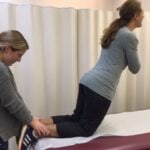
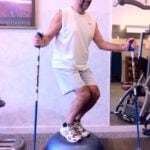
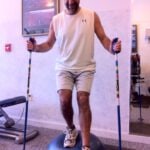
The following exercises will target the essential stability, agility, and eccentric training requirements for the prevention of skiing injuries. A BosuR Ball is a useful tool to challenge your balance and strength for skiing and other sports. It is flat on the bottom and round on the top. (www.bosu.com $110 - $125.)
Traditional exercise such as weight training for quads, hams, gluts etc are valuable. Also, elliptical and stepper equipment and exercise bikes are important. However, the following exercises are specific to the needs of the downhill and cross-country skier.
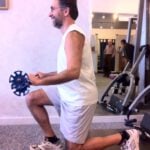
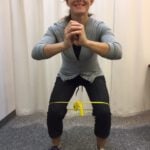
Visit your doctor regularly and listen to your body.
NEXT MONDAY – Read Dr. Paul J. Mackarey “Health & Exercise Forum!”
This article is not intended as a substitute for medical treatment. If you have questions related to your medical condition, please contact your family physician. For further inquires related to this topic email: drpmackarey@msn.com
Paul J. Mackarey PT, DHSc, OCS is a Doctor in Health Sciences specializing in orthopaedic and sports physical therapy. Dr. Mackarey is an associate professor of clinical medicine at GCSOM.
Today is an unofficial holiday in the state of Pennsylvania…the first day of firearms deer season! Approximately, 750,000 hunters from age 12 to seniors will hike through the woods in search of a whitetail.
While I am not a hunter, I am an avid outdoors person with great passion for mountain biking, kayaking, whitewater rafting, hiking and mountain climbing in our state and national parks. With this in mind, I offer hunter safety tips based on the knowledge of experts in the field and offer health safety associated with outdoor activity based on my expertise as a health care provider. Good luck and be safe!
Sources: www.pgc.state.pa.us
Visit your doctor regularly and listen to your body.
Keep moving, eat healthy foods, exercise regularly, and live long and well!
NEXT MONDAY – Read Dr. Paul J. Mackarey “Health & Exercise Forum!”
This article is not intended as a substitute for medical treatment. If you have questions related to your medical condition, please contact your family physician. For further inquires related to this topic email: drpmackarey@msn.com
Paul J. Mackarey PT, DHSc, OCS is a Doctor in Health Sciences specializing in orthopaedic and sports physical therapy. Dr. Mackarey is in private practice and is an associate professor of clinical medicine at Geisinger Commonwealth School of Medicine.
ADVANCED CARE PLANNING FOR NATIONAL HOSPICE AND PALLIATIVE CARE MONTH
Special Feature Health & Exercise Forum with Geisinger Commonwealth School of Medicine the 3rd Monday of every month!

Dr. Glen Digwood, D.O.
Glen Digwood, DO, Assistant Professor of Medicine at Geisinger Commonwealth School of Medicine
Dr. Digwood was born and raised in Taylor, PA., attended Riverside High School, Ursinus College and Lake Erie College of Osteopathic Medicine. He completed Internal Medicine Residency at Scranton-Temple Residency Program and subsequently completed clinical fellowship in Hospice and Palliative Medicine at North Shore University Hospital in Manhasset, NY. Currently he serves as the director of Palliative Medicine for Geisinger's Northeast region and is a assistant professor of Medicine at the Geisinger Commonwealth School of Medicine.
November is National Hospice Month! Each November, the community of hospice and palliative care professionals celebrates National Hospice Month. Although, at first glance, spotlighting the concept of death and dying may seem a bit gloomy, it’s actually the concept of quality of life and the focus on living that is truly being celebrated.
It is true that hospice serves those patients and their families who are on the journey of a serious or terminal illness. But as any hospice professional from the nurse to the social worker to the volunteer to the pastoral counselor will attest------the focus is ALWAYS on the value of life being maintained and the quality of living for each and every patient.
This column, written by guest author Dr. Glen Digwood, hopes to raise the level of awareness regarding the importance of advanced care planning.
Have you ever wondered what choices would be made for you if you could not make them yourself? Whether you are young, old, sick or healthy, it is important to discuss and clarify your goals, values, and preferences, as they relate to healthcare, in advance. Advance Care Planning (ACP), as defined by the National Hospice and Palliative Care Organization, is “making decisions about the care you would want to receive if you become unable to speak for yourself”. An additional consensus definition of ACP has been presented to clarify the process. ACP is intended to support adults in understanding and sharing personal values, life goals, and preferences regarding future medical care so that care is consistent with their values.
There are two major components of creating an Advance Directive. First, the naming of a surrogate decision maker. This could be done by declaring a Healthcare Proxy or Power of Attorney (POA) for Healthcare. This is the person who will be acting on your behalf should you lose capacity to do so yourself. After choosing this person it is crucial to discuss your wishes about medical care and quality of life with them. Secondly, the piece that this article speaks more to, is the documenting of preferences. This is most commonly done through completing a Living Will. This document specifies what type of medical treatments you would or would not want in differing circumstances.
It would seem to make sense that we should want our wishes known, right? Surprisingly, the rates of completion are quite low. Only about one in three U.S. adults have any type of advance directive completed. The result is that when you get sick your healthcare team is often left to figure out your goals and preferences in the most heightened emotional time. Even more surprising should be that those who are the sickest in our population have even lower rates of completion compared to the healthier parts of our society. The importance of ACP has been specifically demonstrated in studies of elderly populations. Those who engage in ACP are “approximately three times as likely to have the end of life wishes known and followed, and their family members suffer significantly less stress, anxiety, and guilt after their loved one’s death.
Why have ACP completions rates been so low historically? How do we change our views on ACP and improve completion rates, or at minimum, promote conversation about “what matters most”? The first step likely lies in changing how our society views ACP. Upon hearing the term, people often picture mounds of legal paperwork loaded with “I do want, or I do not want” checkboxes. This legalization of healthcare preferences, although vitally important, is a major hurdle to those of limited means and access to legal professionals. Additionally, this formal paperwork completion also connotes a certain level of finality to these decisions. In contrast, ACP should be thought of as a longitudinal and dynamic conversation that can change over time as aging occurs and new medical conditions arise. These conversations should happen regularly both with an individual’s healthcare provider and loved ones. The best time to develop your advance directive is before you’re sick. This allows for time to develop a clear understanding about your options. It also provides time for you to communicate your wishes to your loved ones and your doctor.
If you are confused and overwhelmed by the alphabet soup of all of this (ACP, POA, POLST, etc.) innovative tools exist to promote conversation around goals, values, and preferences. Initiatives like the The Conversation Project, documents such as Five Wishes and conversation games such as Hello (Common Practice LLC) aim to enhance conversation and limit the taboo nature of this issue. These are not meant to replace the legal documents to which we are accustomed. Instead, they serve to enhance conversation by, hopefully, removing some of the stigma and taboo nature to these conversations. To this point, advance directives are only as good as the discussions which precede their execution and use. Remember, it is never too early to start the conversation.
https://www.geisinger.org/patient-care/patients-and-visitors/advance-care-planning
https://theconversationproject.org
https://www.nhpco.org/.advance-care-planning
NEXT WEEK: Read Dr. Mackarey’s Health & Exercise Forum – every Monday.
This article is not intended as a substitute for medical treatment. If you have questions related to your medical condition, please contact your family physician. For further inquires related to this topic email: drpmackarey@msn.com.
Paul J. Mackarey PT, DHSc, OCS is a Doctor in Health Sciences specializing in orthopaedic and sports physical therapy. Dr. Mackarey is in private practice and is an associate professor of clinical medicine at Geisinger Commonwealth School of Medicine.


Alexa Rzucidlo, SPT3 is a third year doctor of physical therapy student at Temple University (2019) and intern at Mackarey Physical Therapy. She grew up locally in Factoryville, PA. She graduated from Lackawanna Trail High School and Temple University for her undergraduate degree in Kinesiology. Alexa plans to continue her clinical experience at Grand Junction VA in Colorado.
Zach Brandt is native of Dalton and a 2014 graduate of Scranton Preparatory School. Zach is currently a senior at Penn State University majoring in Kinesiology and intern at Mackarey Physical Therapy with plans to graduate in December. He plans to attend graduate school to attain his doctorate in physical therapy.
What is one of the most common injuries in high school sports? Ankle sprains. In basketball alone, 40% of all injuries are ankle sprains. The most common ankle sprain occurs when the foot or ankle rolls in (inversion), often when landing on the foot of another player after getting a rebound. This excessive motion stretches the ankle ligaments beyond their limits. Because the ligaments hold the ankle bones together and provides ankle stability, even a mild ankle sprain may cause chronic ankle instability and may lead to early arthritis.
Ian Cowder is a basketball player at Dunmore High School with a history of recurrent ankle sprains. He reinjured his ankle last season and spent 8 weeks this summer working diligently on a strength, conditioning, agility, and proprioception program to prevent ankle sprains. This column will share his ankle injury prevention program to educate others with similar ankle problems.
Sprains are typically accompanied by swelling and bruising, but you should be able to walk on the ankle, though it will be painful, immediately following a sprain. If you cannot take four steps immediately following the injury you may have a more serious injury to the ligaments or bones and should seek medical attention.
Once the pain and swelling have gone away you can begin walking normally, but should not immediately return to sport. Returning to sport without additional training puts a person at risk for more ankle sprains. In addition to the strength exercises discussed last week, agility and proprioception exercises are necessary to prevent reoccurrence.
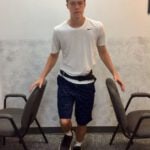
Exercise 1: Single Leg Stance (Photo 1): With two chairs sitting beside you for a safety precaution, lift one leg up in the air and stand on one leg. Without placing your hands on the chairs, stand on a single leg for 15 seconds to begin. When that becomes easy add another 15 seconds. Once a single leg stance can be held for a minute with ease and no pain, progress to exercise 2
Exercise 2: Single Leg Stance on Pillow/Foam: A variation of the exercise described above, place a pillow or a foam pad underneath the foot you are standing on. Once again hold the stance for 15 seconds to begin with, increasing by 15 seconds every time the exercise is completed easily. Once a single leg stance on a pillow/foam can be held for a minute with ease and no pain, progress to exercise 3.
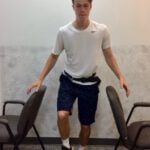
Exercise 3: Single Leg Stance on Stability Disc (Photo 2): The next variation of the single leg stance exercise involves a rubber disc that is inflated with air. These exercise balance stability discs can be found on Amazon for as little as $12. Like the pillow/foam exercise, the disc is placed under the foot but this time the goal is to stand on the disc for five seconds at a time, repeating it five times. Once a single leg stance on a stability disc can be held for up to 15 seconds 5 times in a row with ease and no pain, progress to exercise 4.
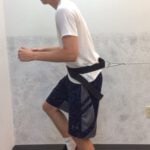
Exercise 4: Single Leg Stance on Stability Disc w resistance Sportscord (Photo 3): The final variation of this exercise involves a sportscord, which is an elastic band that is anchored on one side of the cord and strapped around the waist at the other. As the patient stands in a single leg stance on the stability disc, the elastic sportscord provides a pull on the body forcing core muscles to activate and creating a dynamic exercise. Begin with holding the stance for 5 seconds 5 times and progress to holding the exercise for 15 seconds 5 times.
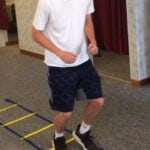
Exercise 5: Agility Ladder: (PHOTO 4): Once the exercises listed above become easy, you can progress to more advanced exercises such as the agility ladder.
The exercise progression above aims to increase strength, balance, and proprioception, but how do you know when it is safe to return to play? One way to self test is with a single leg squat. If you can perform a single leg squat to 90 degrees without the knee collapsing or pain in the ankle, it may be time to return to play.
Another way to gauge your ankle stability/function is to fill out an assessment such as the Ankle Joint Functional Assessment Tool, which provides a numerical representation of your ankle instability. A score of >26 indicates that you may have a functionally unstable ankle and you may benefit from an aggressive program designed for your needs. For more comprehensive exercise programs, consultation with an athletic trainer or sports physical therapist would be required.
It is important to note, that if you have a history of ankle sprains, the best way to prevent another injury is to participate in an aggressive preseason strength, agility and proprioception program for 6-8 weeks.
Link to the assessment is found at https://meetinstrumentenzorg.blob.core.windows.net/test-documents/Instrument4149/AJFAT meetinstr.pdf
Model: Ian Cowder, a junior at Dunmore High School where he plays varsity basketball.
Visit your doctor regularly and listen to your body.
NEXT MONDAY – Read Dr. Paul J. Mackarey “Health & Exercise Forum!”
This article is not intended as a substitute for medical treatment. If you have questions related to your medical condition, please contact your family physician. For further inquires related to this topic email: drpmackarey@msn.com
Paul J. Mackarey PT, DHSc, OCS is a Doctor in Health Sciences specializing in orthopaedic and sports physical therapy. Dr. Mackarey is in private practice and is an associate professor of clinical medicine at Geisinger Commonwealth School of Medicine (formerly The Commonwealth Medical College).
Guest Coauthors: Alexa Rzucidlo, SPT3 and Zach Brandt
Alexa Rzucidlo, SPT3 is a third year doctor of physical therapy student at Temple University (2019) and intern at Mackarey Physical Therapy. She grew up locally in Factoryville, PA. She graduated from Lackawanna Trail High School and Temple University for her undergraduate degree in Kinesiology. Alexa plans to continue her clinical experience at Grand Junction VA in Colorado.
Zach Brandt is native of Dalton and a 2014 graduate of Scranton Preparatory School. Zach is currently a senior at Penn State University majoring in Kinesiology and intern at Mackarey Physical Therapy with plans to graduate in December. He plans to attend graduate school to attain his doctorate in physical therapy.
Ankle Sprains: Part 1 of 2
What is one of the most common injuries in high school sports? Ankle sprains. In basketball alone, 40% of all injuries are ankle sprains. The most common ankle sprain occurs when the foot or ankle rolls in (inversion), often when landing on the foot of another player after getting a rebound. This excessive motion stretches the ankle ligaments beyond their limits. Because the ligaments hold the ankle bones together and provides ankle stability, even a mild ankle sprain may cause chronic ankle instability and may lead to early arthritis.
Ian Cowder is a basketball player at Dunmore High School with a history of recurrent ankle sprains. He reinjured his ankle last season and spent 8 weeks this summer working diligently on a strength, conditioning, agility, and proprioception program to prevent ankle sprains. This column will share his ankle injury prevention program to educate others with similar ankle problems.
Sprains are typically accompanied by swelling and bruising, but you should be able to walk on the ankle, though it will be painful, immediately following a sprain. If you cannot take four steps immediately following the injury you may have a more serious injury to the ligaments or bones and should seek medical attention.
If the sprain is mild, symptoms usually resolve within a couple of days. Symptoms of moderate ankle sprains include swelling, bruising, and loss of ankle motion, and may persist for several weeks. Severe ankle sprains typically require a period of immobilization (i.e. cast or brace) and limited weight bearing (i.e. use of crutches).
Regardless of the severity of the sprain, immediately following an ankle sprain the priority is to minimize swelling and allow damaged ligaments to heal. If you are unable to walk without a limp, rest may include an immobilization shoe and/or the use of crutches to allow ambulation without any weight or limited weight on the injured ankle. The best way to do this is with the RICE method: rest, ice, compression and elevation. Rest meaning you should stay off the injured ankle as much as possible in order to allow the ankle to heal. Ice should be applied to the ankle for up to twenty minutes every few hours to help reduce pain and swelling. Compression of the ankle can be done by using medical bandage wrap, this aids in reducing swelling and internal bleeding. Elevation is also used to reduce swelling and is simply done by placing a few pillows underneath the ankle in order to raise it above the level of the heart.
Immediately after a sprain resting is beneficial, but for how long? Even though it may be uncomfortable to walk, movement is important. Movement helps to pump swelling out of the joint and to prevent the ankle from stiffening up. Movement, however, should be limited and controlled so as not to reproduce pain. It is usually performed in a non-weight bearing position during elevation. The amount of time you should rest will vary on how severe the sprain is and your pain level, but even partially weight bearing or performing ankle pumps (gas pedals) will help prevent ankle stiffness and weakness down the road.
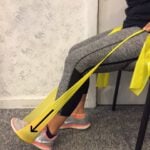
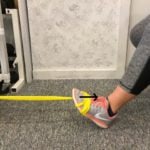
Once the pain and swelling have gone away you can begin walking normally, but should not immediately return to sport. Returning to sport without additional training puts a person at risk for more ankle sprains. Some strength exercises that are easy to do in your home include heel walks for strength and side step over drills for agility.
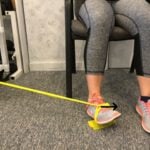
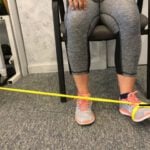
An important aspect that is often overlooked when it comes to ankle sprains is the ankle’s proprioception. In short proprioception is the body’s ability to sense stimuli regarding position, motion and equilibrium. When a sprain occurs, this proprioception is damaged and the brain is not able to receive these signals. In order to regain this proprioception, a person must work simple exercises that target these stimuli. One simple progression of exercises that is very helpful for the prevention of ankle sprains is a set of exercises that build off of a simple single leg stance.
Model: Ian Cowder, a junior at Dunmore High School where he plays varsity basketball.
Visit your doctor regularly and listen to your body.
NEXT MONDAY – Read Dr. Paul J. Mackarey “Health & Exercise Forum!” Prevention of Ankle Sprains: Part 2 of 2
This article is not intended as a substitute for medical treatment. If you have questions related to your medical condition, please contact your family physician. For further inquires related to this topic email: drpmackarey@msn.com
Paul J. Mackarey PT, DHSc, OCS is a Doctor in Health Sciences specializing in orthopaedic and sports physical therapy. Dr. Mackarey is in private practice and is an associate professor of clinical medicine at Geisinger Commonwealth School of Medicine (formerly The Commonwealth Medical College).
Regardless of your source, it is fair to say that this summer has been one of the wettest in recent memory. According to The Weather Channel, NEPA has received 36.85 inches of rain as of August 15th exceeding the previous record set in 1945. Runners, walkers, cyclists, hikers and other outdoor enthusiasts have learned to adapt to a changing environment or bust! While there are other options such as exercising indoors, (not exercising is not an option) and while this may suffice on occasion, nothing compares to being outdoors…even in the RAIN! The purpose of this column is to provide some tips for running in the rain with the hope of making it slightly less awful.
For many, running is a not fun. For others, running in the rain is even less fun, unless you enjoy heavy, wet, clingy clothes and spongy, smelly shoes, blisters on your feet and skin rashes on your armpits, thighs and breasts. However, living in regions of the world where the sun shines less than 50% of the time and rain moistens the earth like a rainforest (especially NEPA this summer), one must reach deep to “embrace the experience” and “find joy in the moment” of running in the rain. Moreover, with a little preparedness and investment in proper clothing and equipment, running in the rain can prove to be less like form of self-inflicted torcher and more like a “rite of passage.”
Some elite runners feel running in the rain is an opportunity to “mix it up” and have a new experience. Others feel it cools you off and lowers your heart rate in the summer heat. Also, there is a “badge of honor” associated with running in the rain as it gives you a little toughness and preparedness because it feels hardcore.
1. BEGIN WITH A POSITIVE ATTITUDE ABOUT THE RAIN …ENJOY THE SENSATION OF GETTING WET!
The sound of the rain taping off your head can be viewed as a waterfall massage to your scalp. The smell of a fresh rain on a hot humid day or crisp autumn afternoon can open up your nasal passages and “clear your head” if you think about it the right way. Run in a long-sleeve, lightweight shirt, shorts, and shoes that drain well." Sometimes you need to skip the rain jacket on your run. While a rain jacket will keep you dry, you might overheat, so, layer correctly to ensure you are warm enough but not trapping in heat.
2. CLOTHING MATERIAL MATTERS!
Avoid cotton in the rain because it absorbs water and gets soggy and heavy which will lead to skin irritation. Instead, wear “drytech” materials that wick away water and moister. In cooler temperatures, look for “Smartwool” which keeps you warm but does not hold water.
3. WEAR A HAT WITH A BRIM!
If you wear glasses or contact lenses, a brim keeps the rain off your glasses and out of your eyes to improve your visibility.
4. WATER RESISTANT SOCKS – A MUST!
Again, avoid cotton. Waterproof or water resistant socks are highly recommended for running in the rain. Dexshell Ultralite Bamboo, Randy Sun and Rocky Gore-Tex are a few highly rated products.
5. CONSIDER WATERPROOF/RESISTANT SHOES
While a completely waterproof shoe may not be necessary, some runners find that tighter mesh products handles mud and water really well. For a more waterproof/resistant shoe consider; Under Armour Fat Tire GTX; Altra Lone Peak NeoShell; The North Face Ultra MT GTX or Brooks Adrenaline ASR 12 GTX.
6. USE THE LUBE!
Skin irritation and chafing is awful! Think of burning flesh! It is very common when running in the rain and the best treatment is prevention. While many “skin lube” or “bodyglide” products are available, good old Vaseline works like a charm on your armpits, groin, breasts, and especially your feet.
7. PLAN TO FINISH AT A WARM SHELTER WITH A HOT SHOWER!
Plan your run so you can access a shelter with a warm drink and hot shower and change your wet clothes ASAP!
8. USE REFLECTORS AND HEAD LIGHTS
If it is a dark cloudy day, be sure to wear reflective material and use flashers and headlights.
Sources: Greatist.com ; Allie Flinn, beauty, fitness, and wellness writer.
Read Dr. Mackarey’s Health & Exercise Forum – every Monday. This article is not intended as a substitute for medical treatment. If you have questions related to your medical condition, please contact your family physician. For further inquires related to this topic email: drpmackarey@msn.com
Paul J. Mackarey PT, DHSc, OCS is a Doctor in Health Sciences specializing in orthopaedic and sports physical therapy. Dr. Mackarey is in private practice and is an associate professor of clinical medicine at GCSOM.
October is National Physical Therapy Month! The American Physical Therapy Association (APTA) would like to recognize the thousands of physical therapists as dedicated health care providers. Moreover, physical therapists would like to thank the public for allowing us to participate in your health and wellness. While PT’s may not save lives…we do save LIFESTYLES!
This column will address a question that is frequently asked by people of all ages and activity levels…stretching. First, it is important to keep in mind that stretching should NEVER be performed without warming up your body and muscles first. This can be done by running slowly in place or around the block for 5-10 minutes. Second, stretching should NEVER be painful. Third, a good stretch should be performed slowly and feel like slight tension in the muscle. NEVER bounce or jerk. First, perform the stretches by actively moving your muscles slowly and deliberately 5-10 times. Then, hold the stretch for 5-10 seconds, repeat 5-10 times, 2-4 times per week.
Remember, flexibility is only one aspect of complete health and wellness. Strength training, cardiovascular fitness, meditation and stress management and proper nutrition are also necessary for a healthy lifestyle. Also, be careful not to overstretch before competition as it may weaken the muscle.
1. CALF STRETCH
2. QUAD STRETCH - (PHOTO A)
3. HAMSTRING STRETCH – (PHOTO B)
4. GROIN STRETCH
5. LOW BACK FLEXION STRETCH – (PHOTO C)
6. LOW BACK EXTENSION STRETCH – (PHOTO D)
7. TRUNK SIDE STRETCH
8. TRUNK ROTATION STRETCH
9. SHOULDER STRETCH - (PHOTO E)
10. CHEST STRETCH

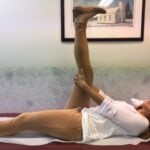
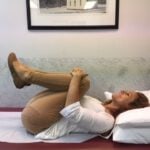

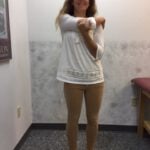
MODEL: Sarah Singer, PTA; Mackarey Physical Therapy
NEXT MONDAY – Read Dr. Paul J. Mackarey “Health & Exercise Forum!”
This article is not intended as a substitute for medical treatment. If you have questions related to your medical condition, please contact your family physician. For further inquires related to this topic email: drpmackarey@msn.com
Paul J. Mackarey PT, DHSc, OCS is a Doctor in Health Sciences specializing in orthopaedic and sports physical therapy. Dr. Mackarey is in private practice and is an associate professor of clinical medicine at GCSOM.

Daniel Savaria, GCSOM, MD4
October is Breast Cancer Awareness Month
GCSOM “Health & Exercise Forum” - 3rd Monday of the Month…
Guest Columnist: Daniel Savaria, GCSOM, MD4
Daniel Savaria of Collegeville is a 4th year medical student at Gesinger Commonwealth School of Medicine (GCSOM). He is a 2012 graduate of Muhlenberg College and received a master of biomedical science degree from TCMC in 2014.
It is fair to say that most of you have heard the phrase, “diet and exercise are the “magic pills.” One very good variation on the analogy says, “Exercise is a magic pill that takes just 30 minutes per day to swallow.” Despite the ubiquity of the sentiment, in the case of breast cancer, current medical research, including a project being conducted at GCSOM, leads me to believe that the public can’t hear the advice often enough.
Before we explore why maintaining a healthy weight is so important to breast cancer prevention, let’s begin with some background. This Breast Cancer Awareness month, there are several things women – and men – should know about this common and feared disease. First of all, breast cancer is not a single disease and is much more complicated than what can be disseminated in the general news media. There are several kinds of breast cancer, including its most common form, estrogen- or progesterone-receptive.
Estrogen-receptive cancer has some very good, targeted treatments, including drugs like tamoxifen and anastrozole, which block estrogen effects. Another type of breast cancer, which is less common, is HER2-receptive breast cancer. As the Mayo Clinic explains, “HER2-positive breast cancer . . . tests positive for a protein called human epidermal growth factor receptor 2 (HER2), which promotes the growth of cancer cells.” As in the case of estrogen-receptive cancer, HER2-positive cancer has a very effective, targeted treatment: trastuzumab. This drug is an antibody that interferes with the HER2/neu receptor.
A third and more aggressive type of breast cancer is Triple–negative breast cancer (TNBC). It is frequently diagnosed in younger and premenopausal women. Since TNBC tests negative for estrogen and progesterone receptors, as well as HER2/neu, it is unlikely to respond to hormone-and/or HRE2-based therapies. Due to its aggression and the lack of a targeted treatment, TNBC can difficult to treat. According to the National Breast Cancer Foundation, TNBC “occurs in about 10-20 percent of diagnosed breast cancers and is more likely to affect younger people, African Americans, Hispanics, and/or those with a BRCA1 gene mutation.” Also, this cancer is more likely to spread and recur. Therefore, finding a way to block growth and proliferation of TNBC cells would be an important tool for treating this fast-moving cancer.
I have had the privilege of assisting in the lab of GCSOM scientist, Dr. Raj Kumar, where he is exploring the overarching goal of identifying what drives TNBC growth and determining how to stop it. Stress hormones, like cortisol, and obesity/metabolic syndrome appear to play a role in TNBC. Discovering a way to block stress-hormone cell receptors could lead to a targeted treatment, something not available today. Dr. Kumar’s lab is currently pursuing a way to target this pathway for drug development. However, if obesity is unequivocally linked to cancer cell proliferation, as we believe it may be, perhaps we already have something infinitely better than treatment – prevention.
That’s where the magic pill comes in. It has been shown that lifestyle changes decrease breast cancer risk even in high-risk women. We should also make abundantly clear that, in rare instances, men can get breast cancer and so should also be concerned with prevention. According to the Mayo Clinic and the American Cancer Society, here’s what men and women can do:
This October, while supporting every good observation aimed at raising awareness and raising funds to defeat breast cancer, take time out to review how often you take the exercise pill. Swallowing it for a little over 20 minutes every day will have protective effects on your body that are almost magical.
Medical Reviewer: Raj Kumar, PhD is Director of Research and Professor of Biochemistry in the Basic Sciences Department at GCSOM.
Sources: Centers for Disease Control, Journal of Infectious Diseases, National Cancer Institute.
Read Dr. Mackarey’s Health & Exercise Forum – every Monday. This article is not intended as a substitute for medical treatment. If you have questions related to your medical condition, please contact your family physician. For further inquires related to this topic email: drpmackarey@msn.com.Paul J. Mackarey PT, DHSc, OCS is a Doctor in Health Sciences specializing in orthopaedic and sports physical therapy. Dr. Mackarey is in private practice and is an associate professor of clinical medicine at GCSOM.