Part 1 of 2
Recently, a very close friend confided in me that he was experiencing intermittent chest pain. Upon further discussion, he shared with me that has been under tremendous stress over the past few months. I urged him to see his family physician and after a series of examinations and tests it was concluded that his symptoms were stress related. However, it reminded me of another friend who was not so lucky. He was experiencing similar symptoms, did not report them to his physician and suffered a heart attack. While he required coronary by-pass surgery, he is living a happy and healthy life today. For me, the disturbing part of these two stories is the fact that both middle-aged men live a very healthy lifestyle. They have healthy diets, get plenty of exercise, and maintain good weight control. Neither have any of the “risk factors” typically associated with heart disease: heredity, obesity, diabetes, high cholesterol, high blood pressure, and smoking. However, the one common factor that was evident for both men was “stress.” Stress is a significant risk factor. Unfortunately, some people, like my friends, do not handle stress very well, especially when coupled with the fact that they have classic “Type A” personalities. Medical researchers are not sure how stress increases the risk of heart disease but more and more evidence suggests a relationship between the two.
There are different types of stress. For example, physical stress such as exercise and other forms of physical exertion can place good demands on heart. In fact, the lack of physical stress (e.g. a sedentary lifestyle) is a major risk factor for heart disease. However, emotional stress, if severe and chronic enough, can also cause heart disease. Stress is unavoidable in a contemporary society. However, while we cannot control or avoid it, we can control how we react to it!
Emotional stress can be caused by many factors including minor daily hassles to major lifestyle changes: illness, death, screaming children, nagging boss or spouse, new job, unemployment, traffic, pregnancy, crowds, legal problems, and financial concerns. Our emotional responses to these and many other situations determine if we are experiencing good stress or bad stress. If we feel that we are in control of our lives and our destinies, we are in a better position to manage stress when faced with a difficult choice or when placed in a challenging situation. However, if we feel that the circumstance or situation controls us, our responses, we will feel out of control and experience bad stress. Also, our personality can be a factor in our perception of stress. If we have a “Type A” personality (e.g. time-sensitive, inpatient, chronic sense of urgency, tendency toward hostility, perfectionist, and competitive), we may be creating our own emotional stress! For example, a simple trip to the grocery store will be filled with episodes of bad drivers, poorly-timed traffic lights, crowded aisles, ignorant check-out clerks, and thin plastic bags that rip too easily.
Researchers are not sure if emotional stress is a direct or indirect cause of heart disease. As a direct cause, emotional stress has been shown to constrict coronary arteries, cause blood to clot more readily, increase heart rate, and raise blood pressure. Also, emotional stress can trigger an increase in cholesterol levels by causing the body to produce more energy in an attempt to adequately respond to increased stress. Increasing the body’s cholesterol, raises HDLs (good cholesterol) as well as LDLs (bad cholesterol). Furthermore, emotional stress increases the production of cortisol. Cortisol stimulates fat and carbohydrate metabolism for fast energy in addition to insulin release for maintenance of blood sugar levels. The end result of these actions is an increase in appetite. Emotional stress that stimulates your appetite may cause weight gain. Moreover, cortisol can affect where you put on the weight. Cortisol tends to cause fat to deposit in the abdominal area rather than at the hips. This type of fat deposition has been strongly correlated with the development of heart disease.
As an indirect cause, emotional stress can cause people to participate in bad habits that are associated with heart disease. Overeating may be an attempt to fulfill a psychological need. People that overeat because of stress often binge on “comfort” foods that are high in fat, cholesterol, and sugar. These foods are associated with significant weight gain. Also, emotional stress can trigger depression. Depression can not only cause indulgence in comfort foods but also reduce motivation for physical activity and exercise. Moreover, an individual experiencing emotional stress may attempt to reduce stress by participating in dangerous activities such as smoking and alcohol abuse.
No one can escape from emotional stress because it is a normal part of everyone’s life. We must learn to manage stress effectively so that stress can be used as a motivational tool rather than as an implement of self-destruction.
Contributor: Janet Caputo, DPT, PT, OCS, is a physical therapist specializing in the management of orthopedic and sports injuries with a special interest in vestibular rehab and falls prevention at Mackarey Physical Therapy in downtown Scranton.
NEXT MONDAY – Read Dr. Paul J. Mackarey “Health & Exercise Forum!” Next Week: Part 2 “Managing Stress” in the Scranton Times-Tribune.
This article is not intended as a substitute for medical treatment. If you have questions related to your medical condition, please contact your family physician. For further inquires related to this topic email: drpmackarey@msn.comPaul J. Mackarey PT, DHSc, OCS is a Doctor in Health Sciences specializing in orthopaedic and sports physical therapy. Dr. Mackarey is in private practice and is an associate professor of clinical medicine at The Commonwealth Medical College.
Health and Safety Tips for Gardeners: Gardening with Disabilities
Summer is finally here and gardeners in northeast PA are anxious work in their gardens and enjoy the fruits of their labor. Last week, Health & Exercise Forum presented tips for gardeners for preventing hand and arm injuries such as carpal tunnel syndrome. This week’s column is dedicated to prevention of lower back and lower body injuries when working in the yard and for gardeners with disabilities….
A relaxing and enjoyable activity for many, gardening can turn dangerous without proper precaution as repetitive stress injuries, back pain, muscle pulls, can stem from raking, weeding, digging and pruning, can turn into serious problems if not treated appropriately. Since prevention is the best approach, the US Dept of Agriculture promotes warm-up exercises and injury prevention tips to help all levels of gardeners avoid serious and long-term injuries while enjoying this popular outdoor activity.
People with various disabilities enjoy gardening at different levels. For example, those suffering from neurological diseases with muscle weakness, paralysis and poor balance as well as those with musculoskeletal problems such as neck and LBP or hip and knee arthritis can safely enjoy gardening at some level. This outdoor labor of love is very therapeutic.
Warm up and stretching is important. Don’t garden first thing in the morning before you have a chance to warm up. Get up, go for a short walk, have breakfast and maybe warm up with a hot shower before working in the garden. Some stretches include:


Note: These exercises should never be painful when completing them. You should only feel a gentle stretch. Hold the stretch10 seconds and repeat 5 times before you garden and every 20 -30 minutes while working. Should you experience pain, please consult your family physician or physical therapist.
The following guidelines to prevent injury and foster healthy gardening for those with and without disability:
Source: Karen Funkenbusch, MA; Willard Downs, PhD.: U. S. Department of Agriculture - Agricultural Engineering Extension
Model: Sarah Singer, PTA
NEXT MONDAY – Read Dr. Paul J. Mackarey “Health & Exercise Forum" in the Scranton Times-Tribune.
This article is not intended as a substitute for medical treatment. If you have questions related to your medical condition, please contact your family physician. For further inquires related to this topic email: drpmackarey@msn.com
Paul J. Mackarey PT, DHSc, OCS is a Doctor in Health Sciences specializing in orthopaedic and sports physical therapy. Dr. Mackarey is in private practice and is an associate professor of clinical medicine at The Commonwealth Medical College.
Health and Safety Tips for Gardeners: Prevention of Hand Injuries Associated with Gardening
Today is Memorial Day and for many it is the official first day of planting a vegetable garden in NEPA without fear of frost. While gardeners are anxious to work in their gardens and enjoy the fruits of their labor, a relaxing and enjoyable activity can turn dangerous quickly. Precautions are necessary as repetitive stress injuries such as shoulder and elbow tendonitis and carpal tunnel syndrome can stem from raking, weeding, digging and pruning. Additionally, simple scrapes, blisters, and bites can turn into serious problems if not treated appropriately. Since prevention is the best approach, the American Society of Hand Therapists (ASHT) promotes warm-up exercises and injury prevention tips to help all levels of gardeners avoid serious and long-term injuries while enjoying this popular outdoor activity.
ASHT recommends following these upper extremity warm-up exercises prior to gardening:
Note: These exercises should never be painful when completing them. You should only feel a gentle stretch. Hold 10 seconds and repeat 5 times. Should you experience pain, please consult a physician or hand therapist.
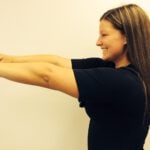
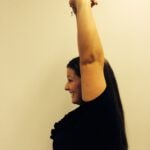
ASHT recommends the following guidelines to prevent injury and foster healthy gardening practices:
Professional Contributor: Nancy Naughton, OTD, CHT, is an occupational therapist and certified hand therapist practicing in NEPA at Professional Orthopedics.
Model: Vanessa Borgia
NEXT MONDAY – Read Dr. Paul J. Mackarey “Health & Exercise Forum” in the Times-Tribune. Next Week: “Prevention of Gardening Injuries” Part 2 of 2.
This article is not intended as a substitute for medical treatment. If you have questions related to your medical condition, please contact your family physician. For further inquires related to this topic email: drpmackarey@msn.com
Paul J. Mackarey PT, DHSc, OCS is a Doctor in Health Sciences specializing in orthopaedic and sports physical therapy. Dr. Mackarey is in private practice and is an associate professor of clinical medicine at The Commonwealth Medical College.
Guest Columnist: Kevin Perry, 3rd Year Medical Student The Commonwealth Medical College
“Should I use heat or ice?” While working as a third year medical student at TCMC, I was surprised to find that this is one of the most common questions asked by patients with musculoskeletal complaints. Trying to decide whether to use ice or heat to make an injury feel better and heal faster may not be so easy. Unfortunately, there is confusion, even among medical professionals, about the appropriate times to use of heat or cold. However, if we review the basic science on this subject, there are some valuable guidelines to consider.
When an injury is sustained, such as a sprained ankle, chemical signals are released in the area of the injury, which increases blood supply to the damaged tissues to allow appropriate cells to repair the damage. This response is evident by the principle signs and symptoms of inflammation including warm, redness, swelling, pain, and loss of function. This reaction makes sense because anytime tissues are injured; the body is responsible to protect the site until repair can occur. To protect the injured site, the body causes swelling and pain to prevent excessive movement or overuse which will lead to further injury. With the site of injury protected, the appropriate cells are able to lay down new tissue to repair the damage. As tissues heal, a web of connective tissue pulls the damaged tissues back together and holds them in place while new tissue is formed. Once the tissue is completely repaired, the blood flow returns to normal and fluid drains from the site of injury allowing restoration of motion and function. However, the new tissue is fragile and unorganized and often sticks together leaving tightness and weakness. After repeated use, the new tissue adapts to the stress placed upon it and becomes functional.
When grounded in science, the use of heat or cold can be used to expedite the healing process. While inflammation is crucial to the repair of injured tissue, the response can be exaggerated and last longer than necessary. Therefore, ice and heat can be used to modify the bodies’ inflammatory response and help us return to activity sooner.
Ice causes blood vessels to narrow and nerves to slow down. When ice is applied to tissue, the body responds by decreasing blood flow to the area to preserve the core body temperature. Also, as nerves cool down, the signals they send slow down and become less frequent, therefore the pain signals they send to your brain become less intense. Thus, we can use ice to decrease blood flow to inflamed tissue which will reduce swelling and decrease pain. Ice is ideally used immediately following most injuries to control pain and swelling.
Heat causes your blood vessels to open and increase blood flow to tissues. When heat is applied, blood flow and tissue temperature are increased and tight tissues relax and are better able to glide across one another. However, when applied too early in the healing process, heat, by increasing blood flow, can increase swelling and pain. Heat is ideally used after an injury has healed and there is residual tightness or protective muscle spasms.
Now that we know how ice and heat work in conjunction with the inflammatory process we can easily understand when to use each one. Ice is best used following an acute injury. Anytime the principle signs and symptoms of inflammation are present, ice is the appropriate treatment of choice. For example, immediately after spraining your ankle, if it is swollen and painful to walk, ice is the preferred treatment. Regardless of when the injury occurred, if there is swelling and pain, ice is the appropriate treatment. Heat should be used when there is tightness and stiffness and no signs of acute inflammation. For example, week two or three following an ankle sprain, if stiffness persists and swelling is controlled then heat would be beneficial.
Apply ice using a bag of ice and water, ice pack, or bag of frozen vegetables wrapped in a wet towel. Cover the injured and swollen area and if possible elevate the iced area above the level of your heart. You should apply ice for a maximum of 20 minutes and rest at least one hour between icing sessions so as not to cause harm. Never apply ice directly to skin and never fall asleep while icing.
Apply heat with a heating pad covered in a few towels or a bag of rice heated in a microwave. Cover in a towel and place the heat on the affected area for a maximum of 20 minutes and rest at least one hour between heating sessions. Never apply heat over skin that you cannot feel (numbness or loss of sensation) or on open wounds in the skin. Also, do not lie directly on the heating source and don’t fall asleep while using heat to avoid burns.
Hopefully this information is helpful in dispelling some of the confusion regarding when to use ice or heat. As you can see there is no “golden rule” or “72-hour rule” for advising when to use ice or heat. But if you stick to the principles discussed in this article, you should be treating your aches and pains appropriately. This has been a simplified explanation of a complex topic and if you have any further questions, please ask a medical professional.
Guest Columnist: Kevin Perry is a third-year medical student at TCMC. Dr. Perry grew up in Wyckoff, New Jersey before attending Loyola University Maryland as a Biology major and Mathematics minor while competing as a soccer player. He continued his education at the University of Scranton where he earned a Doctorate in Physical Therapy, graduated with academic honors, and published research about the diagnosis of meniscal tears. After medical school, he aspires to complete an orthopedic surgery residency.
Read “Health & Exercise Forum” in the Scranton Times-Tribune – Every Monday. This article is not intended as a substitute for medical treatment. If you have questions related to your medical condition, please contact your family physician. For further inquires related to this topic email: drpmackarey@msn.com
Paul J. Mackarey PT, DHSc, OCS is a Doctor in Health Sciences specializing in orthopaedic and sports physical therapy. Dr. Mackarey is in private practice and is an associate professor of clinical medicine at The Commonwealth Medical College
Part 2 of 2
GET THE HECK OUTSIDE! Research shows that spending time outdoors has many positive effects on your health. While there are many year round activity options, in Northeastern Pennsylvania our short-lived summer is the inspiration to “suck the marrow out of a sunny day!” Summer in NEPA is enjoyed in many ways such as; walking, running, hiking, biking, horseback riding, boating, kayaking, and swimming. Studies show that even less vigorous activities such as; fishing, picnicking camping, barbequing or reading a good book on the porch are healthier than being indoors.
It is reported that Americans spend 90% of their lives indoors and that number increases with age. Worse yet, for some, venturing outdoors is considered risky behavior with fear of the sun, ticks, wind, mosquitoes and other creatures of God. Well, the truth of the matter is the risk of being one with nature is far less than the ill effects of a life stuck indoors. Please consider the following benefits of spending time outdoors.
Read “Health & Exercise Forum” – Every Monday in the Scranton Times-Tribune. This article is not intended as a substitute for medical treatment. If you have questions related to your medical condition, please contact your family physician. For further inquires related to this topic email: drpmackarey@msn.com
Paul J. Mackarey PT, DHSc, OCS is a Doctor in Health Sciences specializing in orthopaedic and sports physical therapy. Dr. Mackarey is in private practice and is an associate professor of clinical medicine at The Commonwealth Medical College.
Part 1 of 2
Despite the lingering winter temps, spring and summer will return to NEPA. So, get ready to enjoy the great outdoors because research shows that it is good for your health!
Daphne Miller, MD, is a physician, author, hiker and associate clinical professor at The University of California, San Francisco. She is an advocate of the National Park Service’s “Healthy Parks, Healthy People” program. She was featured in the 2014 Spring Edition of NationalParks Magazine for prescribing outdoor activities for the health and well-being her patients.
Dr. Miller is strong proponent of the spending time in the great outdoors for medicinal purposes. Studies strongly support the fact that exposure to green space has a positive impact on our health and well-being. Consequently, when taking a patient history, she is just a likely to ask a patient how much time they spend in nature, as she is how much they smoke and drink alcohol.
Hundreds of studies support the fact that getting off the couch, away from the television and video games to increase physical activity, is only one of the many reasons people benefit from green space. One study demonstrated that children with attention-deficit hyperactivity disorder (ADHD) functioned with more focus when placed in a natural setting. Other studies found that children demonstrated lower risk for asthma and elderly improved their longevity, when they lived in greener spaces. Most impressive, was a study published in the British medical journal, Lancet, which found that health disparities between wealthy and poor were neutralized when both groups lived in greener spaces.
According to the article in National Parks, a “nature prescription” written by Dr. Miller might look like this:
Drug: Exercise in Glen Canyon Park
Dose: 45 Minutes of Hiking, Walking, or Running
Directions: Take 3-4 Times per Week (M,W,F,S) at 7 AM or 7 PM
Refill: Unlimited
As many of readers who know me are aware, I am a card carrying member and passionate supporter of the National Park Conservation Association (NPCA). I have not only visited, but camped, explored, and hiked, in many of our National Parks and enjoyed all four seasons in several of these special places. As you may recall from the Ken Burn’s documentary, “The National Parks – America’s Best Idea” these sanctuaries are often described as much for their natural beauty, as they are for the emotion they evoke…spiritual, divine, ethereal, holy, calming, tranquil, mesmerizing, inspirational, illuminating and other countless words of peaceful wisdom. For me, they are this planets version of “heaven!”
People often ask, “What is your favorite National Park?” I tell them, “It is impossible for me to pick just one.” They all have their own special beauty and each exudes a unique feeling. For example, The Grand Canyon in Arizona is an overwhelming beautiful place that must be seen before you leave the planet. For most, it is admired by looking down into a “special version of heaven.” At the same time, Yosemite National Park in California stirs emotion while looking up at the granite rock formed into art by nature with names like Half-Dome and El Capitan. However, more than 500 geysers, including “Old Faithful” and many other thermal features produced over millions of years, have mesmerized visitors in Yellowstone National Park like no other natural feature. So, you can quickly see the dilemma in choosing one favorite over fifty-eight special versions of heaven on earth!
Keep in mind, living in NEPA offers plenty of options for healthy green space. You do not have to travel far to get our city or state parks. Nay Aug Park and Lackawanna State Parks are two good examples. A short drive will take you to Ricketts Glen State Park for a beautiful hike along the waterfalls. If you don’t mind a little longer drive, The Pennsylvania Grand Canyon will bring you closer to a healthy mind, body and spirit.
Read “Health & Exercise Forum” – Every Monday in the Scranton Times-Tribune. This article is not intended as a substitute for medical treatment. If you have questions related to your medical condition, please contact your family physician. For further inquires related to this topic email: drpmackarey@msn.com
Paul J. Mackarey PT, DHSc, OCS is a Doctor in Health Sciences specializing in orthopaedic and sports physical therapy. Dr. Mackarey is in private practice and is an associate professor of clinical medicine at The Commonwealth Medical College.
With the increased popularity of local races such as the Steamtown Marathon and Scranton 1/2 Marathon, local interest in running is exploding. On many levels, including the improvement of the health and wellness of the residents of NEPA, this is a tremendous trend. However, as a health care provider, I am seeing a significant number of first time runners visit my office with a wide variety of injuries that are very preventable with a modicum of good judgment.
Runners are addicted to running for good reason. There is nothing like it! No exercise offers so much in such little time. Caloric expenditure is higher than in most other exercises, including biking. Running also allows for fresh air, beautiful scenery, minimal investment in clothing or equipment, little skill and time to learn. Moreover, the benefits are many; runners suffer from less depression, colds and flu symptoms, and experience less pain due to an endorphin release (a natural chemical in the brain associated with euphoria and pain control.)
This column will be dedicated to those who are interested in beginning a running program for all the reasons mentioned above and more. The program is designed to promote a safe and gradual introduction or return to running as form of exercise. The initial goal is to help you attain 30 minutes (approximately 2 miles) of running at a slow, relaxed and safe pace. This 30 minute goal is the standard used in most research that shows improvement in weight control, cholesterol, heart disease, blood pressure and adult onset diabetes. The 8 week program is a simple and safe program that begins with more walking than running and gradually reverses the proportion. The first two miles are the hardest and once mastered; one can begin to build on mileage and intensity if desired. For those interested in advancing to a half or full marathon, I recommend the book “The Marathon” by Jeff Galloway who advocates a run/walk program as you increase distances. Visit his website at: www.jeffgalloway.com.
Before You Begin Running:
SOURCE: Runner's World
NEXT MONDAY – Read Dr. Paul J. Mackarey “Health & Exercise Forum!” in the Scranton Times-Tribune. This article is not intended as a substitute for medical treatment. If you have questions related to your medical condition, please contact your family physician. For further inquires related to this topic email: drpmackarey@msn.comPaul J. Mackarey PT, DHSc, OCS is a Doctor in Health Sciences specializing in orthopaedic and sports physical therapy. Dr. Mackarey is in private practice and is an associate professor of clinical medicine at The Commonwealth Medical College.

Anjani Amladi
“Shatter the Silence. Stop the Violence.”
Guest Columnist: Anjani Amladi
3rd Year Medical Student The Commonwealth Medical College
Last Spring, while walking down Monroe Avenue in Scranton surrounded by women, men, and children in a sea of royal purple, I had an experience I never had before. I was invited to an event called “Take Back the Night,” hosted by the Take Back the Night Foundation, and at the time had no real grasp on what the night had in store for me. Based on my friend’s description of the event, I anticipated a small get together promoting sexual assault and domestic violence awareness. But I was surprised to be involved in an amped up rally, an inspirational program, and a new outlook on life. As a result, I plan to be an active participant for the “Take Back the Night 2014” on April 24.
At the beginning of the march, I trailed at the tail end of the line observing what was happening around me. With our sheer numbers we managed to stop traffic, draw incredible amounts of attention to ourselves, and dared to hold up signs that brought awareness to a topic that most people try to forget exists. As we walked, I noticed children halting their games and staring, parents coming out of their homes to figure out what the fuss was about, and a group of college guys ceasing their drinking activities to watch the participants. At that moment in time, a number of thoughts were percolating in my mind. I was proud to be a part of this group who so ardently advocates for all people, not just women… but I’m ashamed to say that along with pride I was also a little embarrassed. What are people thinking about us? What will they say? How are we being viewed? Are they upset at the disturbance? When I walked past a house with six men sitting on the porch drinking beers, I immediately looked at my shoes hoping they wouldn’t notice me. After addressing the discomfort I was experiencing, I pondered the possibilities as to why I was so uneasy, and after conducting research for this article I began to understand why others might be too.
The Numbers are Staggering
According to the Rape Abuse Incest National Network (RAINN), one of the largest anti-sexual violence organizations in the nation, one in six women in the United States has been a victim of an attempted or completed rape. This translates into 17.7 million American women who are survivors of such a tragedy. While women make up a disproportionate number of survivors, approximately one in thirty-three men have experienced an attempted or completed rape in their lifetime which translates into approximately 2.78 million men in the United States. 15% of sexual assault and rape survivors are children under twelve years of age and 90% of them know their attacker. Even more staggering are the small number of rapes that are actually reported, and the proportion of perpetrators that serve time in jail for their crimes. According to the National Crime Victimization Survey conducted by the United States Justice Department from 2006 to 2010, approximately 46 out of 100 sexual assaults were reported to the authorities (this means that the perpetrators who committed the other 54 acts will not spend a single day in jail.) Furthermore of the 46 that are reported, 12 arrests are made, 9 will subsequently be prosecuted, and only 5 will receive a felony conviction. To be put candidly, if 100 rapes took place only 3 of those perpetrators would spend time behind bars.
Why do the Statistics Matter?
The World Health Organization states that there are significant adverse health effects, both short and long term in survivors of intimate partner and sexual violence. These include back pain, abdominal pain, fibromyalgia, gynecological problems, sexually transmitted infections, depression, post-traumatic stress disorder, eating disorders, drug and alcohol misuse, and suicide attempts. By raising awareness, and creating an environment where the reporting of crimes, and prosecution offenders becomes the social norm, we can play an important role in decreasing the number of these life altering crimes.
What is the “Take Back the Night Foundation?”
An organization that “seeks to end sexual assault, domestic violence, dating violence, sexual abuse and all other forms of sexual violence,” with an emphasis on creating “safe communities and respectful relationships through awareness events and initiatives.” The first documented “Take Back the Night” event in the United States took place in Philadelphia, Pennsylvania in 1975 after the brutal murder of Susan Alexander Speeth, a microbiologist who was stabbed to death by a stranger near her home while walking the streets alone. The first “International Take Back the Night” event took place at The International Tribunal on Crimes against Women in Brussels, Belgium in 1976. The turnout was incredible and more than 2,000 women, representing 40 countries, were in attendance.
The inspirational program of “Take Back the Night” gave me hope despite the sharing of numerous tragic and painful stories. The camaraderie, sensitivity and receptiveness of all the participants left me with overwhelming feelings of strength and perseverance. The women and men who shared their stories were the most courageous people I have ever met, and I can only imagine how much gumption and strength it took to tell their stories to complete strangers. As we lit candles in honor of all individuals who have experienced unspeakable tragedies, the people in the crowd who started off strangers to me, now felt like friends.
After writing this article I now understand why as a society, we don’t like to think about these events due to the heaviness of the subject matter. But the lesson to be learned is that by ignoring the existence of these issues, we become part of the problem, when we should be part of the solution. As much as we would like to deny that rape, assault, abuse and neglect happen in our own back yard, sticking our heads in the sand is not the answer. When someone works up the courage to share their story, and our response as an audience is discomfort, that feeling is something to acknowledge, not ignore. Discomfort means we are not indifferent and we recognize that a wrong was committed. And as such, we bring it into our conscious mind where we can enact change. It is time to bring awareness to a topic that lives in the shadows, shine a light on it, and shatter the silence once and for all!
IF YOU WOULD LIKE TO PARTICIPATE OR WANT MORE INFORMATON REGARDING NEPA “TAKE BACK THE NIGHT” ON THURSDAY APRIL 24th VISIT:
http:/www.scranton.edu/studentlife/studentaffairs/center/TBTN.shtml
Resources
National Child Abuse Hotline http://www.childhelp.org/ 1-800-4-A-CHILD
National Domestic Violence Hotline http://www.thehotline.org/ 1-800-799-SAFE
National Sexual Assault Hotline http://www.rainn.org/get-help/national-sexual-assault-hotline/ 1-800-656-HOPE National Sexual Violence Resource Center http://www.nsvrc.org/ 1-877-739-3895
See Sally Kick Ass: A Woman’s Guide to Personal Safety Vogt, Fred Outskirts Press, 2006 ISBN-10: 159800820X ISBN-13: 978-1598008203
Guest Columnist: Anjani Amladi is a 3rd year medical student at The Commonwealth Medical College (TCMC). She was raised in San Ramon, CA and earned a B.S. in Biological Sciences at The University of California at Davis. She has a special interest in alternative medicine, wellness and preventive care. Her goal is to secure a Psychiatry residency with the hope of researching alternative therapies for psychiatric disorders.
Anjani has a passion for people, and was so inspired by her experience with Take Back the Night that she decided to write this article in honor of all those who have been affected by violence and sexual assault. It is her hope to support those who have had the courage to share their stories and give a voice to those who have not.
Read “Health & Exercise Forum” – Every Monday in the Scranton Times-Tribune. This article is not intended as a substitute for medical treatment. If you have questions related to your medical condition, please contact your family physician. For further inquires related to this topic email: drpmackarey@msn.com
Paul J. Mackarey PT, DHSc, OCS is a Doctor of Health Sciences specializing in orthopaedic and sports physical therapy. Dr. Mackarey is in private practice and is an associate professor of clinical medicine at The Commonwealth Medical College.
Every day someone comes to our office with lower back pain (LBP). Often, the person’s primary complaint is that they cannot perform an important daily activity (work, clean, cook, run) because of back pain. However, no group of patients with lower back pain is more eager to recover and return to unrestricted activity than golfers.
LBP is the most common physical problem for golfers, especially males. The causes of LBP in golfers, especially in the amateur, are many: poor golf swing mechanics, excessive practice, inadequate warm-up and poor flexibility and conditioning. However, the very nature of the golf swing can create great stress on the structures of the lower back. Forward bending while twisting creates excessive torque on the discs, joints, muscles and ligaments of the lower back.
Walk/Ride –
Other Tips-


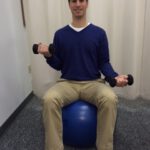
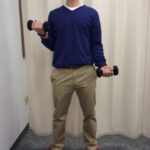
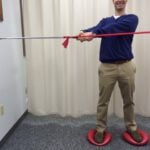
Keep Good Posture – at home, work, and when playing golf keep your shoulders back, low back arched when sitting or standing. Use a towel roll in the small of your lower back when sitting. Extend your spine into throughout the day.
Bend Forward Carefully – bend at hips and knees with one leg ahead of the other when bending to get your ball out of the cup. Let the back leg lift up off the ground as you bend. Suction cups for the end of your putter are available to retrieve your ball from the cup.
Take a Lesson – learn the mechanics of a proper swing for less stress on your lower back from a PGA golf professional. It can make the difference!
Be Smart – Listen to Your Body- If the lower back pain is severe, long lasting or causes radiating pain, tingling or numbness into your legs, consult your family physician to determine the best course of action before you continue playing golf.
MODEL: John Mackarey, Temple University Doctor of Physical Therapy Student
Visit your doctor regularly and listen to your body.
NEXT MONDAY – Read Dr. Paul J. Mackarey “Health & Exercise Forum” in the Scranton Times-Tribune.
This article is not intended as a substitute for medical treatment. If you have questions related to your medical condition, please contact your family physician. For further inquires related to this topic email: drpmackarey@msn.com
Paul J. Mackarey PT, DHSc, OCS is a Doctor in Health Sciences specializing in orthopaedic and sports physical therapy. Dr. Mackarey is in private practice and is an associate professor of clinical medicine at The Commonwealth Medical College.
Every day someone comes to our office with lower back pain (LBP). Often, the person’s primary complaint is that they cannot perform an important daily activity (work, clean, cook, run) because of back pain. However, no group of patients with lower back pain is more eager to recover and return to unrestricted activity than golfers. Dr. Joe Cimochowski and Dr. Dan Sullivan are two good examples of successful return to the sport after spine surgery. I hope this column does not jinx them!
LBP is the most common physical problem for amateur golfers. However, professional golfers also are plagued with this problem. For example, recently, Phil Mickelson had to withdraw from Farmers Insurance Open Tournament and Tiger Woods backed out of the Arnold Palmer Invitational at Bay Hill due to lower back pain. Fortunately, PGA professionals benefit tremendously from sport science, physical therapy and fitness programs on tour.
The causes of LBP in golfers, especially in the amateur, are many: poor golf swing mechanics, excessive practice, inadequate warm-up and poor flexibility and conditioning. However, the very nature of the golf swing can create great stress on the structures of the lower back. Forward bending while twisting creates excessive torque on the discs, joints, muscles and ligaments of the lower back.




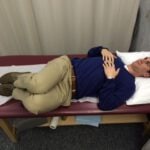
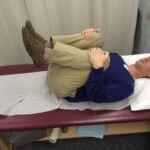
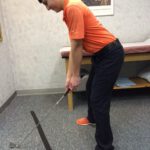
MODELS: John Mackarey, Temple University Doctor of Physical Therapy Student; Frank Cestone, Scranton Prep Golf Team
Visit your doctor regularly and listen to your body.
NEXT MONDAY – Read Dr. Paul J. Mackarey “Health & Exercise Forum" in the Scranton Times-Tribune. Next Week: Back Pain Prevention for Golfers - Part 2 of 3
This article is not intended as a substitute for medical treatment. If you have questions related to your medical condition, please contact your family physician. For further inquires related to this topic email: drpmackarey@msn.com
Paul J. Mackarey PT, DHSc, OCS is a Doctor in Health Sciences specializing in orthopaedic and sports physical therapy. Dr. Mackarey is in private practice and is an associate professor of clinical medicine at The Commonwealth Medical College.