2nd of 2 Columns on Fall Prevention
Preventing a fall can not only save your independence but also your life! Last week, Health & Exercise Forum presented how to assess your risk of falling and exercises to limit your risk by maintaining a reasonable fitness level. This week will discuss the importance of fall prevention. Preventing injuries from falls reduces the need for nursing home placement. Injuries from falls are the seventh leading cause of death in people over the age of sixty-five.
The following suggestions will assist you in minimizing your risk of a fall:
Guest Contributor: Janet M. Caputo, PT, DHSc, OCS is clinic director at Mackarey & Mackarey Physical Therapy Consultants, Scranton, PA where she specializes in the treatment of vestibular and balance disorders.
Medical Reviewers: Dr. Louis DeGennaro & Dr. Mark Frattali
NEXT MONDAY – Read Dr. Paul J. Mackarey “Health & Exercise Forum” in the Scranton Times-Tribune.
This article is not intended as a substitute for medical treatment. If you have questions related to your medical condition, please contact your family physician. For further inquires related to this topic email: drpmackarey@msn.com
Paul J. Mackarey PT, DHSc, OCS is a Doctor in Health Sciences specializing in orthopaedic and sports physical therapy. Dr. Mackarey is in private practice and is an associate professor of clinical medicine at The Commonwealth Medical College.
ARE YOU AT RISK OF FALLING?
1st of 2 Columns on Fall Prevention
New research shows that falls are the number one cause of serious orthopedic injuries such as hip fractures in the elderly. As a result, falls prevention has become a health care priority. Studies also show that a comprehensive medical evaluation and a falls prevention rehabilitation program are very effective in lower the risk of falls
To determine your risk first it is necessary to define “a fall”. A fall is an unplanned, unexpected contact with a supporting surface. A supporting surface is not only the floor or ground, but could be a chair (when rising and you fall backwards), a wall (when loss of balance causes you to bump into a wall) or a counter (when reaching overhead loss of balance causes you to bump into the countertop).
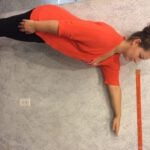
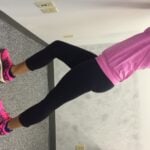
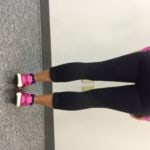
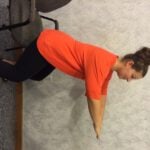
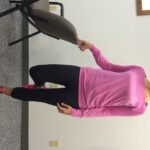
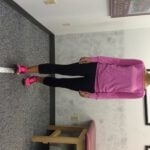
How likely are you to fall? Two quick tests that can determine your fall risk:
***BE SURE TO HAVE SOMEONE STANDING AT YOUR SIDE DURING THIS TEST TO MAKE SURE YOU DON’T FALL!
Age related changes in strength, endurance, flexibility, reflexes, vision and posture creates a greater risk of falls in the elderly. The strength and endurance of your leg muscles decline with age. Strength can be reduced up to 40% by 80 years of age! The flexibility of your spine as well as ankle joints diminishes. Arthritis and pain can further limit motion in these joints. A stooped posture interferes with proper postural alignment and increases fall risk. Ankle flexibility is essential for effective balance responses and reflexes. Diminished sensation in the legs and feet (i.e. peripheral neuropathy) decreases responses to balance threats. Cataracts, macular degeneration and retinal disease reduce your ability to use vision to maintain and/or regain balance and contribute to falls. Distractions can cause a fall since many older adults require more attention to complete a task safely. Anxiety and fear of falling can have a negative effect on balance performance.
Identifying and remedying all possible causes may prevent a fall. Preventing or reducing the likelihood of a fall may improve your quality of life. Elderly people who have fallen avoid performing basic physical and social activities (walking, shopping) because of fear of falling. If a fall causes a hip fracture, the resulting mobility deficits may prevent living independently and require nursing home placement. Fall prevention can lower health care costs. Health care costs of fall injuries for individuals 65 and older exceeded $19 billion in 2000.
Guest Contributor: Janet Caputo, PT, DPT, OCS specializes in orthopedic and neurological rehabilitation as an associate at Mackarey & Mackarey Physical Therapy Consultants, LLC.
Read “Health & Exercise Forum” in the Scranton Times-Tribune every Monday…Next Week Read: Part 2 of 2 on Fall Prevention! This article is not intended as a substitute for medical treatment. If you have questions related to your medical condition, please contact your family physician. For further inquires related to this topic email: drpmackarey@msn.com
Paul J. Mackarey PT, DHSc, OCS is a Doctor in Health Sciences specializing in orthopaedic and sports physical therapy. Dr. Mackarey is in private practice and is an associate professor of clinical medicine at The Commonwealth Medical College.
If you are among the 2000 runners who finished The 19th Annual Steamtown Marathon Sunday, then you are waking up this morning with a little less jump in your step than you had yesterday. Your should probably know that if you ran a marathon before the 1908 Olympics in London, then you would have run one mile less than you did yesterday. The Royal Family was picnicking at Windsor Castle one mile further than the original for starting place of the race. For fear of insulting Royalty, the starting point was moved to accommodate them. Ironically, several runners collapsed due to unusually hot and humid weather. But, one can’t help but to place partial blame on the Royal Family for lengthening the event. If you are sore today, blame the Royal Family.
I remember quite well the euphoric feeling of finishing my first marathon. That night, however, I was exhausted. So, I went to bed early and looked forward to a fun filled day on Monday, as I took the day off to relax and enjoy my family. To my surprise, I had great difficulty getting out of bed. My feet, knees, hips, and back were very sore and stiff. My toes nails were black and feet blistered. The “recovery – the day after the marathon” was something I was not prepared for. Today, I offer some helpful suggestions to expedite your recovery:
Recommendations:
PREVENTION BEFORE AND DURING THE RACE:
IMMEDIATE RECOVERY:
LONG TERM RECOVERY:
This article is not intended as a substitute for medical treatment. If you have questions related to your medical condition, please contact your family physician. For further inquires related to this topic email: drpmackarey@msn.com
Paul J. Mackarey PT, DHSc, OCS is a Doctor in Health Sciences specializing in orthopaedic and sports physical therapy. Dr. Mackarey is in private practice and is an associate professor of clinical medicine at The Commonwealth Medical College.
The 19th Annual Steamtown Marathon will be held on Sunday, October 12, 2014. The 26.2 mile event, beginning in Forest City and ending in downtown Scranton, is certified by USA Track and Field as a qualifier for the esteemed Boston Marathon and is highly regarded by running aficionados. By my view, the event represents everything that makes NEPA special: hardworking, unselfish organizers, appreciative and enthusiastic supporters, beautiful landscape and fall foliage. Many runners have local roots and return home to run with zealous love and support from family and friends along the trail.
This year at the race, whether running, working or cheering, take notice of the many runners sporting knee socks. You may wonder what this is all about…style, fad, or medical device.
Runners competing at this level constantly try to improve performance through training, diet, nutrition, mental focus and equipment. And, to advance to the next level, it is critical to limit exercise-induced muscle soreness from excessive training. One product purported to control post-exercise soreness has become popular over the past few years among members of this elite group: compression socks.
In 2009, compression socks burst onto the running scene when people witnessed Paula Radcliffe, one of the top female marathon runners, wearing what appeared to be knee-high socks as she ran the Boston Marathon and other major events. In fact, so many people took notice that the sock she wore, 2XU Compression Racing Socks, became the 2009 Product of the Year! Today, the company offers two socks: one worn while running to improve performance, and the other worn after prolonged activities to reduce exercise-induced muscle soreness.
Most people recognize compression socks as the tight knee-high support stockings worn to prevent blood clots after a surgical procedure such as a knee or hip replacement. They are made with a special fabric and weave design that provide graduated compression (stronger compression at foot and ankle and less at the top of the sock) to promote better circulation and movement of fluids from the foot, ankle and calf back to the upper leg and, ultimately, to the heart. The theory that compression socks help runners relies on the idea that they facilitate the movement of stagnant fluid filled with lactic acid and other byproducts of exercise away from the legs and toward the heart, thereby rushing fresh blood, nutrients and oxygen to the legs. This exchange fosters the healing of micro-damage to tissue and promotes more efficient use of the muscles. If the product holds up to scientific scrutiny, compression socks could significantly benefit long distance runners, cyclists, triathletes, soccer players and others participating in endurance sports.
In 2009, The Journal of Strength and Conditioning Research published a study suggesting that wearing compression socks significantly improved running performance, but similar studies have failed to support this claim. However, one finding that literature supports is that compression socks can improve the rate and magnitude of recovery when worn by soccer players and runners. A study in The British Journal of Sports Medicine confirmed this finding, and reported that the benefits of compression socks are more obvious for long-duration activities or when running 10km or more.
Time will tell if the benefit of compression socks for runners is a fact supported by scientific research or a fad based on placebo effect. Current wisdom suggests that these socks may offer value and benefit for activities of long duration (more than 1 hour), long distance running (more than 10km), and when worn after prolonged activity to expedite recovery from exercise-induced muscle soreness. If you are an athlete who falls into one of these categories of activity, this product is worth a try. However, as with all new equipment, you should try the product during practice and only use it during competition if your training was successful. If you hesitate to use compression socks while running, consider wearing them after a prolonged training session or competition to reduce exercise-induced muscle soreness. If you are de-conditioned and attempting to begin a fitness program or if you are a novice weekend athlete, you may see the greatest benefit from compression socks, as the improvements recorded in well-trained athletes were minimal.
2XU Compression Racing Sock – www.2XU.com
Two socks are available – one for racing and one for recovery
NEXT MONDAY – Read Dr. Paul J. Mackarey “Health & Exercise Forum” in the Scranton Times-Tribune.
This article is not intended as a substitute for medical treatment. If you have questions related to your medical condition, please contact your family physician. For further inquires related to this topic email: drpmackarey@msn.com
Paul J. Mackarey PT, DHSc, OCS is a Doctor in Health Sciences specializing in orthopaedic and sports physical therapy. Dr. Mackarey is in private practice and is an affiliated faculty member at the University of Scranton, PT Dept.
Choosing a Cervical Pillow: 10 Tips to Choose the Best Cervical Pillow
Part 2 of 2
As discussed last week in Part 1 on Cervical Pillows, studies on cervical or neck pillows have shown that those using a cervical pillow demonstrated a significant reduction in chronic neck pain and headaches. However, researchers cautioned that there are many different types of pillows and that—depending on the individual—some may be more effective than others. This week, I offer tips on choosing the best pillow for you.
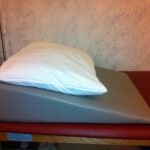
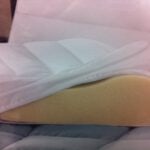
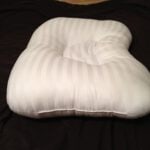
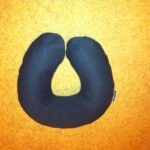
If you missed Part 1 of this series, you can go back and read it here.
Read “Health & Exercise Forum” in the Scranton Times-Tribune Every Monday. This article is not intended as a substitute for medical treatment. If you have questions related to your medical condition, please contact your family physician. For further inquires related to this topic email: drpmackarey@msn.com.
Paul J. Mackarey PT, DHSc, OCS is a Doctor in Health Sciences specializing in orthopaedic and sports physical therapy. Dr. Mackarey is in private practice in downtown Scranton, PA and is an associate professor of clinical medicine at The Commonwealth Medical College.
Choosing a Cervical Pillow: Part 1 of 2
Are you one of the millions of people who suffer from chronic neck (cervical) pain and headaches? Did you ever wonder if your pillow is right for you? Studies on cervical or neck pillows have shown that those with chronic neck pain showed a significant reduction in neck pain and headaches when using a cervical pillow for four weeks when compared to the control group. However, there are many types of cervical pillows, and there is no single best choice for everyone. This column will give you an overview on the different types of cervical pillows, and hopefully this information will help guide you to the right pillow for your individual size and shape.
Introduction
People who suffer from back and neck pain are always in search of something to lessen their pain and stiffness. Those with conditions such as arthritis, osteoporosis, or other bone and joint problems have great difficulty finding a comfortable position to sleep, and they often wake up with pain, stiffness and headaches in the morning. For these people, a cervical pillow may offer great comfort, because it is specifically designed to alleviate these symptoms.
Traditional pillows have drawbacks mainly because they are designed as a one-size-fits-all rectangle with greater emphasis placed on form than on function. Very often, a small-framed woman (5 feet tall, weighing 100 pounds) may find herself using the same style of pillow as a large male with the build of a football player (6 feet 5 inches weighing 350 pounds). It is obvious these two individuals have very different head, neck and shoulder sizes, and therefore they require two very different types of pillows.
Cervical or neck pillows come in a variety of shapes and sizes, and they are designed to provide support specifically to the cervical area of the spine. In theory, a cervical pillow attempts to align and support the natural shape of the neck while one is sleeping. Those suffering from neck or shoulder pain, degenerative cervical disc disease, or conditions such as arthritis or osteoporosis may find these pillows valuable.
Types of Pillows
Cervical pillows are made by many different manufactures and come in a variety of sizes, designs and shapes. Manufacturers claim that these pillows offer the benefits of increased circulation, improved breathing, reduced snoring and lessened neck and shoulder muscle pain and stiffness. One manufacturer, Tempur-PedicR (www.tempurpedic.com), boasts special memory foam technology that, they claim, offers unique and individualized support to accommodate the weight of every body type.
When selecting a cervical pillow, it is important to remember several things. First, know that most manufacturer claims are not subject to validation by independent research studies. Second, remember that, regardless of what a manufacturer states, no single pillow is right for every person. Third, realize that the most expensive option is not necessarily the best. Although many people consider Tempur-PedicR to be the leader in the field, they are costly, ranging from $89 to $349. If you shop around, you can find several companies that offer alternatives—both of similar and alternative designs—that may actually be a better fit for your neck and your budget. Other companies producing cervical pillows include CoreR, which offers support around the periphery with a special or dip (or “core”) in the middle in which your head rests (www.coreproducts.com), TheraGearR, which offers a version of the orthopedic “bump” (www.painreliever.com), and BodyLineR, which offers a model with both a large and a small orthopedic “bump” in one pillow (www.bodyline.com). These pillows are economical, ranging in price from $30 to $60.
Regardless of what brand of pillow you select, it is likely to fall into one of the following three categories:
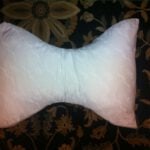
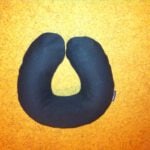
Conclusion
It is important to remember that there is no one pillow fit for everyone—each person’s needs are unique. You should select your pillow type based on your body type, head size, shoulder width, favorite sleeping position, and medical conditions, such as neck or lower back pain, osteoarthritis, headaches, etc. When choosing a pillow, try to sample a cheaper version of the product when possible. For example, if you think you might like the “orthopedic bump” style from Tempur-PedicR that costs $200, consider trying the $50-60 version from TherGearR first. Better yet, if you have a friend or relative with a similar body type and problem who successfully uses a cervical pillow, try borrowing it! Finding the right pillow is a process of trial-and-error, so not get frustrated or give up. If you succeed in finding the right pillow for you, the result will be worth the search.
Read “Health & Exercise Forum” in the Scranton Times-Tribune every Monday. Next Week, Part II of II: Tips to Select a Good Cervical Pillow For You. This article is not intended as a substitute for medical treatment. If you have questions related to your medical condition, please contact your family physician. For further inquires related to this topic email: drpmackarey@msn.com.
Paul J. Mackarey PT, DHSc, OCS is a Doctor in Health Sciences specializing in orthopaedic and sports physical therapy. Dr. Mackarey is in private practice in downtown Scranton, PA and is an associate professor of clinical medicine at The Commonwealth Medical College.
Guest Columnist: Christopher Cali
Last week, in response to the popular “ALS Challenge,” “Health & Exercise Forum” featured the four most common neurodegenerative diseases; amyotrophic lateral sclerosis (ALS), Alzheimer’s,(the most common form of dementia), Parkinson's and Huntington’s in an effort to raise the level of awareness and educate the public. This week in Part II, I invited Christopher Cali, who is currently pursuing his PhD in Genetics at the University of Pennsylvania, to discuss updates on these diseases as it relates to his research.
Neurodegenerative diseases, including; ALS, Alzheimer’s disease, (and various other forms of dementia), Parkinson’s and Huntington’s can take a devastating toll on patients and families. This broad category of diseases is characterized by the destruction of neurons that are important for memory and muscle function. It’s estimated that up to 50 million Americans currently suffer from a neurodegenerative disease, and this number is expected to grow as the Baby Boomer generation ages. The financial burden on society is huge as well. Dementia care alone is estimated to cost $250 billion dollars each year in the US. With the enormous mental, physical and societal burden of these diseases, scientists have made understanding neurodegenerative diseases a major priority.
As a graduate student at the University of Pennsylvania, I am working to understand the genetic basis of neurodegenerative diseases. My current work focuses on ALS (Amyotrophic lateral sclerosis, also called Lou Gehrig's disease) and a type of dementia called Frontal Temporal Dementia (FTD). ALS is a truly devastating disease that affects at least 30,000 Americans. It normally strikes otherwise healthy individuals between the ages of 30-70. The first symptoms are usually mild and arise as muscle weakness and/or stiffness. Symptoms become noticeable after frequent stumbles and difficulty lifting normal household objects. Slurred speech is also a common early symptom. The pace of this disease is relentless. Neurons that control every muscle in the patient’s body deteriorate over a few years, leaving patients unable to move anything except their eyes. Most patients live only 3-5 years after diagnosis. However, some patients do live for decades after diagnosis.
There is currently no effective treatment for this terrible disease. The medication riluzole is the only approved ALS medication, and it only extends life by an average of 3 months. As for prevention, some studies have suggested that diet and exercise can delay the onset of ALS symptoms or lessen the severity of symptoms in ALS patients. For instance, one study from the Harvard School of Public Health found that people with increased dietary intake of carotenoids (found in tomatoes, carrots and squash) had a slightly lower risk of developing ALS. It’s still debated whether regular exercise can reduce the risk of developing ALS. Some studies show that exercise is not a risk factor for developing ALS. Interestingly, a few studies report that ALS is more common among athletes and those with physically demanding jobs. While the role of exercise in prevention of ALS is unclear, it is certain that regular exercise and physical therapy after diagnosis can delay the decline of ALS patients.
Frontal temporal dementia is the second most common form of dementia behind Alzheimer’s. Like ALS, it typically occurs in middle aged people. It is characterized by drastic changes in behavior, inability to recognize objects or people, loss of organizational and planning skills and various speech problems. There is also no cure for FTD. So how are FTD and ALS connected?
In 2011, two research groups published the finding that a mutation in a single gene was responsible for both ALS and FTD in a subset of patients. This finding led to a wave of new research on these two diseases. Interestingly, this same mutation was found in small numbers of people with other neurodegenerative diseases, including Alzheimer’s. Scientists are now realizing that these diseases often overlap with each other, and it’s possible for one patient to have symptoms from several different neurodegenerative diseases. The recently discovered mutation lies in a gene that hasn’t been well studied at all. In fact, this gene is so new that it does not even have a name (it’s referred to as C9orf72).
Scientists are now beginning to understand how this newly identified mutation causes the disease and have already designed drugs that turn off the mutant gene. These drugs, called Antisense Oligonucleotides, are made up of short pieces of DNA that are injected into the patient and block the mutated gene. Since most ALS patients with the C9orf72 mutation have one mutated gene and one normal gene, shutting off the mutated gene should be enough to halt the disease. These drugs are currently being tested in mice with promising results.
Another promising piece of new technology that has been used to study ALS and FTD are cells called Induced Pluripotent Stem cells. Induced pluripotent stem cells are derived from adult skin cells and can be changed into any cell type in the body. For instance, the skin cell can be changed to a stem cell, and then to a nerve cell. This technology was developed by Shinya Yamanaka, who was awarded the 2012 Nobel Prize. The new procedure side steps the ethical issue of destroying a human embryo to obtain stem cells. It also allows scientists to grow personalized cells from patients that they can study in a dish and test new medications on. One day, scientists hope to be able to correct any genetic mutations in a patient’s cells and then inject the stem cells back into the patient’s spinal cord. In the right environment, they will change back into neurons and replace the diseased neurons.
There is still much to be done to fully understand ALS and FTD. The mutation in C9orf72 accounts for only a small percentage of all ALS patients. This means that there are numerous other genes that contribute to ALS that have not yet been identified. With today’s technology, however, it’s possible to go from an unnamed gene to a viable treatment in only three years. This should give those currently affected by ALS, FTD or any other neurodegenerative disease immense hope, as a cure may just be right around the corner.
Visit your doctor regularly and listen to your body.
 Christopher Cali, received his BS in biology from Villanova University and is currently pursuing a PhD in Genetics from the University of Pennsylvania. To find out more about his work or donate directly to ALS research in his lab, visit: www.med.upen.edu/tnr
Chris, has strong local roots as a 2009 graduate of Scranton Prep and is the son of Dr. Gregory and Celeste Cali of Dalton.
NEXT MONDAY – Read Dr. Paul J. Mackarey “Health & Exercise Forum” in the Scranton Times-Tribune.
This article is not intended as a substitute for medical treatment. If you have questions related to your medical condition, please contact your family physician. For further inquires related to this topic email: drpmackarey@msn.com
Paul J. Mackarey PT, DHSc, OCS is a Doctor in Health Sciences specializing in orthopaedic and sports physical therapy. Dr. Mackarey is in private practice and is an associate professor of clinical medicine at The Commonwealth Medical College.
ALS & DEMENTIA UPDATES: Part 1 of 2
By now, most of you are familiar with or have participated in the “ALS Ice Bucket Challenge.” If not, I encourage you to do so. I met my challenge a few weeks ago and dedicated it to my cousin, Joanne Mackarey Coyne. Joanne, with the tremendous love, care, and support of her dedicated family and friends, has not allowed ALS to daunt her strong spirit and beautiful smile. The ALS challenge has truly “gone viral” and has not only raised awareness about the disease, but as of August 27, 2014, the ALS Association has reported 94.3 million dollars (compared to 2.1 million last year) in contributions for research, support and education for this devastating neurodegenerative disease.
What is a neurodegenerative disease? Unfortunately, many of us have been affected by a friend or family member with a devastating disease that takes a tremendous physical, emotional and financial toll on everyone involved. Today Part I on ALS & Dementia in “Health & Exercise Forum” discusses the four most common neurodegenerative diseases, Alzheimer’s,(the most common form of dementia), Parkinson’s, Huntington’s, and amyotrophic lateral sclerosis (ALS) in an effort to raise the level of awareness and educate the public. Next week in Part II, Christopher Cali, a graduate student at the University of Pennsylvania, where he is pursuing a PhD in Genetics, will discuss updates on these diseases as it relates to his research.
Neurodegenerative diseases, including; ALS, Alzheimer’s disease, (the most common form of dementia), Parkinson’s and Huntington’s can take a devastating toll on patients and families. This broad category of diseases is characterized by the destruction of neurons that are important for memory and muscle function. It’s estimated that up to 50 million Americans currently suffer from a neurodegenerative disease, and this number is expected to grow as the Baby Boomer generation ages. The financial burden on society is huge as well. Dementia care alone is estimated to cost $250 billion dollars each year in the US. With the enormous mental, physical and societal burden of these diseases, scientists have made understanding neurodegenerative diseases a major priority.
Amyotrophic Lateral Sclerosis (ALS), also known as “Lou Gehrig’s Disease” is a progressive neurodegenerative disease that affects nerve cells in the brain and spinal cord, according to the ALS Association. As the disease progresses and the motor neurons are destroyed, the ability of the brain to initiate voluntary muscle movement is lost and paralysis remains. Early symptoms include muscle weakness in the arms and legs, difficulty swallowing and speaking. While there is not cure presently, riluzole, an FDA approved drug, has been modestly successful in slowing the progression of ALS. For more information visit: www.alsa.org
According to the Alzheimer’s Association, dementia is a general term used to describe a decline in mental function which presents significant difficulty in intellectual functions which affects everyday activities. Memory loss is the hallmark sign of this neurodegenerative disease. Alzheimer’s disease is one of the most common forms of dementia as it accounts for approximately 60-80 percent of all cases. Alzheimer’s is NOT a normal part of aging as approximately 5 percent of patients with the disease have early onset in their 40’s or 50’s. While dementia typically is a gradual process, Alzheimer’s is a progressive disease that often leads to the ability to carry on a conversation or provide self-care. While people with this disease can survive from four to twenty years, after the onset of noticeable symptoms, the average survival is eight years, depending on age and other health problems. For more information visit: www.alz.org
Parkinson’s Disease is neurodegenerative brain disorder that occurs when neurons in the brain fail to produce enough dopamine, a chemical that relays messages from one part of the brain to another, to control movements of the body. A hallmark sign of this disease is the loss of smooth coordinated movement. The disease progresses slowly in most people as most live more than twenty years following diagnosis. While there is no actual cure for Parkinson’s, treatment is available to help control symptoms and improve the quality of life. For more information visit: www.parkinson.org
According to the Huntington’s Disease Society of America, Huntington’s disease is a neurodegenerative genetic disease the affects muscle coordination and leads to cognitive and behavioral symptoms. The hallmark sign of this disease is abnormal involuntary thrashing movements called chorea. It affects both men and women and symptoms using begin between 35 and 44 years of age. Early symptoms include mood and cognition changes that are followed by uncoordinated and unsteady walking. As the disease progresses slowly over twenty years full-time care is required in the later stages. While there is no cure available drugs are available to help control symptoms and improve the quality of life. For more information visit: www.hdsa.org
Visit your doctor regularly and listen to your body.
Contributor: Christopher Cali, received his BS in biology from Villanova University and is currently pursuing a PhD in Genetics from the University of Pennsylvania. To find out more about his work or donate directly to ALS research in his lab, visit: www.med.upen.edu/tnr
NEXT MONDAY – Read Dr. Paul J. Mackarey “Health & Exercise Forum” in the Scranton Times-Tribune: Part 2 on “ALS UPDATE” by Christopher Cali.
This article is not intended as a substitute for medical treatment. If you have questions related to your medical condition, please contact your family physician. For further inquires related to this topic email: drpmackarey@msn.com
Paul J. Mackarey PT, DHSc, OCS is a Doctor in Health Sciences specializing in orthopaedic and sports physical therapy. Dr. Mackarey is in private practice and is an associate professor of clinical medicine at The Commonwealth Medical College.
Since 1894 Labor Day has been designated as the national holiday that pays tribute to the contributions and achievements of American workers. Research supports the notion that healthier employees are happier and more productive. When employers encourage healthy behavior and safety at work, they benefit in many ways. For example, in addition to improving job satisfaction and productivity, healthy employees save money by using less sick time, worker’s compensation benefits and health benefits. For example, according to the Centers for Disease Control and Prevention, approximately 75 percent of employers” health care costs are related to chronic medical problems such as obesity, diabetes, high blood pressure, and high cholesterol. Deconditioned, overweight employees are more likely to suffer from these preventable conditions and are at greater risk for injury. Employers, please consider using this holiday as an opportunity to start a health promotion program at your workplace…have a health fair, offer healthy snacks, encourage walking and exercising at lunch, or offer fitness club stipends.
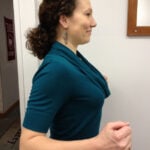
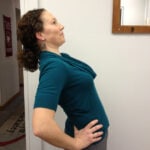
Lower back pain, one of the most costly illnesses to employers, is one example of a problem which can be prevented with a good health and safety program. It is widely accepted in the medical community that the best treatment for lower back pain (LBP) is prevention. Keeping fit, (flexible and strong), practicing good posture, and using proper body mechanics are essential in the prevention of LBP. At our clinic, significant time and effort is spent emphasizing the importance of these concepts to our patients and employees.
Kane Trucking is a perfect example of the merit and value of LBP safety and prevention. I have served as a rehab consultant for Kane Trucking for many years. During this time, Kane has noticed a significant reduction in LBP injuries through an onsite safety program which promotes education, wellness, body mechanics, lifting techniques, postural and stretching exercises and ergonomics.


Visit your doctor regularly and listen to your body.
NEXT MONDAY – Read Dr. Paul J. Mackarey “Health & Exercise Forum” in the Scranton Times-Tribune.
This article is not intended as a substitute for medical treatment. If you have questions related to your medical condition, please contact your family physician. For further inquires related to this topic email: drpmackarey@msn.com
Paul J. Mackarey PT, DHSc, OCS is a Doctor in Health Sciences specializing in orthopaedic and sports physical therapy. Dr. Mackarey is in private practice and is an associate professor of clinical medicine at The Commonwealth Medical College.
MUSCLE CRAMPS!
PIAA fall sport teams began their first week of official practice a few weeks ago – including double sessions for high school football. While a warm August may be a wonderful time of year to swim and kayak, it may not offer the best temperature and humidity for athletes playing football or soccer. One common problem these athletes suffer from is severe muscle cramping. This year was not exception as many players limped off the practice field in pain and many concerned players, parents and grandparents repeatedly ask me about the problem. What exactly is a muscle cramp? Why does it happen? How can it be prevented?
A muscle cramp is defined as an involuntary contraction or spasm of a muscle that will not relax. The tight muscle spasm is painful and debilitating. It can involve all or part of the muscle and groups of muscles. The most common muscles affected by muscle cramps are: gastrocnemius (back of lower leg/calf), hamstring (back of thigh), and quadriceps (front of thigh). Cramps can also occur in the abdomen, rib cage, feet, hands, and arms. They can last a few seconds or 15+ minutes. They can occur once or multiple times. It can cause a very tight spasm or small little twitches.
Although the exact cause may be unknown at this time, there are several theories why muscle cramps occur. According to the American Academy of Orthopaedic Surgeons, when a muscle is flexible and conditioned, the muscle fibers are capable of changing length rapidly and repeatedly without stress on the tissue. Also, overall poor conditioning or overexertion of a specific muscle leads to poor oxygen/carbon dioxide exchange and build up of lactic acid and cause a muscle spasm. Also, this process can alter muscle spindle reflex activity and stimulate the spinal cord to send a message to the muscle to contract. If uncontrolled this leads to cramps and spasm.
Muscle cramps are more common in hot weather due to loss of body fluids, salts, minerals, potassium, magnesium and calcium. This leads to an electrolyte imbalance which can cause a muscle to spasm.
First Aid
Prevention
Read Dr. Mackarey’s Health & Exercise Forum – every Monday in the Scranton Times-Tribune.
This article is not intended as a substitute for medical treatment. If you have questions related to your medical condition, please contact your family physician. For further inquires related to this topic email: drpmackarey@msn.com
Paul J. Mackarey PT, DHSc, OCS is a Doctor in Health Sciences specializing in orthopaedic and sports physical therapy. Dr. Mackarey is in private practice and is an associate professor of clinical medicine at TCMC.