Congratulations to the close to 3,000 runners who finished the 20th Annual Steamtown Marathon yesterday. Most, if not all of you are waking up this morning with a little less jump in your step than you had yesterday.
As active people by nature, many of you will resist the logic of rest, despite the pain and stiffness in your muscles and joints. Therefore, I would like to offer some words of wisdom, based on science, to encourage you to adequately rest and allow your body to recover.
With adequate rest and recovery, an elite runner can quickly regain full form in 3-4 weeks, while an average runner may require 4-6 weeks. Meb Keflezighi, an elite American runner and winner of the 2014 Boston Marathon, is an excellent example of the merits of rest and recovery. However, he discovered it by accident…following the 2012 New York City Marathon, Meb developed a foot infection which required three weeks rest. With the Olympic Trials just 70 days away, Meb quickly regained his pre-injury fitness level to win the 2012 US Olympic Marathon Trials and join the US Olympic Team in London. It may be that his injury was fortuitous and allowed him adequate recovery time, (that he might not have otherwise allowed), preparing him for intensive training leading up to the trials.
The Effects of Running 26.2 Miles on the Body: (RunNow.com - Jim Peskett)
Muscle-Skeletal System:
One of the most obvious effects of running a marathon is significant muscle and joint pain and stiffness. It will set in after you sit for a while and attempt to get up and move around. For most, it will be more pronounced the day after the marathon, as you get out of bed and limp to the bathroom. Studies show that the leg muscles, (especially the calf muscles) display significant inflammation and necrosis (dead tissue) in the fibers of the muscle. In other words, the trauma to the muscles is so severe that tissue damage causes muscle cells to die. Consequently, studies found that muscle strength, power and endurance is compromised and required significant time to recover… sometimes as long as 4-6 weeks!
Additionally, many runners report severe bone and joint pain following the race. Some studies report findings of microfractures or bone bruising from the repeated and prolonged pounding of the marathon. It is purported that the stress on the joints may be related to: weight and body type, running shoes, running style and mechanics. While not dangerous, again, it is important to respect the stress placed on the body and allow adequate healing…LISTEN TO YOUR BODY!
Cellular Damage:
Creatine kinase is an enzyme found in the brain, skeletal muscles and heart. It is found in elevated levels in the presence of cellular damage to these tissues, for example, following a heart attack. Similarly, significantly elevated creatine kinase levels are found in the blood of runners up to 4 days post marathon, demonstrating extensive tissue damage at the cellular level. It is important to note, that these enzyme markers are present, even if a runner does not experience muscle soreness. So, adequate rest for healing and recovery is required, regardless of soreness.
Immune System:
It is not a coincidence that the runners are more likely to contract colds and flu after intensive training or running 26.2 miles. The immune system is severely compromised after a marathon and without adequate recovery; a runner can become ill and ultimately lose more training time or will underperform.
3 MYTHS THAT PREVENT REST AND RECOVERY IN RUNNERS:
This article is not intended as a substitute for medical treatment. If you have questions related to your medical condition, please contact your family physician. For further inquires related to this topic email: drpmackarey@msn.com
Paul J. Mackarey PT, DHSc, OCS is a Doctor in Health Sciences specializing in orthopaedic and sports physical therapy. Dr. Mackarey is in private practice and is an associate professor of clinical medicine at The Commonwealth Medical College.
Part 3 of 3: Health Tips for College Students
This is the third of three columns dedicated to healthcare for college students Please find the “10 Tips to Keep Yourself Healthy in College” helpful. However, no discussion regarding the health and wellness of college students would be complete and thorough without addressing what health care and university experts consider the two most dangerous behaviors on college campuses across the nation: binge drinking and unprotected sexual activity. While it is not my intent to offend the religious and moral values of any reader, it is my purpose to provoke direct and meaningful conversation between parents, religious leaders and students. To prevent serious health problems in college, parents must share their experience and discuss their values regarding sexual activity and alcohol consumption with children before they leave home to live independently in college. If you are unable to have a direct conversation about these issues, consider doing what several readers have done; mail a copy to your child!
10 Tips to Keep Yourself Healthy in College
(American Academy of Pediatrics)
SOURCES: American Academy of Pediatrics
Visit your doctor regularly and listen to your body. Keep moving, eat healthy foods, and exercise regularly
NEXT MONDAY – Read Dr. Paul J. Mackarey “Health & Exercise Forum” in the Scranton Times-Tribune.
Find Part 1 of this series here.
Find Part 2 of this series here.
This article is not intended as a substitute for medical treatment. If you have questions related to your medical condition, please contact your family physician. For further inquires related to this topic email: drpmackarey@msn.com
Paul J. Mackarey PT, DHSc, OCS is a Doctor in Health Sciences specializing in orthopaedic and sports physical therapy. Dr. Mackarey is in private practice and is an associate professor of clinical medicine at The Commonwealth Medical College.
Part 2 of 3
This is the second of three columns dedicated to healthcare for college students. As part of the preparation, think about a first aid kit, health care history, and insurance file. Once you finish with these preparations, plan to take dance, art history and conversational Italian classes to occupy your time without children, especially for those who will be empty-nesters. Life goes on!
Remember, in living a large community and sharing close quarters makes the development and spread of disease a natural progression. College life can be very unhealthy for many reasons: lack of sleep, poor eating habits, poor hygiene and stress.
(American Academy of Pediatrics)
Last week we discussed common illnesses among college students, how to manage and when to seek professional help. Below you will find a list of symptoms that should never be ignored. The college health services department should be contacted if you have any of the following symptoms:
(American Academy of Pediatrics)
Get a small/medium plastic storage box and use it to keep all of the following health care items together in one place.
SOURCES: American Academy of Pediatrics
Visit your doctor regularly and listen to your body.
Keep moving, eat healthy foods, and exercise regularly
NEXT MONDAY – Read Dr. Paul J. Mackarey “Health & Exercise Forum!” Next Week: “Health Tips for College Students – Part 3”
If you missed it, read last week's article, Part 1 in this series.
This article is not intended as a substitute for medical treatment. If you have questions related to your medical condition, please contact your family physician. For further inquires related to this topic email: drpmackarey@msn.com
Paul J. Mackarey PT, DHSc, OCS is a Doctor in Health Sciences specializing in orthopaedic and sports physical therapy. Dr. Mackarey is in private practice and is an associate professor of clinical medicine at The Commonwealth Medical College.
Health Tips for College StudentsPART 1 of 3
Labor Day has passed and suddenly it is the middle of September. Students have returned to school and many college freshmen are still adjusting to their new environment away from home. Over the past month I have received several requests for a copy of my three part series of columns on health tips for college students. In view of this, I thought other parents preparing to send a child off to college this fall might also find this information valuable.
To fully appreciate the importance of this topic, one must keep in mind that living in a large community and sharing close quarters is the first ingredient in the development and spread of disease. College life can be very unhealthy for many reasons. Lack of sleep, poor eating habits and stress add spice to the recipe for disease. Lastly, poor hygiene added to the equation, will really get the Petri dish cooking up some nasty germs.
Common Health Problems for College Students (American Academy of Pediatrics)
SOURCES: American Academy of Pediatrics.
Visit your doctor regularly and listen to your body. Keep moving, eat healthy foods, and exercise regularly.
NEXT MONDAY – Read Dr. Paul J. Mackarey “Health & Exercise Forum” in the Scranton Times-Tribune. Next Week: “Health Tips for College Students – Part 2”
This article is not intended as a substitute for medical treatment. If you have questions related to your medical condition, please contact your family physician. For further inquires related to this topic email: drpmackarey@msn.com
Paul J. Mackarey PT, DHSc, OCS is a Doctor in Health Sciences specializing in orthopaedic and sports physical therapy. Dr. Mackarey is in private practice and is an associate professor of clinical medicine at The Commonwealth Medical College.
 New Protective Equipment Available!
Fall is not only the time of year for football, but it is soccer season as well. Moreover, concussions are not only associated with football, but with soccer as well. However, new protective equipment may offer a solution.
Concussions occur when a person’s brain is violently rocked back and forth inside of the skull because of a blow to the head or neck. Severe concussion, although rare, can lead to brain swelling, blood vessel damage, and even death. According to the University of Pittsburgh Medical Center, approximately ten percent of all athletes involved in contact sports, such as football, hockey, and soccer, suffer a concussion each year. In soccer, in a career of 300 games, a soccer player sustains an estimated 2000 blows. Even in contact sports, some concussions can be prevented by teaching proper playing and tackling techniques and by wearing proper headgear. Symptoms of concussion are not always definite and knowing when it is safe for an athlete to return to play is not always clear. Severe concussions display obvious symptoms and removal from participation is obvious. However, the athlete with a mild concussion can display symptoms that are less clear. There are serious repercussions of early return following even a mild concussion due to the long term effects of multiple mild concussions. Therefore, there is no substitute for prevention.
As you may have read, the National Football League (NFL), the National Hockey League (NHL), and the National Collegiate Athletic Association (NCAA) are involved in litigation regarding concussions. Soccer has now joined the group.
In August 2014, a group of parents from California filed a class-action lawsuit against the Federation Internationale de Football Association (FIFA), soccer’s international governing body, for its improper management of concussions in the sport. The suit claims that the FIFA failed to properly prevent, monitor and treat head injuries in soccer. The plaintiffs do not seek financial reward, but rather request changes be implemented in the sport to protect players from head injuries beginning at a young age. Ultimately, the lawsuit seeks to limit the number times children under 17 years old would be allowed to “head” the ball, similar to enforcing a “pitch count” for baseball pitchers in little league baseball. “Heading” occurs when a soccer player uses their head to strike a soccer ball in the air and some healthcare professionals feel that accumulative “heading” in soccer is the equivalent to many years of “head blows” in boxing. Additionally, the mandatory use of protective equipment, similar to the required batting helmet in baseball, has been discussed. In fact, this fall, schools in Princeton, New Jersey required students playing soccer in grades 6 to 12, to wear protective headgear for both practice and competition.
As with all new equipment, protective headgear and headbands in soccer is not without its controversy. Some feel that protecting the head with equipment gives the player a feeling of invulnerability and promotes excessive use of the head in soccer. Others feel that protective gear leads to more aggressive play by participants. However, when skeptical healthcare professionals were asked about use of protective gear for their children, all stated that they would not opt out of a mandatory protective headgear program, similar to the one used in Princeton.
A recent study published in the Journal of Athletic Training, entitled, “The Efficacy of Soccer Headgear,” found that under all conditions tested in the study, protective headgear/ headbands successfully decreased the force of impact to the head from a soccer ball. However, it was also concluded that, while headgear may be of value, it should not be a substitute for proper technique or adequate strengthening.
There are two main types of protective headgear for soccer players. One is a “headband” type product which has an extra padding in the front of the forehead area. The other is more of a light and open “helmet” style with protection in the front and on top of the head.
Visit your doctor regularly and listen to your body.
NEXT MONDAY – Read Dr. Paul J. Mackarey "Health & Exercise Forum" in the Scranton Times-Tribune.
This article is not intended as a substitute for medical treatment. If you have questions related to your medical condition, please contact your family physician. For further inquires related to this topic email: drpmackarey@msn.com
Paul J. Mackarey PT, DHSc, OCS is a Doctor in Health Sciences specializing in orthopaedic and sports physical therapy. Dr. Mackarey is in private practice and is an associate professor of clinical medicine at The Commonwealth Medical College.
Happy Labor Day! Prevent Back Pain!
Lower back pain (LBP) is one of the most common problems people experience, not only in the workplace, but in daily life as well. LBP is not limited to the manual laborer but is also prevalent in those working in sedentary positions. It is estimated that 80-90% of adults in the USA will experience lower back pain at one or more times in their lives. The spine consists of 24 moving vertebrae, a fused sacrum and tailbone, and shock absorbing discs between each moving segment. The spine is designed to provide support and protect the spinal cord while remaining flexible for movement and function. Spinal nerves exit the spinal cord at each segment to deliver messages from your brain to your extremities. Pressure on one of these nerves can cause pain, numbness, tingling, or weakness.
LBP can occur from many causes. Some of these include: muscle strain, disc degeneration, arthritis, scoliosis or curvature of the spine, instability from trauma or degeneration, acute trauma from a motor vehicle accident account or a fall. The Occupational Safety and Health (OSHA) and the United States Department of Labor list the following risk factors for LBP:
Good posture is critical for a healthy back. When sitting, standing or walking maintain a slight arch in your lower back, keep shoulders back, and head over your shoulders. In sitting, use a towel roll or small pillow in the small of the back.
Those working at a desk or workstation spend much of the day with their spine bent or flexed forward for extended periods of time. Postural exercises are designed to stretch your back in the opposite direction of this forward flexed position. Examples include:
Posture Exercises:
Perform slowly, hold for 3-5 seconds and repeat 6 times each 6 times per day
Ergonomics (Photo 4):
Sitting - When sitting, use an ergonomic work station and chair with a lumbar support and adjustable heights. Get close to your desk, keyboard and monitor.




Models:
Photos 1-3: Sarah Singer
Photo 4: Vanessa Serena
NEXT MONDAY – Read Dr. Paul J. Mackarey “Health & Exercise Forum” in the Scranton Times-Tribune
Paul J. Mackarey, PT, DHSc, OCS is doctor of health science specializing in orthopedic and sports physical therapy. He practices in downtown Scranton and is an associate professor of clinical medicine at The Commonwealth Medical College.
This article is not intended as a substitute for medical treatment. If you have questions related to your medical condition, please contact your family physician. For further inquires related to this topic email: drpmackarey@msn.com

Soroosh T Hashemi
Guest Author: Soroosh T Hashemi
Soroosh T Hashemi is a 2015 graduate from The Commonwealth Medical College (TCMC).He was raised in Levittown,, PA and earned a B.S. in Biological from Penn State University. He matched in Internal Medicine at Penn State Hershey Medical Center.
This article appeared in “in-training,”a website for medical students, run by and written entirely by medical students. Proudly, this article, in which a medical student opens up his heart to divulge his innermost fears, was written by Soroosh T Hashemi, a recent graduate from TCMC, in an attempt to raise the level of consciousness for medical students and patients alike, that we are all vulnerable…”to err is human; to forgive, divine.”(Alexander Pope) I thought it might give patients insight and heighten sensitivity about medical students and young medical practicioners…they are bright, well –intended, and altruistic. But they are also inexperienced and vulunerable…just like their patients!
Kyle died early on a Sunday morning. His last meal was vanilla pudding, fed to him lovingly by his grandmother Shirley, while reruns of “Inspector Gadget” played in the background. When Kyle was born 25 years earlier, the family had been told he would not live more than a few weeks into infancy. But Kyle surprised everyone by surviving a quarter of a century with debilitating cerebral palsy. What surprised me most about Kyle was that he was always smiling, even though he was unable to communicate or control his body, and even though a majority of his life was spent on his grandparent’s living room floor.
I visited Kyle’s grandparents a month after the memorial service. Their living room, once a collage of toys and DVDs surrounding the living hearth that was Kyle, was now quiet and organized. I could hardly recognize the space without him. Kyle’s grandfather Bryce had recently been diagnosed with glioblastoma multiforme, but the family still smiled. Having just begun his course of gamma knife treatments and chemotherapy, Bryce had opted to keep the hairstyle his neurosurgeon had left him. Calling it his “Mohawk,” he grew a beard, began sporting punk rock tee-shirts and took to wearing thick black plastic framed glasses. Shirley and Bryce were adapting to yet another medical hardship with the style and grace they seemed to exude. They smiled together, not worried about tomorrow or depressed about today, but rejoicing in the love that made their family so indestructible.
Standing on the front porch during my last visit, I listened to Shirley as she talked about the recurrent pneumonias that finally took Kyle and the process of dealing with Bryce’s newly diagnosed brain cancer. I watched her as the sun set that afternoon, the light catching a newly visible grey streak she let grow in her hair to match Bryce’s punk rock style. It was obvious that she had become the keystone that held her family together; yet she seemed completely oblivious to the weight that she bore.
For the first time on that porch, I was able to sense her sadness as she spoke of the physicians who had cared for Kyle at the end of his life. She spoke of a surgery to repair Kyle’s hiatal hernia, she spoke of his inability to recover, and of the myriad of health care professionals who would visit periodically to suggest treatments before disappearing. Shirley recounted her feelings of helplessness as Kyle would cry, lapsing in and out of consciousness, and her frustration with the lack of face time doctors gave her. Grievous, she remembered feeling uninvolved and uninformed while decisions were made for Kyle during his final decline in health.
With the crisp smell of autumn in the air, and a languorous sunset catching the trees around us, Shirley asked, “Will you tell your classmates to remember to talk to their patients?”
“I will,” I responded.
This article is not intended as a substitute for medical treatment. If you have questions related to your medical condition, please contact your family physician. For further inquires related to this topic email: drpmackarey@msn.com
Paul J. Mackarey PT, DHSc, OCS is a Doctor in Health Sciences specializing in orthopaedic and sports physical therapy. Dr. Mackarey is in private practice and is an associate professor of clinical medicine at The Commonwealth Medical College.
Read Dr. Mackarey’s Health & Exercise Forum – Every Monday in the Scranton Times-Tribune.
SIX PACK ABS – WITHOUT BACK PAIN! The Best Exercises to Strengthen the Abdominal Muscles Without Causing Back Pain
Part 2 of 2
It may not be possible to pick up a health and fitness magazine without a plethora of articles on how to gain “six-pack abs!” However, for most people, before you begin your quest to find the “abdominal holy grail,” you need to be aware of the many fallacies related to abdominal exercises and how to get a flat stomach.
First, you cannot reduce fat in a specific part of the body over another. If you have belly fat, you must lose overall body weight in order to allow the underlying muscles to become more visible. If you lose 10 to 15 pounds, it is lost in all parts of the body that have excessive fat, not one area more than another. Second, performing 100 sit up exercises will not guarantee washboard abs. More often than not, those able to perform 100 sit ups are already in excellent physical condition. Furthermore, people often use poor technique and substitute muscles other than the abdominals such as the hip flexors, when performing 100 sit-ups. Most importantly, performing too many traditional “sit-up” exercises may actually be lead to lower back pain.
Last week we discussed Level I Abdominal Exercises For Beginners and Level II Abdominal Exercises for the Moderately Fit. This week’s column provides abdominal exercises for Level III- Excellent Physical Condition (high fitness level).
LEVEL THREE – 6 Abd Exercises for a High Fitness Level

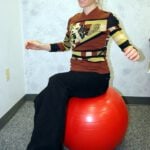
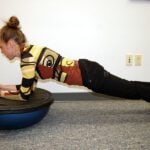
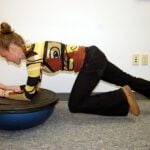
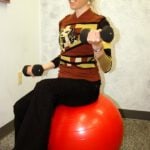
Photos: Jen Hnatko Model: Samantha Snead
NEXT MONDAY – Read Dr. Paul J. Mackarey “Health & Exercise Forum” in the Scranton Times-Tribune.
This article is not intended as a substitute for medical treatment. If you have questions related to your medical condition, please contact your family physician. For further inquires related to this topic email: drpmackarey@msn.com
Paul J. Mackarey PT, DHSc, OCS is a Doctor in Health Sciences specializing in orthopaedic and sports physical therapy. Dr. Mackarey is in private practice and is an associate professor of clinical medicine at The Commonwealth Medial College.
The Best Exercises to Strengthen the Abdominal Muscles Without Causing Back Pain
Part 1 of 2
It may not be possible to pick up a health and fitness magazine without a plethora of articles on how to gain “six-pack abs!” However, for most people, before you begin your quest to find the “abdominal holy grail,” you need to be aware of the many fallacies related to abdominal exercises and how to get a flat stomach.
First, you cannot reduce fat in a specific part of the body over another. If you have belly fat, you must lose overall body weight in order to allow the underlying muscles to become more visible. If you lose 10 to 15 pounds, it is lost in all parts of the body that have excessive fat, not one area more than another. Second, performing 100 sit up exercises will not guarantee washboard abs. More often than not, those able to perform 100 sit ups are already in excellent physical condition. Furthermore, people often use poor technique and substitute muscles other than the abdominals such as the hip flexors, when performing 100 sit-ups. Most importantly, performing too many traditional “sit-up” exercises may actually be lead to lower back pain.
The purpose of this column is to provide abdominal exercise for three levels of participants; Part 1: Level One- Poor Fitness Condition (non exerciser), Moderate Fitness Condition (exercises 1-2 days per week). Part 2 will be dedicated to abdominal exercises for those in excellent physical condition (high fitness level). These exercises are designed to strengthen the abdominal and trunk “core” to protect the lower back.
All of the following exercises can be performed at home without purchasing any equipment except exercise bands.
LEVEL ONE – 5 Abdominal Exercises for a Poor Fitness Level


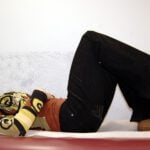

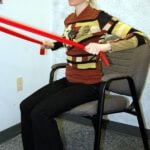
LEVEL TWO – 5 Abd Exercises for a Moderate Fitness Level


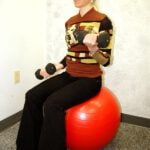
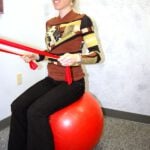

Photos: Jen Hnatko. Model: Samantha Snead
NEXT MONDAY – Read Dr. Paul J. Mackarey “Health & Exercise Forum” in the Scranton Times-Tribune. Next Week: Part 2 of 2– Abdominal Exercises.
This article is not intended as a substitute for medical treatment. If you have questions related to your medical condition, please contact your family physician. For further inquires related to this topic email: drpmackarey@msn.com
Paul J. Mackarey PT, DHSc, OCS is a Doctor in Health Sciences specializing in orthopaedic and sports physical therapy. Dr. Mackarey is in private practice and is an associate professor of clinical medicine at The Commonwealth Medical College.
Summer football training camps and practice sessions will soon be in full swing in Northeastern Pennsylvania. In 2013, the Pennsylvania Interscholastic Athletic Association (PIAA) implemented “Preseason Heat-Acclimatization Guidelines” This policy was recently updated for the 2015 season.
At this time each year, I receive several emails from concerned parents regarding heat stroke in football players and hopefully this column will serve to educate coaches, players and parents about the importance of heatstroke prevention.
Most medical professionals agree that the amount of protective equipment worn by football players makes them more susceptible to heat stroke than athletes in other sports. It is also well-accepted that prevention is the best treatment for heat stroke. They feel that overweight and poorly conditioned players should be monitored closely by weighing in before and after practice. A player who loses more than 3% body weight is at risk for heat stroke. These players should be required to take more breaks, with more fluid intake before, during and after practice. Heat stroke one of the most serious heat-related illnesses. Heat stroke is caused by long term exposure to the sun to the point which a person cannot sweat enough to lower the body temperature. The elderly and infants are most susceptible as are athletes wearing full gear and protective equipment. It can be fatal if not managed properly and immediately. Believe it or not, the exact cause of heatstroke is unclear. Prevention is the best treatment because it can strike suddenly and without warning. It can also occur in non athletes at outdoor concerts, outdoor carnivals, or back yard activities. The American Academy of Pediatrics and The American College of Sports Medicine has the following recommendations:
Signs of Heatstroke:
Treatment of Heatstroke:
Prevention of Heatstroke:
NEXT MONDAY – Read Dr. Paul J. Mackarey “Health & Exercise Forum" in the Scranton Times-Tribune.
This article is not intended as a substitute for medical treatment. If you have questions related to your medical condition, please contact your family physician. For further inquires related to this topic email: drpmackarey@msn.com
Paul J. Mackarey PT, DHSc, OCS is a Doctor in Health Sciences specializing in orthopaedic and sports physical therapy. Dr. Mackarey is in private practice and is an associate professor of clinical medicine at The Commonwealth Medical College.