LUMBAR SPINAL STENOSIS
PART 1:
We all have known or seen someone with spinal stenosis, perhaps without even realizing it. Those with spinal stenosis often suffer from lower back pain with the additional complaints of pain, numbness and weakness in both legs when standing or walking but feel much better sitting. They are is frustrated by the fact that they cannot enjoy their passions such as: golfing, walking, hiking, cooking and baking, if it requires prolonged standing or walking. Spinal stenosis sufferers are often over 65 years of age and can be seen sitting on a bench at the mall to avoid prolonged walking or standing leaning over a shopping cart in the grocery store to avoid standing upright into and extended posture.
Definition and Diagnosis
In technical terms, stenosis is an abnormal narrowing of a hollow tube or canal. When used in reference to the lower back, this narrowing is called lumbar spinal stenosis. Lumbar spinal stenosis is an extremely common cause of disabling back and leg pain in older individuals. Since these individuals tend to avoid the painful activities of standing and walking, they become deconditioned and lose their independence. It must be emphasized that, although spinal stenosis is a progressive process, symptoms generally will not lead to leg paralysis. However, it can lead to weakness and poor endurance of the muscles in the legs and remains the most common reason for undergoing spinal surgery after the age of 65.
There are two types of lumbar spinal stenosis. Central stenosis is a narrowing of the spinal canal surrounding the spinal cord. Symptoms produced will affect both legs, and may cause bowel and bladder disturbances. Lateral stenosis is a narrowing of the exit for the nerve root. Since lateral stenosis involves a single nerve root, symptoms are localized to a specific area of the leg. Symptoms are dependent on the following factors: the amount and location of compression on the nervous tissues and the amount of inflammation present. Therefore, symptoms are not identical between individuals, may vary over time in the same individual, and can be inconsistent.
Two causes of spinal stenosis have been identified: Congenital or developmental defects (something you born with or occurs when developing) (e.g. scoliosis, dwarfism, trefoil or misshaped canal); Acquired through degenerative changes, fractures, spondylolisthes (boney instability), postoperative scar tissue, tumors, or systemic disease. Additional spinal changes may accompany spinal stenosis are: disc/joint degeneration, ligamentous, thickening, bone spurs, and disc bulging.
A person who has spinal stenosis is typically over fifty years of age with either a long history of low back pain/ache/stiffness or symptoms that have seemed to develop for no apparent reason. The symptoms, which are more intermittent than constant, can be made worse by inclement weather. The back pain may extend into the tailbone or buttocks and may be accompanied by poorly localized pain, tingling, numbness, cramping, discomfort, tightness, burning, and/or weakness in one or both legs. These complaints will increase with standing and walking because extension of the spine (as in erect posture, reaching overhead, and backward bending) and spinal compression (a normal part of bearing weight through the legs) narrows the canal that surrounds the spinal cord and nerve roots. Conversely, sitting will decrease symptoms since flexion (as which occurs with forward bending) increases canal diameter. This postural dependency of the symptoms is a unique characteristic of individuals with spinal stenosis and explains why these people prefer sitting to walking. When walking they will stoop or slouch forward and/or walking behind a shopping cart or lawnmower to support themselves as they lean forward.
An individual with spinal stenosis may have several of the following symptoms:
Spinal stenosis can be a complicated and multifaceted problem. If you have some of these symptoms consult your family physician. If the physician suspects that you may have spinal stenosis, the following advanced diagnostic imaging studies may be recommended:
Next week’s article will discuss prevention and treatment for lumbar spinal stenosis.
Visit your doctor regularly and listen to your body.
NEXT MONDAY – Read Dr. Paul J. Mackarey “Health & Exercise Forum” in the Scranton Times-Tribune.
This article is not intended as a substitute for medical treatment. If you have questions related to your medical condition, please contact your family physician. For further inquires related to this topic email: drpmackarey@msn.com
Paul J. Mackarey PT, DHSc, OCS is a Doctor in Health Sciences specializing in orthopaedic and sports physical therapy. Dr. Mackarey is in private practice and is an associate professor of clinical medicine at Geisinger Commonwealth School of Medicine.

Pamela Lucchesi, PhD, FAHA
This column is a monthly feature of “Health & Exercise Forum” in association with the students and faculty of Geisinger Commonwealth School of Medicine (formerly The Commonwealth Medical College).
Breast Cancer & Metastasis: What does it mean?
By Pamela Lucchesi, PhD, FAHA
Dr. Lucchesi Chair of Basic Sciences and Professor of Physiology at Geisinger Commonwealth School of Medicine
Suzanne Alba O’Hara, from Wyoming in Luzerne county, was kind enough to share her story in an effort to help raise the level of awareness for fellow citizens of NEPA. She received her first breast cancer diagnosis in 2012, after her dermatologist noticed some skin discoloration. She endured eight cycles of chemotherapy and 42 radiation treatments and believed she had achieved remission. After four years of celebrating life cancer-free, Suzanne began feeling pain on her right side under her ribs. Thinking it must be her gallbladder or some other non-cancer-related problem, she visited her primary care doctor, who ordered an ultrasound. The ultrasound showed “spots” on her liver. Subsequent CT and PET scans confirmed that her breast cancer had come back and spread to her liver and spine, leading to a diagnosis of stage IV or metastatic breast cancer. Suzanne knew at the time of her original treatment that there was a possibility that the cancer would return, but cancer was the last thing on her mind in 2016.
Breast cancer is a disease caused by uncontrolled growth of breast tissue cells. The disease is treatable with chemotherapy and radiation, which kills these rapidly growing cells, or with surgical removal of a tumor. Typically, people diagnosed with early stage breast cancer manage to achieve remission, meaning there is no longer any evidence of the cancer. However, although there may be no signs of disease, sometimes the errant cells manage to escape treatment, and move to other places in the body. This process of tumor cells migrating and growing in other places is called metastasis.
Metastatic breast cancer (MBC) is also known as stage IV, advanced or chronic breast cancer. Once breast cancer reaches this stage, it cannot be cured, but it can be treated. Sometimes when breast cancer is first discovered, it has already metastasized, but MBC is frequently diagnosed as a recurrence, often several years after a patient has already achieved remission of an early stage breast cancer. This was the case for Suzanne.
Nationally, there are an estimated 150,000 to 250,000 people in the U.S. living with MBC. This broad estimate reveals a data-collection problem that clouds our ability to say with certainty what percentage of people treated for early breast cancer later suffer a recurrence. Currently, statistics are not collected for metastatic recurrences, which comprise the larger portion of MBC cases. Most U.S. registries only count new cases and cancer deaths. If a breast cancer patient has a recurrence sometime after initial treatment, there is no national registry to which doctors must submit that information.
No matter the statistics, a person hearing the news that he or she has MBC can be overwhelming and may provoke grief and anxiety. The person is plunged into a new medical reality – and a very difficult world to navigate. MBC patients often feel alone and overlooked. They need to know that while MBC is a lifelong disease, it is possible for people with the diagnosis to live well.
Our NEPA Komen affiliate has devoted itself to identifying local resources that can help MBC patients to not only cope, but to thrive. On April 29, Komen NEPA and Geisinger Commonwealth School of Medicine (Geisinger Commonwealth), with a generous grant from the Moses Taylor Foundation, will present a symposium covering a range of MBC topics. From emerging treatments and clinical trials to social support and the tools need to care for mental health and physical wellbeing, people living with MBC (and the healthcare professionals who care for them) will receive the most up-to-date and comprehensive information available.
In addition to wellness tips and activities, there are several nationally recognized researchers speaking, including two Komen scholars from Pennsylvania. Komen Scholars are a group of 60 distinguished scholars and leaders in breast cancer research and advocacy. The scholars speaking on April 29 are Adrian Lee, Ph.D., from the University of Pittsburgh Cancer Institute and David A. Mankoff, M.D., Ph.D. from the Perelman School of Medicine at the University of Pennsylvania. Dr. Lee’s lab uses genomic approaches to identify the unique “signatures” of metastatic cells that may be used as personalized therapy for MBS. He will discuss the present gaps in MBC research. Dr. Mankoff’s research focuses on developing new imaging techniques to more accurately diagnose MBS and monitor treatment effectiveness. Both scholars are committed to improving progression-free survival and quality of life in MBS patients.
Other speakers are Michael Murray, M.D. and Craig Piso, Ph.D. Dr. Murray is director of Geisinger’s clinical genomics and the MyCode data project. He will talk about how genomics is changing the detection and treatment of cancer. Dr. Piso is a psychologist whose presentation is entitled, “Finding Courage and Strength During Life’s Biggest Challenges.”
If you or someone you know is affected by breast cancer or metastatic disease, or if you would like to learn more, the details of the free event are:
Visit your doctor regularly and listen to your body.
NEXT MONDAY – Read Dr. Paul J. Mackarey “Health & Exercise Forum” in the Scranton Times-Tribune.
This article is not intended as a substitute for medical treatment. If you have questions related to your medical condition, please contact your family physician. For further inquires related to this topic email: drpmackarey@msn.com
Paul J. Mackarey PT, DHSc, OCS is a Doctor in Health Sciences specializing in orthopaedic and sports physical therapy. Dr. Mackarey is in private practice and is an associate professor of clinical medicine at Geisinger Commonwealth School of Medicine (formerly The Commonwealth Medical College).
Several years ago, while hiking to the bottom of the Grand Canyon with my family, my wife Esther developed “canyon knee,” also known as “hiker’s knee” or in medical terms, “patellar tendonitis.” Regardless of the term, the end result was that she had severe pain in the tendon below her knee cap and was unable to walk up the trail to get out of the canyon. In addition to ice, rest, bracing, and non-steroidal anti inflammatory medications, the National Park Ranger insisted that she use two trekking poles on her assent to the rim. Prior to that experience, I always thought that “walking/hiking sticks or trekking poles” were for show or those in need of a walking aide. Well, I could not have been more incorrect. Needless to say, Esther made it out of the canyon safely and, with the use of our life saving trekking poles; we have lived “happily ever after!” Now, 15 years later, I rarely walk more than 5 miles without my poles.
As a result of this experience, I have been recommending walking or trekking poles to my patients. These poles are an essential part of hiking or distance walking gear, for the novice and expert alike. Specifically, for those over 50 who have degenerative arthritis and pain in their lower back, hips, knees, ankles or feet, these simple devices have been shown to improve the efficiency of the exercise and lessen the impact on the spine and lower extremities. Additionally, using poles reduces the likelihood of ankle sprains and falls during walking. Trekking poles are also a safe option for those with compromised balance. If you want to walk distances for exercise and need a little stability but don’t want the stigma of a cane, trekking poles are for you.
Early explorers, Europeans and Native Americans have been using walking sticks for centuries. More recently, in the 1968 classic hiker’s bible, “The Complete Walker,” Colin Fletcher praised his “walking staff” for its multipurpose use: for balance and assistance with walking and climbing, protection from rattlesnakes, and for use as a fishing rod. Today, these sticks are now versatile poles made from light-weight materials.
Trekking poles are made of light-weight aluminum and vary in cost and quality. But, like most things, “you get what you pay for!” These hollow tubes can telescope to fit any person and collapse to pack in luggage for travel. Better poles offer multiple removable tips for various uses, conditions and terrains. For example, a basket to prevent sinking too deeply in snow or mud; a blunt rubber tip for hard surfaces like asphalt or concrete, or the pointed metal tip to grip ice or hard dirt. Better quality poles offer an ergonomic hand grip and strap and a spring system to absorb shock through your hands, wrists and arms upon impact.
The poles should be properly adjusted to fit each individual. When your hand is griping the handle the elbow should be at a 90 degree angle. Proper use is simple; just walk with a normal gait pattern of opposite arm and leg swing. For example, left arm and pole swings forward to plant at the same time the right foot swings forward to strike. I have been very pleased with my moderately priced Kelty poles ($30.00 per pole). Prices range from $19.99 to 79.95 per pole. kelty.com; leki.com; rei.com.


While there have been numerous studies to support the use of trekking poles, those that support their use for health and safety are most convincing and pragmatic. One study published compared hikers in 3 different conditions; no backpack, a pack with 15% body weight and a pack with 30% body weight. Biomechanical analysis was performed blindly on the three groups and a significant reduction in forces on lower extremity joints (hip, knee, and ankle) was noted for all three groups when using poles compared to those not using poles. Another study confirmed that trekking poles reduced the incidence of ankle fractures through improved balance and stability. Further studies support the theory that trekking poles reduce exercise induced muscle soreness from hiking or walking steep terrain. Additionally, studies found that while less energy is expended in the lower body muscles using poles, increase energy is used in the upper body; therefore, the net caloric expenditure is equal as it is simply transferred from the legs to the arms.
In conclusion, it is important to remember that trekking poles for hiking or distance walking are much more than a style statement. They are proven to be an invaluable tool for health, safety and wellness by reducing lower extremity joint stress, improving stability and balance, and enhancing efficiency for muscle recovery.
Sources: Medicine and Science in Sports and Exercise. The Complete Walker, by Colin Fletcher
EVERY MONDAY – Read Dr. Paul J. Mackarey “Health & Exercise Forum” in the Scranton Times-Tribune.
This article is not intended as a substitute for medical treatment. If you have questions related to your medical condition, please contact your family physician. For further inquires related to this topic email: drpmackarey@msn.com
Paul J. Mackarey PT, DHSc, OCS is a Doctor in Health Sciences specializing in orthopaedic and sports physical therapy. Dr. Mackarey is in private practice and is an associate professor of clinical medicine at Geisinger Commonwealth School of Medicine.
You Are Never Too Old To Exercise: Part 2 of 2
You are never too old to exercise! This is the second of two columns dedicated to appropriate exercise for the elderly. Last week I discussed basic strengthening exercises. This column will address three additional components necessary for independence in the elderly: flexibility, balance and endurance. While it may not be as valuable for those fortunate to be over 75 years of age and capable of running, biking, skiing and playing tennis, you may still find a noteworthy pearl of wisdom.
Why would someone 75 or 80 be interested in a basic exercise program? Well, one must maintain adequate flexibility, strength, balance and endurance to safely function in daily activities around the house. For example, the most common goals of elderly patients are: climbing stairs, getting in and out of a shower, putting on shoes and socks, tucking in a shirt or fastening a bra, cooking, cleaning, and carrying groceries or laundry.
Remember, for most people it is more harmful not to exercise, so contact you physician to discuss whether independent exercise is appropriate for you. You may need to consult with a physical therapist to get started.
Flexibility Exercises involve moving the arms, legs and trunk through comfortable range of motion to give you more mobility in order to improve your ability to perform daily activities such as tucking in a shirt, tying shoes or fastening a bra. Best if performed after strength exercises because the muscles and joints will be warm and limber. Always perform slowly with slight stretch sensation and no pain. No bouncing or overstretching!
These exercises are to be performed while sitting in a chair with a backrest, slowly, 5 repetitions, 3-5 times per week.
To Be Performed While Sitting In A Chair With A Backrest:
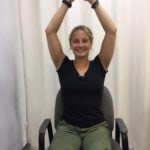
Shoulder Raise – clasp hands together, raise arms up to forehead, then above head, as high as comfortably possible – PHOTO A
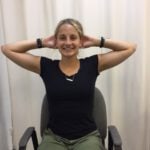
Hands Behind Head – raise arms behind head by first touching ears, then touch back of head – PHOTO B
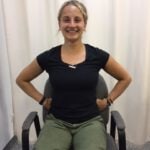
Hands Behind Back – bring arms behind back by first touching the side pocket, then back pocket and toward small of back as comfortably possible -- PHOTO C
To Be Performed While Lying On Back In Bed:
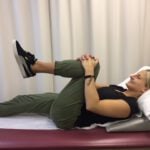
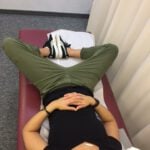
Knees to Chest – bring knee toward chest using hands: Right Leg 5 Times – Left Leg 5 Times - Both Legs 5 Times -- PHOTO D
Leg Spread – Place heels together and separate knees – PHOTO E
Gas Pedals – pump ankles up and down like gas pedal
Balance Exercises involve strengthening muscles that keep the body upright and stable in standing in order to improve your ability to perform daily activities without falling. According to the NIH, 300,000 US hospital admissions for broken hips occur each year due to falls. Check with your physician if you have a history of dizziness before performing these exercises on your own. Best if performed with someone at home or some assistance. Always use a countertop or back of chair to hold onto for support.
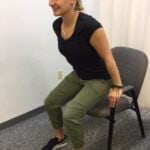
Sitting Squat – Squat up and down in a chair. First use both arms to assist, then one arm.- PHOTO F
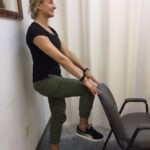
Standing March – March legs up and down while holding onto countertop or back of chair – PHOTO G
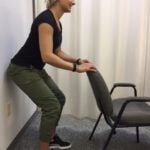
Standing Squat – Squat down by bending at hips and knees 20-30 degrees while holding onto countertop or back of chair – PHOTO H
Dance – Slow dancing with a partner is great fun and a very helpful exercise to improve balance.
Endurance Exercises involve any activity such as walking, swimming, biking or raking leaves that elevates your heart rate and breathing for an extended period of time. Check with your physician if you have a history of heart problems or dizziness before performing these exercises on your own. Best if performed with someone at home or some assistance. Start off slowly for only 5 minutes and add 1-2 minutes each week or 2. Gradually, build up your time to 20 – 30 -45 – 60 minutes according to your fitness level. Wear good and comfortable shoes – no heels!
While not all of these endurance exercises may be appropriate for you, one or two of these may offer a good starting point.
Walk Around the House – Start walking around the house for 1-2 minutes nonstop every 1-2 hours. Then, add 1-2 minutes every week.
Static Marching – hold onto the countertop or back of chair and march in place for 30 seconds. Rest 1-2 minutes and repeat. Do 5 cycles. Add 5-10 seconds every week.
Climb the Steps – If you can do so safely, use the steps for exercise 1-2 times per day. Then, add 1-2 times per day.
Walk the Mall/Treadmill – If you are able to get out of the house and can tolerate more extensive endurance exercises, get out and walk the malls or use a treadmill.
Recumbent Bike – If balance is a problem, but you can tolerate more extensive endurance exercise, use a recumbent bike (a bike with a backrest)
Visit your doctor regularly and listen to your body.
Keep moving, eat healthy foods, exercise regularly, and live long and well!
NEXT MONDAY – Read Dr. Paul J. Mackarey “Health & Exercise Forum” in the Scranton Times-Tribune.
Photo Model: Sarah Andrews, PT Student, University of Pittsburgh
Paul J. Mackarey PT, DHSc, OCS is a Doctor in Health Sciences specializing in orthopaedic and sports physical therapy. Dr. Mackarey is in private practice and is an associate profession of clinical medicine at Geisinger Commonwealth School of Medicine.
This article is not intended as a substitute for medical treatment. If you have questions related to your medical condition, please contact your family physician. For further inquires related to this topic email: drpmackarey@msn.com
You Are Never Too Old To Exercise!
PART 1 OF 2
You are never too old to exercise! A reader who described herself as “elderly” asked me if she was too old to exercise. Without knowing her age, I replied that she was not. I did qualify my response with the fact that exercise must be adjusted to meet the individual needs of a person based on age, health status and goals. Her question, however, led me to think of the many “elderly” who may be apprehensive to begin an exercise program for a variety of reasons. Fear of injury and lack of information may be two reasons. Another reason, according to this inquiry, is the fact that so many exercise programs featured in the media are geared to the young and healthy or baby boomers and few focuses on the needs of those over 75, home bound and weakened by age and inactivity. Those running, biking, skiing, golfing at 75 and over and do not fall into this category, please do not be offended, you are the exception. God bless you!
Why would someone 75 or 80 be interested in an exercise program? Well, one must maintain adequate flexibility, strength, balance and endurance to safely function in daily activities around the house. For example, the most common goals of elderly patients are: climbing stairs, getting in and out of a shower, putting on shoes and socks, walking safely for functional distances, tucking in a shirt or fastening a bra, cooking, cleaning, and carrying groceries or laundry.
The National Institute of Health (NIH) recommends four areas of concentration for elderly persons to concentrate on in order to maintain safety and independence: strength, flexibility, balance and endurance. It will be the purpose of this column to recommend safe, practical and easy exercises that focus on each of these categories.
Remember, for most people it is more harmful not to exercise, so contact your physician to discuss whether independent exercise is appropriate for you. You may need to consult with a physical therapist to get started.
Strength Exercises involve using the muscles to move the arms and legs against resistance such as a weighted object, dumbbells, resistance bands, and body weight against gravity. Strength is necessary to perform daily activities such as walking, lifting a ½ gallon of milk, transferring to a shower or chair safely.
These exercises are performed while sitting in a chair with backrest, slowly, 5 -10 repetitions, and 3-5 times per week. No weight is used in the beginning, only the weight of the arm against gravity. In 1-2 weeks a light 1-2 pound weight and light resistance band may be added.
To Be Performed While Sitting In A Chair With Backrest:
Shoulder Shrug – shrug top of shoulders up toward the ears – PHOTO A
Row the Boat – pull both arms back at a 45 degree angle with bent elbows as if “rowing a boat” - PHOTO B
Saw Wood – pull both arms back with arms at side with bent elbows as if “sawing wood” – PHOTO C
Elbow Bend/Extend – bend and straighten elbows – PHOTO D
Wrist Curl – bend wrist up and down
Grip – squeeze ball
To Be Performed While Sitting In A Chair With Backrest:
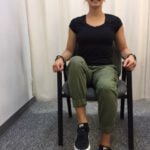
Hip Hike – lift hip up 2-4 inches as if “marching” – PHOTO E
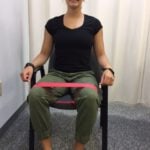
Hip Spread – heels on the floor, tie band around thighs - spread knees apart – PHOTO F
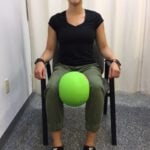
Hip Squeeze – heels on floor, put ball or pillow between knees –squeeze knees together – PHOTO G
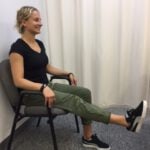
Leg Kicks – extend knee as if kicking the foot forward and up – PHOTO H
Heel Raise – raise heel up with toe on floor
Toe Raise – raise toes up with heel on floor
Performed Standing While Holding On To Counter Top:
Standing Leg Curl – facing and holding onto the back of a chair or countertop, bend the knee by bringing the foot back – PHOTO I
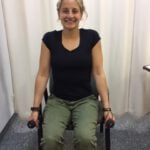
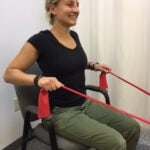
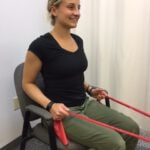
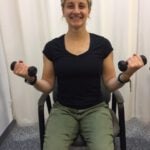
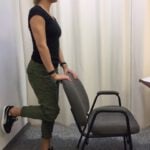
Once you have mastered these exercises against gravity, then advance to using light weights or light resistance bands. Ankle weights are very inexpensive and can be purchased in 1 pound increments. Light resistance bands are available in yellow and red in colors.
Visit your doctor regularly and listen to your body.
Keep moving, eat healthy foods, exercise regularly, and live long and well!
NEXT MONDAY – Read Dr. Paul J. Mackarey “Health & Exercise Forum” in the Scranton Times-Tribune. Next Week: Never To Old To Exercise – Part 2 of 2
Photo Model: Sarah Andrews, PT Student, University of Pittsburgh
This article is not intended as a substitute for medical treatment. If you have questions related to your medical condition, please contact your family physician. For further inquires related to this topic email: drpmackarey@msn.com
Paul J. Mackarey PT, DHSc, OCS is a Doctor in Health Sciences specializing in orthopaedic and sports physical therapy. Dr. Mackarey is in private practice and is an associate profession of clinical medicine at Geisinger Commonwealth School of Medicine.

Kathleen Nealon, MD2
Author: Kathleen Nealon, 2nd year medical student Geisinger Commonwealth School of Medicine
This column is a monthly feature of “Health & Exercise Forum” in association with the students and faculty of Geisinger Commonwealth School of Medicine.
Author: Kathleen Nealon, MD2
Katie Nealon is a second year medical student at Geisinger Commonwealth School of Medicine. She is a Scranton native and hopes to become an Obstetrician/Gynecologist.
Research Withstands the Test of Time to Support the Fact: ADVERSE CHILDHOOD EXPERIENCES DIRECTLY IMPACT ADULT HEALTH AND WELLNESS!
What if I told you that you could reduce your child’s future risk of heart disease, hepatitis, lung disease, cancer, and suicide in one fell swoop? What if I told you that even if you aren’t a parent, you could do the same for your niece, your grandchild, your student? I’d be willing to bet that I would get your attention. Well, here’s the thing: you can. It all has to do with a child’s extremely delicate cerebral and hormonal development.
In 1998, a study by Dr. Vince Felitti, MD from the Kaiser Permanente Clinic in San Diego was published, called the Adverse Childhood Experiences Study (the ACE study). The implications of the study have only improved over time. Researchers looked back at negative events that had happened during the childhood of about 17,000 adults. The categories they looked at were:
Each type of adverse experience that a person had been subjected to before the age of 18 counted towards their ACE score, and it turned out that the prevalence of these events was very high. 66% of the respondents had experienced at least one of the adverse events and of those, 87% had experienced two or more types. Slightly over 12% of the respondents had experienced four or more ACEs.
The research went even further, and correlated these ACE scores with some of the biggest killers in our society, and found that a person’s risk of ischemic heart disease, cancer, COPD, liver disease, skeletal fractures, autoimmune disease, obesity, smoking, abuse of alcohol & drugs, and suicidality were all raised significantly. Furthermore, the more ACEs someone had, the greater his or her risk was for these conditions. It has been demonstrated that these effects are not simply due to poor health choices; there are distinct changes in brain development in those who have experienced ACEs. Changes in the size of the prefrontal cortex (in part responsible for impulse control) and the nucleus accumbens (the brain’s reward center) are among the most significant found.
There have been several hundred ACE-related studies since 1998, including over 200 by other investigators and individual studies by 32 states and the District of Columbia. The big question here is, if all this research is being done, why haven’t we heard anything about it? Why aren’t my children, grandchildren, students, patients being screened for ACE’s? Why have I not been screened?
Our research at TCMC began as a way of trying to answer those questions. We anonymously surveyed the clinical faculty of TCMC, asking questions like, “Have you heard of the ACE Study?”, “What is your level of familiarity with the study?”, and “Would you be willing to screen for ACEs?”. Our study found that that about 85% of respondents hadn’t heard of the groundbreaking study I’ve discussed here. The good news is that approximately 70% would be willing to screen for ACEs, and the same number were interested in learning more from us about the study. Pediatricians and Family Doctors were the most knowledgeable about the study, as any concerned parent would hope; however, fewer than 50% of them were aware of the study. Our work has shown that there is much to be done in the way of education, and that the physicians in our area are ready to learn.
Medical students only have four years to learn the crucial elements of being a physician … the truth is, we our limited by our time and education. The goal of our research is not to tell physicians that they don't know everything, but to remind us that there is more to learn, and to show us that there are new ways to understand some of the root causes contributing to ill health and risky behaviors. This information can help our patients and our society.
This problem is not only applicable to those who are uneducated or living in poverty. This is everyone’s problem, and no one is spared its effects. This means, however, that we can help our whole society by acting on the results of this study: coordinated care plans, ACE-screening techniques, and targeted therapy are the future of healthcare. This idea fits into the preventative health movement, which focuses on avoiding disease rather than waiting until we are already sick to do something about it.
You may be reading this and wondering, ‘I’m not a doctor, what can I do?’ The answer is that there is a lot you can do. Further research has shown that children who have experienced multiple ACEs, but who have a positive figure in their lives who acts in a supportive, mentoring capacity have reduced risk for the negative health outcomes described above. This means that whether you are a parent, teacher, grandparent, or community member, there is something you can do. Joining a mentoring program such as the Big Brothers Big Sisters group or church group, coaching a little league team, or simply being a supportive and positive presence in a child’s life can do more than you know. ACEs are a problem that affects us all, and it is up to all of us to be part of the solution.
GCSOM Faculty Advisor: Dennis Dawgert, MD
Visit your doctor regularly and listen to your body.
NEXT MONDAY – Read Dr. Paul J. Mackarey “Health & Exercise Forum” in the Scranton Times-Tribune.
This article is not intended as a substitute for medical treatment. If you have questions related to your medical condition, please contact your family physician. For further inquires related to this topic email: drpmackarey@msn.com
Paul J. Mackarey PT, DHSc, OCS is a Doctor in Health Sciences specializing in orthopaedic and sports physical therapy. Dr. Mackarey is in private practice and is an associate professor of clinical medicine at Geisinger Commonwealth School of Medicine.
Germaphobes, cleaning zealots, neat freaks, and those with diagnosed or undiagnosed obsessive compulsive disorder (OCD), this column is for you! If you would rather clean your bathroom floor than go for a walk on a beautiful sunny day, please read on. If you use a toothbrush on tile grout on a regular basis and take pride in the sparkle of your toilet bowl than beware… studies show that performing these tasks with too much vigor and passion might lead to back, neck, and shoulder and wrist pain.
For some, and you know who you are, (I am related to a few) spring cleaning can be a particularly exciting sporting event. It is almost an exorcism to rid a home of all its evil spirits; smudges, dust, dirt, germs, and odors. Every April curtains come off the windows to be washed and carpets rolled up, remove and cleaned. The surfaces under the curtains and carpets are sterilized with cleaning detergents, disinfectants and chemicals that would make sterile technique in most hospital operating rooms seem to be inadequate. And, that doesn’t include the heavy work: moving furniture, bedding, including mattresses and box springs.
As a physical therapist and survivor of childhood exposure to copious amounts of cleaning chemicals, I have come to learn that there are healthy and safe options for spring cleaning your home. Of course, the most obvious solution is to hire professional help if you could afford it. The other practical solutions are below:
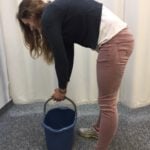
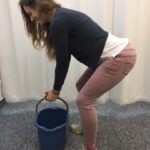


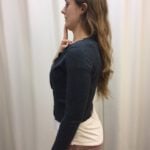
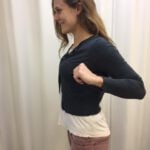
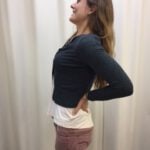
Sources: National Center for Injury Prevention and Control at the CDC, www.medicinenet.comwww.household-management-101
Model: Sarah Singer, PTA
Read Dr. Mackarey’s Health & Exercise Forum – Every Monday.
This article is not intended as a substitute for medical treatment. If you have questions related to your medical condition, please contact your family physician. For further inquires related to this topic email: drpmackarey@msn.com
Paul J. Mackarey PT, DHSc, OCS is a Doctor in Health Sciences specializing in orthopaedic and sports physical therapy. Dr. Mackarey is in private practice and is an associate professor of clinical medicine at Geisinger Commonwealth School of Medicine.
Yoga for Healthy Mind, Body, and Spirit! Part 2 of 2

Catherine Udomsak, DPT
Guest Columnist: Catherine Udomsak, DPT
It is hard to believe that yoga, which is now a cultural mainstay, was once considered a foreign practice. An ancient discipline that totes numerous health benefits, yoga is meant to cultivate inner peace, enlightenment, and a strong relaxed body. In the past, only major cities housed yoga studios but over time yoga has spread into small towns across the country. Studios offer a variety of classes and each promotes their own unique philosophy. Whether you are looking for a new workout regime, compliment to your current program or simply to quiet your mind in a hectic world, yoga may be an option for you.
What is yoga?
Yoga is a discipline that developed over 5,000 years ago and is generally recognized as an ancient system for wellbeing. The word yoga, from the Sanskrit word “yuj”, literally means to yoke or to bind together. The primary focus of yoga is to harmonize or unite the mind, body, and spirit through a combination of poses, breathing techniques, and meditation.
Where did it come from?
The specific origin of yoga is a topic of debate. However, it is said to have originated in India and was brought to the Western world by yoga gurus in the late 19th and early 20th centuries. The basis for most current yoga practices is The Yoga Sutras of Patanjali. In The Yoga Sutras, eight limbs of yoga are specified. The three most common limbs are meditation, pranayama or breathing exercises, and asana which are the physical poses. Yoga classes can vary greatly, however, most classes include a combination of meditation, breathing exercises, and physical postures.
Types of Yoga
There are numerous styles of yoga. If you are a newcomer, deciding on a yoga class may be difficult. It is always a smart idea to call a studio before attending a class to gain information and have any questions answered. Furthermore, if you have any health concerns you may want to consult your doctor prior to trying a new form of exercise. Some common forms of yoga include but are not limited to:
Hatha - Hatha yoga is a general broad-based term referring to any type of yoga that teaches physical postures. Typically, one will find Hatha classes to be slow and gentle and a great option for beginners.
Vinyasa - This type of yoga focuses on the coordination of breath with movement. In Vinyassa yoga classes you can expect a continuous flow of movement from one posture to the next. Classes can be fast paced and are often appealing to those looking for a more strenuous workout.
Iyengar - Unlike Vinyassa, this type of yoga focuses on holding postures for a period of time to bring the body into it’s best alignment. If you attend this type of yoga class you can expect to use props including yoga blocks, blankets, and straps.
Ashtanga - This type of yoga follows a specific sequencing of postures. This rigorous form of yoga always performs the same postures, in the same order at each class and is typically fast paced.
Bikram - Typically performed in rooms heated to 105 degrees Fahrenheit and 40% humidity, the heat warms muscles and allows a deeper stretch. The difference between Bikram and Hot yoga is that Bikram follows a specific sequence of 26 poses from which hot yoga often deviates.
Yin Yoga - This meditative practice is perfect for those who want to calm their mind. In this type of yoga, poses are held for 5 minutes or longer. The purpose is to apply a deep stretch to the connective tissue (the tendons, fascia and ligaments) to improve flexibility.
Restorative - Best for those who want to focus on relaxing and taking some time to slow down. Most restorative yoga classes will be slow moving with longer hold times to allow deep relaxation.
Basic Poses
Below you can find a few common yoga poses or asanas that can be found in beginner classes. These poses promote flexibility and strength and can be incorporated into your everyday workout routine. Remember, before you attempt the poses, begin by walking, biking or running to warm up. Don’t overstretch, perform slowly, and hold the position. You should feel mild discomfort NOT pain.
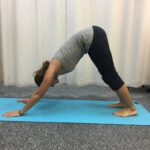
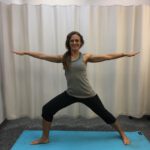
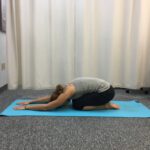
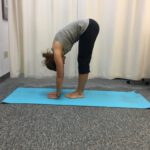
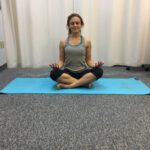
Where to Practice
There are a lot of options when it comes to where to start to practice yoga. It is important that the studio you choose employs certified yoga instructors who have completed comprehensive training. A good instructor can make all the difference in your yoga experience. The studio should provide a clean environment and offer a variety of classes including beginner level if you are a newcomer. The best way to get a feel for a studio is to stop in for more information. You may want to ask about pricing as there are often discount introductory rates. Ask about rentals if you do not own a yoga mat and request to see the space. Some yoga studios have a strong sense of community while others are more like a gym. Try out a few different places until you find a fit for you.
Guest Columnist: Catherine Udomsak, DPT is a doctor of physical therapy and is an associate at Mackarey & Mackarey Physical Therapy Consultants, LLC in downtown Scranton, where she works with outpatient orthopedic and neurological patients. She has a special interest in vestibular and balance problems.
Model: Sarah Singer, PTA
Read Dr. Mackarey’s Health & Exercise Forum – Every Monday in the Scranton Times-Tribune.
This article is not intended as a substitute for medical treatment. If you have questions related to your medical condition, please contact your family physician. For further inquires related to this topic email: drpmackarey@msn.com
Paul J. Mackarey PT, DHSc, OCS is a Doctor in Health Sciences specializing in orthopaedic and sports physical therapy. Dr. Mackarey is in private practice and is an associate professor of clinical medicine at Geisinger Commonwealth School of Medicine.
Yoga for Healthy Mind, Body, and Spirit! Part 1 of 2
Catherine Udomsak, DPT
Guest Columnist: Catherine Udomsak, DPT
It is hard to believe that yoga, which is now a cultural mainstay, was once considered a foreign practice. An ancient discipline that totes numerous health benefits, yoga is meant to cultivate inner peace, enlightenment, and a strong relaxed body. In the past, only major cities housed yoga studios but over time yoga has spread into small towns across the country. Studios offer a variety of classes and each promotes their own unique philosophy. Whether you are looking for a new workout regime, compliment to your current program or simply to quiet your mind in a hectic world, yoga may be an option for you.
What is yoga?
Yoga is a discipline that developed over 5,000 years ago and is generally recognized as an ancient system for well-being. The word yoga, from the Sanskrit word “yuj”, literally means to yoke or to bind together. The primary focus of yoga is to harmonize or unite the mind, body, and spirit through a combination of poses, breathing techniques, and meditation.
Where did it come from?
The specific origin of yoga is a topic of debate. However, it is said to have originated in India and was brought to the Western world by yoga gurus in the late 19th and early 20th centuries. The basis for most current yoga practices is The Yoga Sutras of Patanjali. In The Yoga Sutras, eight limbs of yoga are specified. The three most common limbs are meditation, pranayama or breathing exercises, and asana which are the physical poses. Yoga classes can vary greatly, however, most classes include a combination of meditation, breathing exercises, and physical postures.
Benefits of Yoga
So what is with all the hype? Why has yoga become so popular? Many would say it is due to its numerous mental and physical health benefits. Research has shown that yoga, when practiced regularly, can reduces stress levels and even boost one’s immune system. Regular stretching releases tension in the body and the controlled breathing and mediation decrease anxiety. Studies show that those who practice yoga habitually can have decreased blood pressure and cholesterol making them less prone to heart disease. Other ailments which are shown to be positively impacted by yoga include insomnia, depression, and chronic pain including low back pain and headaches. Yoga is an excellent way to combat the negative effects of stress on the body and cope with anxiety and angst.
In addition to stress reduction, yoga has many physical benefits. These include increased flexibility, strength, and balance. Those who practice yoga regularly are often less prone to injury, such as a muscle strain or tear, due to their increased flexibility. Furthermore, yoga can be an effective way to strengthen one’s core which is crucial to maintaining ideal posture and protecting the back. For athletes, yoga can be a great way to challenge one’s balance and improve stability. In the elderly, it is a safe way to improve overall body awareness and decrease the risk of falling. Yoga has also been shown to improve respiration and many report an overall increase in energy when incorporating yoga into their lives.
With all of the positive impacts yoga has on the body it is easy to see why it has become such a popular form of exercise. There are classes to meet almost all needs and most poses can be modified based on ability. Yoga can be practiced by those of all ages and all fitness levels. Whether you’re looking for a way to loosen up tight muscles or you simply wish to quiet your mind for an hour, yoga is a tool to improve and maintain health. The only thing you need is a mat and an open mind.
Is yoga right for me?
Yoga can be practiced by anyone. From children to adults to the elderly, there are classes for all ages and abilities. It can be a form of cross training for athletes, especially runners who tend to have tight musculature. It also promotes balance and core stability which may be beneficial to sportspersons including football players, soccer players, boxers, etc. Furthermore, there are classes for the elderly which focus on balance and maintaining mobility. There are even prenatal yoga classes for pregnant women to promote deep breathing, flexibility and muscle tone.
Next Week: Types of Yoga and Basic Poses
Guest Columnist: Catherine Udomsak, DPT is a doctor of physical therapy and is an associate at Mackarey & Mackarey Physical Therapy Consultants, LLC in downtown Scranton, where she works with outpatient orthopedic and neurological patients. She has a special interest in vestibular and balance problems.
Read Dr. Mackarey’s "Health & Exercise Forum" in the Scranton Times-Tribune Every Monday. Next Week: Yoga - Part 2
This article is not intended as a substitute for medical treatment. If you have questions related to your medical condition, please contact your family physician. For further inquires related to this topic email: drpmackarey@msn.com
Paul J. Mackarey PT, DHSc, OCS is a Doctor in Health Sciences specializing in orthopaedic and sports physical therapy. Dr. Mackarey is in private practice and is an associate professor of clinical medicine at Geisinger Commonwealth School of Medicine.
This column is a monthly feature of “Health & Exercise Forum” in association with the students and faculty of Geisinger Commonwealth School of Medicine (formerly The Commonwealth Medical College).
Clinical Trials – America’s Most Under Used Resource
February is National Cancer Prevention Month and Clinical Trials are Essential for Research in Cancer Prevention and Treatment!
Guest Coauthors: Megan Lombardi and Connor McDonald, 2nd Year Medical Students at Geisinger Commonwealth School of Medicine (GCSOM)
 Megan Lombardi is a second year medical student at Geisinger Commonwealth School of Medicine. Megan grew up locally in Dalton, PA before attending Penn State University for her undergraduate degree. She is exploring her options for medical residencies following graduation in 2019.
 Connor McDonald is a second year medical student at Geisinger Commonwealth School of Medicine. Connor is from Benton, PA and attended Lebanon Valley College for his undergraduate degree. He is exploring his options for medical residencies following graduation in 2019.
This past summer Megan Lombardi and Connor McDonald partnered with Dr. Chris Peters at Northeast Radiation Oncology Center (NROC) for six weeks to determine oncology clinical trial accrual rates in Northeastern PA and then sought to explore what barriers are preventing local patients from joining trials. They interviewed doctors and nurses from three different oncology practices in the Scranton area and came up with a list of recurring barriers to participation and then brainstormed ideas that could be put into place to help raise accrual rates. Megan and Connor presented their findings to physicians and nurses at NROC and at GCSOM to hopefully help raise accrual rates for clinical trial research.
Cancer is the second leading cause of death in the US with 600,000 deaths each year and over 1.6 million new diagnoses per year. Today, clinical trials have become a forefront necessity for the advancement of cancer treatment. While nearly 70% of all adult cancer patients have shown an interest and willingness to participate in these trials, only about 3-5% of these patients go on to do so. Overall survival rates of cancers have increased very slowly over the past 20 years, but in some cases they have actually declined, which may be attributed to the lack of clinical trial participation. This is in stark contrast to childhood cancers where over 50% of all pediatric cancer patients are placed on trial thereby seeing some survival rates for various cancers skyrocket up over 90%.
A major reason for the low accrual rate among clinical trials is due to the lack of public awareness among the general population. Upon questioning, many patients express the notion that they were simply unaware a clinical trial was even possible as a treatment option. A clinical trial is very simply a research study that is done with humans to help answer specific health questions. One major benefit of joining a trial is that the patient gets to take an active role in their care and generally have access to cutting edge medical technology not yet available to the general public. Safety and security is assured in clinical trials as they are subject to numerous stages and checkpoints by various federal agencies before being allowed to enroll human subjects.
The rational as to why adults should consider clinical trials is the fact that these trials often lead to crucial advancements in treatments. Children were continually signed up on trials for their cancer treatments and now today we see some of these childhood cancers are very easily treated. Additionally, as we are all aware cancer affects everyone, so by placing people of various races, ages, areas of living, etc., we can ensure that these new medical advances are for the benefit of everyone. Furthermore, these clinical trials extend not only to the field of cancer but also to many other major health care problems. We advise adults to pursue and sign up, if applicable, for trials dealing with everyday diseases such as diabetes, hypercholesterol, high blood pressure, and arthritis.
The mindset that clinical trials are only for people with severe diseases or who have exhausted all other treatment possibilities is an idea of past generations. Clinical trials are springing up for every disease these days to help not only cure common diseases but to help alleviate some of the symptoms. Trials can encompass many different components as some require changes in exercise and others changes in diet, while another may not require the administration of various medications or therapies, which many people often cite as a fear of participation in trials. However, when considering a clinical trial for cancer treatment, the most important thing to remember is that every single person will receive the current standard of care. Contrary to popular belief, no one will receive anything less than what is currently being used in everyday treatment and no one will receive any treatment that can be harmful; often many participants will actually receive extra treatment and care, which can be above and beyond the current care.
If clinical trials are so important to the advancement of cancer care, what can the patient do to help the cause? The simple answer is to keep an open mind when your physician and other members of the health care team broach the subject of participation in a clinical trial. Many offices, including your primary care offices, have pamphlets or material available for distribution on clinical trials and many more have physicians experienced on the topic. In addition, physicians are dedicated to serve their patients and provide the best possible care. With this in mind, make time to discuss the possibility of participation with your primary care physician and oncologist (cancer specialist). Additional information can be found by visiting credible internet sites such as American Cancer Society, NIH, and Cancer.net, which offer background, advice, links to speak to clinical trial specialists, and the current open trials in which one can enroll.
In conclusion, please understand that clinical trials are essential for the advancement of prevention and treatment of cancer. It is not dangerous or inhumane. In fact, clinical trials today are subject to more regulation, monitoring, and documentation than most standard practices of care that everyone accepts today. Furthermore, as emphasized above, people in these trials are often subject to more advanced, newer medications than those of the general population!
Visit your doctor regularly and listen to your body.
NEXT MONDAY – Read Dr. Paul J. Mackarey “Health & Exercise Forum” in the Scranton Times-Tribune.
This article is not intended as a substitute for medical treatment. If you have questions related to your medical condition, please contact your family physician. For further inquires related to this topic email: drpmackarey@msn.com
Paul J. Mackarey PT, DHSc, OCS is a Doctor in Health Sciences specializing in orthopaedic and sports physical therapy. Dr. Mackarey is in private practice and is an associate professor of clinical medicine at Geisinger Commonwealth School of Medicine (formerly The Commonwealth Medical College).