BE COOL WITH SUMMER FUN! Part 2 of 2
After a long cold and rainy spring, NEPA is finally experiencing hot summer weather! So, get outdoors and have fun in the sun. However, please be mindful of how your body reacts to high humidity and heat and take appropriate precautions. You don’t have to be running a marathon or playing football in full uniform to suffer from heat stroke.
Heat stroke, one of the most serious heat-related illnesses, is the result of long term exposure to the sun to the point which a person cannot sweat enough to lower the body temperature. The elderly and infants are most susceptible and it can be fatal if not managed properly and immediately. Believe it or not, the exact cause of heatstroke is unclear. Prevention is the best treatment because it can strike suddenly and without warning. It can also occur in non athletes at outdoor concerts, outdoor carnivals, or backyard activities.
Prevention of Heatstroke:
NEXT MONDAY – Read Dr. Paul J. Mackarey “Health & Exercise Forum!”
This article is not intended as a substitute for medical treatment. If you have questions related to your medical condition, please contact your family physician. For further inquires related to this topic email: drpmackarey@msn.com
Paul J. Mackarey PT, DHSc, OCS is a Doctor in Health Sciences specializing in orthopaedic and sports physical therapy. Dr. Mackarey is in private practice in downtown Scranton and is an associate professor of clinical medicine at Geisinger Commonwealth School of Medicine.
BE COOL WITH SUMMER FUN! Part 1 of 2 on Heat Stroke
After a long cold and rainy spring, NEPA is finally experiencing hot summer weather! So, get outdoors and have fun in the sun. However, please be mindful of how your body reacts to high humidity and heat and take appropriate precautions. While football and soccer players will soon be pounding the fields (August 14, 2017 first day of practice for fall sports), it is important to remember that you don’t have to be running a marathon or playing football in full uniform to suffer from heat stroke.
Heat stroke, one of the most serious heat-related illnesses, is the result of long term exposure to the sun to the point which a person cannot sweat enough to lower the body temperature. The elderly and infants are most susceptible and it can be fatal if not managed properly and immediately. Believe it or not, the exact cause of heatstroke is unclear. Prevention is the best treatment because it can strike suddenly and without warning. It can also occur in non athletes at outdoor concerts, outdoor carnivals, or backyard activities.
Hot Temps and Exercise
Some “old school” folks think that wearing extra clothing and “breaking a good sweat” is an optimal goal for exercise. However, it may be potentially very dangerous in hot and humid conditions. When exercising in hot weather, the body is under additional stress. As the activity and the hot air increases your core temperature your body will to deliver more blood to your skin to cool it down. In doing so, your heart rate is increased and less blood is available for your muscles, which leads to cramping and other more serious problems. In humid conditions, problems are magnified as sweat cannot be evaporated from the skin to assist in cooling the body.
The American Academy of Pediatrics and The American College of Sports Medicine has the following recommendations which are appropriate for both the competitive athlete and weekend warrior:
Signs of Heatstroke:
Treatment of Heatstroke:
NEXT MONDAY – Read Dr. Paul J. Mackarey “Health & Exercise Forum!” Next Week: “Heat Stroke Part 2”
This article is not intended as a substitute for medical treatment. If you have questions related to your medical condition, please contact your family physician. For further inquires related to this topic email: drpmackarey@msn.com
Paul J. Mackarey PT, DHSc, OCS is a Doctor in Health Sciences specializing in orthopaedic and sports physical therapy. Dr. Mackarey is in private practice in downtown Scranton and is an associate professor of clinical medicine Geisinger Commonwealth School of Medicine.

Eduardo Ortiz, MD3
Protect Your Skin …for your health and looks!
Guest Columnist: Eduardo Ortiz, MD3
This week’s article was written by Eduardo Ortiz, a third year medical student at Geisinger Commonwealth School of Medicine (GCSOM). Eduardo majored in Biology and minored in Art History at Florida International University in Miami, Florida. As president of the Dermatology Interest group, he helped organize a free skin cancer screening with local dermatologists earlier this year.
This column is a monthly feature of “Health & Exercise Forum” in association with the students and faculty of Geisinger Commonwealth School of Medicine.
Despite the fact that we have limited exposure to sunny days in NEPA (50%), skin cancer still exists in large numbers. Skin cancer is the most common cause of cancer in the United States. While there are several types of skin cancer and not necessarily all are deadly, procedures to remove these skin cancers are both costly and frequently result in unsightly scars. The most dangerous type of skin cancer, called melanoma, results in an estimated 10,000 deaths per year. The good news? Nearly all skin cancers are preventable!
The majority of skin cancers are caused by harmful ultraviolet (UV) rays from the sun. Two major types are UVA and UVB:
In the field of anti-aging, advertisers make lofty promises for many products that claim to contain or boost collagen. Whether or not these work is a whole other discussion, but what is collagen and what does it have to do with wrinkles?
Collagen is the most abundant protein in the human body. It is found in nearly all tissues and organs, and plays a crucial role in maintaining structural integrity. Unfortunately, collagen production naturally decreases with age. This causes many of the findings we associate with older age, such as sagging skin and wrinkles, as well as joint pain. Collagen also works together with another important protein called elastin, which helps to maintain elasticity – a feature commonly associated with youthful skin.
When exposed to UV rays, these proteins can become damaged. For instance, studies have shown that skin exposed to UV rays increases the expression of proteins called matrix metalloproteinases, or MMPs. You can think of these MMPs as collagen’s enemy, as they cause their degradation. This results in a decrease in collagen’s structural function leading to loose and wrinkled skin. UV rays can also stimulate the production of reactive oxygen species. These are substances such as hydrogen peroxide and bleach, which further cause destruction of skin’s microscopic structure.
So, you’re convinced and have decided to keep your skin healthy and youthful – what next? With so many different products on the market, choosing a daily sunscreen can become a difficult task. Here are a few pointers:
Another consideration when choosing a sunscreen is chemical versus physical blockers:
If preventing skin cancer isn’t incentive enough to wear sunscreen daily and avoid excessive sun exposure (and indoor tanning booths!), then consider the rapid effects on aging the sun’s rays can have. While a tan may look good for a week, avoiding exposure to UV rays will both delay and prevent aging for years.
For more information on skin cancer and prevention, please visit the Center for Disease Control’s website (https://www.cdc.gov/cancer/skin/) and contact your physician for specific concerns regarding spots on your skin.
Read Dr. Mackarey’s Health & Exercise Forum – every Monday. This article is not intended as a substitute for medical treatment. If you have questions related to your medical condition, please contact your family physician. For further inquires related to this topic email: drpmackarey@msn.com
Paul J. Mackarey PT, DHSc, OCS is a Doctor in Health Sciences specializing in orthopaedic and sports physical therapy. Dr. Mackarey is in private practice and is an associate professor of clinical medicine at Gesinger Commonwealth School of Medicine.
Standing while studying, working, reading … good for children and adults to learn, work and be healthier!
I think we would all agree, technology is a wonderful thing. However, like all good things, it comes at a price. Students and workers alike are suffering from the many physical effects of sitting for too many hours. Studies show the impact of prolonged sitting, especially with proper posture, are multifaceted; pain, headaches, vision problems, poor concentration, excess fat storage with weight gain. Studies strongly support the use of using good posture, ergonomic workstations, posture stretches, frequent changes of positions, including the use of standing desks to prevent pain and injury. In fact, standing desks are not a new invention; they have been used by many to promote health and stimulate thought…Hemingway, Franklin and Jefferson all stood while they worked.
The average head weighs 10 to 12 pounds and when tilted down at a 45 degree angle the forces of gravity are multiplied by 5. While reading, studying or working on the computer with poor posture, one must support 50 or more pounds of pressure on the neck, middle and lower back for hours on end. It is no wonder why this activity is associated with headaches, neck and back pain, numbness and tingling in arms and legs, muscle spasms etc. Some studies report the lifetime prevalence of neck and shoulder pain in office workers as high as 80%.
Recent research has also correlated the amount of time an individual sits to a decrease in their average life expectancy. Seriously, watching television and sitting is literally killing us. The Heart and Diabetes Institute of Australia conducted extensive research on sedentary behavior, including a review of almost one million people. They used actuary science, adjusted for smoking, waist circumference, and diet and exercise habits to assess the specific effects that the hours of sitting in a day impacts a person’s life span. They found that sitting too long results in a decrease in muscle contraction of the big leg muscles and because these unused muscles need less fuel, more unused glucose (fuel) is stored in the muscle. High glucose levels result in high blood sugar, which leads to adult onset diabetes and other health issues.
The deleterious effects of sitting in children have also come under scrutiny and it may impact the classroom. Due to technology, today’s classroom is more advanced in many ways. However, the traditional hard chair and desk remain unchanged. Not only are these, “one size fits all,” desks uncomfortable, current research suggests that they may also limit learning.
Recent studies show that standing desks promote not only a physically healthier child by expending more calories and lowering obesity, but also improves focus and concentration to improve academic outcomes.
Research from Texas A&M Health Science Center found two landmark things about children who worked at standing desks such as Stand2LearnR (www.stand2learn.com), when compared to those seated: One, children burned more calories and obese children burned more than normal-weight peers. Two, children were more attentive in the classroom and engaged more with their teacher and their work when allowed to stand. Teachers in the study not only found the results to be favorable for fidgety, high-energy kids, but those who tend to be overweight and tired benefited greatly.
Researchers were quick to point out that there may be many ways to promote movement and limit sitting in the classroom that may also promote learning in a healthy way such as sitting on exercise balls or inflatable discs.
The average office worker sits for more than 10 hours per day between office work, sitting at lunch, checking email and social media at home. Amazingly, studies suggest that even vigorous exercise before and after work cannot overcome the damage from prolonged sitting. New products such as the “TrekDeskR," (www.trekdesk.com) allows a worker to work on a computer, phone, or do paperwork, while walking on a treadmill, has great health value. Also, other products such as VariDeskR (www.varidesk.com), allows for frequent positional changes from sitting to standing while working. Even without using a standing desk, changing positions, such as standing during phone calls or meetings has proven to be valuable.
Dr. Mackarey’s Health & Exercise Forum – every Monday
This article is not intended as a substitute for medical treatment. If you have questions related to your medical condition, please contact your family physician. For further inquires related to this topic email: drpmackarey@msn.com. Paul J. Mackarey PT, DHSc, OCS is a Doctor in Health Sciences specializing in orthopaedic and sports physical therapy. Dr. Mackarey is in private practice and is an associate professor of clinical medicine at Geisinger Commonwealth School of Medicine.
Spine problems can be prevented with good posture and proper body mechanics. Poor posture and improper body mechanics subject the spine to abnormal stresses that, over time, can lead to degeneration and pain. Good posture and proper body mechanics and frequent changes in positions, can minimize current spine pain and prevent recurrent episodes. Posture is the position in which you hold your body upright against gravity. Good posture involves positions that place the least amount of stress on the spine. Good posture maintains the spine in a “neutral” position. In a neutral spine, the three normal curves are preserved (a small hollow at the base of the neck, a small roundness at the midback and a small hollow in the low back). When viewed from the side, the upper back appears straight with a small hollow in the lower back.
GOOD POSTURE
Childhood Vaccinations Are Safe & Critical …for the health of your child and the children in your community! BE WISE…IMMUNIZE!

Dennis Dawgert, M.D.
Contributor: Dennis Dawgert, MD
Dr Dawgert Graduated from the University if Scranton Attended Med school at St Louis Universality and did his residency training in Pediatrics at Cardinal Glennon Memorial Hospital for Children In St Louis. After serving 2 years in the National Health Corps Service,he Moved back to Scranton where he and Dr Thomas Zukoski formed Pediatrics of NE PA. which has provided pediatric care to Scranton area since 1977. He retired in 2015 from active practice and has been teaching part time at Geisinger Commonwealth Medical College. He is interested In the Adverse Childhood Experience studies and its Effects On Health.
This column is a monthly feature of “Health & Exercise Forum” in association with the students and faculty of Geisinger Commonwealth School of Medicine.
If you do not read any further than this sentence, know this: childhood vaccinations are scientifically proven to be safe and critical for the health of your child and the children in your community!
Progress in infant mortality continues globally according to the Centers for Disease Control (CDC). Throughout the 18th and 19th centuries the infant mortality rate was approximately 50% world-wide. In 1960 it improved to 18% and in 2015 4.3%. In 2014, the infant mortality rates in the United States were 24 deaths per 100,000 for ages 1-4 and 12.7 deaths per 100,000 for ages 5-14 and the leading cause of death was accidental. Most scientists feel the reason for such dramatic improvement in the death rates of infants and children is multifaceted, however, childhood vaccinations is key among them.
Diseases once thought to be common and deadly around the world are now preventable by vaccination. Some of these include small pox, polio, measles, diphtheria, pertussis (whooping cough), rubella (German measles), mumps, tetanus, and others. It is estimated that millions of lives have been saved due to the advances in vaccinations. While concerns regarding the safety of childhood vaccinations in isolated segments of the private sector have received media attention, careful scientific and public health research has proven these claims invalid.
What is immunity?
According to the CDC, immunity is the natural method in which the body prevents disease. Children are born with all the essential elements to comprise an immune system such as; cells, glands, organs, and protective fluids. Infants are born with antibodies from their mothers (and additional protection with nursing), however, this immunity is lost after the first year of life. When a foreign body (also called and antigen) enters the body, the immune system recognizes it as such and reacts by producing a protein to fight it (antibodies).
How does immunity work?
When a child is affected with an antigen (measles virus) for the first time, the immune system springs into action to produce antibodies naturally. However, the child becomes ill from the virus because the body cannot produce antibodies quickly enough to prevent the illness. Immunity occurs during the exposure because the body remembers the invading antigen and if it invades the body again, it will be equipped to produce enough antibodies to adequately fight the antigen and prevent reoccurrence of the disease.
What is a vaccine?
A vaccine contains the actual antigen of the desired disease to be prevented. For example, the measles vaccine contains the actual measles virus. It can be a whole or partial and weakened to a point of being harmless or dead. The beauty of the treatment is that a child will get enough exposure to build up defenses from the disease without receiving enough to become ill…immunity without illness!
You want to do what is best for your children. You know about the importance of car seats, baby gates and other ways to keep them safe. But, did you know that one of the best ways to protect your children is to make sure they have all of their vaccinations? According to the CDC there are at least five compelling reasons to vaccinate your child:
Because of advances in medical science, your child can be protected against more diseases than ever before. Some diseases that once injured or killed thousands of children, have been eliminated completely and others are close to extinction– primarily due to safe and effective vaccines. Polio is one example of the great impact that vaccines had have in the United States. Polio was once America’s most-feared disease, causing death and paralysis across the country, but today, thanks to vaccination, there are no reports of polio in the United States.
Vaccines are only given to children after a long and careful review by scientists, doctors, and healthcare professionals. Vaccines will involve some discomfort and may cause pain, redness, or tenderness at the site of injection but this is minimal compared to the pain, discomfort, and trauma of the diseases these vaccines prevent. Serious side effects following vaccination, such as severe allergic reaction, are very rare. The disease-prevention benefits of getting vaccines are much greater than the possible side effects for almost all children.
Children in the U.S. still get vaccine-preventable diseases. In fact, we have seen resurgences of measles and whooping cough (pertussis) over the past few years. Since 2010, there have been between 10,000 and 50,000 cases of whooping cough each year in the United States and about 10 to 20 babies, many of which were too young to be fully vaccinated, died each year. While some babies are too young to be protected by vaccination, others may not be able to receive certain vaccinations due to severe allergies, weakened immune systems from conditions like leukemia, or other reasons. To help keep them safe, it is important that you and your children who are able to get vaccinated are fully immunized. This not only protects your family, but also helps prevent the spread of these diseases to your friends and loved ones.
A child with a vaccine-preventable disease can be denied attendance at schools or child care facilities. Some vaccine-preventable diseases can result in prolonged disabilities and can take a financial toll because of lost time at work, medical bills or long-term disability care. In contrast, getting vaccinated against these diseases is a good investment and usually covered by insurance. The Vaccines for Children program is a federally funded program that provides vaccines at no cost to children from low-income families. To find out more about the VFC program, visit http://www.cdc.gov/vaccines/programs/vfc/ or ask your child’s health care professional.
Vaccines have reduced and, in some cases, eliminated many diseases that killed or severely disabled people just a few generations ago. For example, smallpox vaccination eradicated that disease worldwide. Your children don’t have to get smallpox shots anymore because the disease no longer exists. By vaccinating children against rubella (German measles), the risk that pregnant women will pass this virus on to their fetus or newborn has been dramatically decreased, and birth defects associated with that virus no longer are seen in the United States. If we continue vaccinating now, and vaccinating completely, parents in the future may be able to trust that some diseases of today will no longer be around to harm their children in the future.
In conclusion, childhood vaccinations are scientifically proven to be safe and critical for the health of your child and the children in your community!
For more information visit:
http://www.cdc.gov/vaccines/events/niiw/index.html.
NEXT MONDAY – Read Dr. Paul J. Mackarey “Health & Exercise Forum” in the Scranton Times-Tribune.
This article is not intended as a substitute for medical treatment. If you have questions related to your medical condition, please contact your family physician. For further inquires related to this topic email: drpmackarey@msn.com
Paul J. Mackarey PT, DHSc, OCS is a Doctor in Health Sciences specializing in orthopaedic and sports physical therapy. Dr. Mackarey is in private practice and is an associate professor of clinical medicine at Geisinger Commowealth School of Medicine.
Prevention of Shoulder Injuries In Tennis by Stretching: Part 2 of 2
Last week we discussed the importance of strengthening to prevent shoulder injuries in tennis. This week we will focus on stretching the shoulder for injury prevention. As with the exercises for strength, it may be better to do nothing at all than to do so improperly. For example, the shoulder must be adequately warmed up and in the proper position and alignment to fully benefit from stretching. New research is demonstrating that proper stretching to promote good posture may help or even prevent shoulder problems.
Part of the rotator cuff, a group of muscles that stabilize the shoulder, passes between the arm bone (humerus) and a bone in the back (scapula). Due to the nature of the overhead tennis stoke or overuse from constant hitting, the rotator cuff can be repetitively pinched between the two bones. This produces a painful inflammatory condition known as rotator cuff tendonitis of the shoulder.
If the shoulder blade is tipped downwards, such as the position the shoulder assumes when slouching, it will place the shoulder in a position which pinches part of the rotator cuff. Stretching, strengthening or hitting a ball in this position will ultimately lead to problems. Add excessive training and practicing to the mix and this overuse may cause the muscles and tendons of the rotator cuff to become inflamed and swell. The swelling of the muscles and tendons will make the shoulder more prone to impingement.
A tight neck, chest and muscles in the front of the shoulder may cause a tennis player to assume a hunched over posture. This poor posture decreases the distance between the humerus and scapula making the shoulder more prone to impingement. Good posture with head and shoulders back increases the distance between the humerus and scapula. Therefore, proper stretching and good posture is important for prevention of shoulder pain because it decreases the impingement.
STRETCHING:
Warm Up: Never stretch a cold muscle because the muscle can tear instead of stretch. To warm up the muscle one can run or jog for 5 minutes, place a heating pad on the area to be stretched, slowly move the arms in the direction that imitates various tennis strokes at 25-50% speed (dynamic stretching) while never moving far enough to cause discomfort. After practice, one can perform stretches that are more aggressive and held for 5-10 seconds with slight discomfort to improve flexibility. Aggressive stretching before competition may weaken the muscle and effect performance.
The Nicholas Institute of Sports Medicine and Athletic Trauma suggests the following stretches to be performed actively (dynamic) without discomfort to 90% range of motion before competition and passively and hold to 100% end range of motion (static) with slight discomfort after practice.
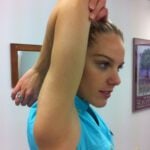
Photo 1 - Triceps Stretch: Begin by raising your arm directly over your head. Bend your elbow and try to reach the shoulder blade on the same side of you body. Use your opposite arm to push your elbow back.
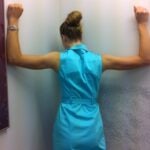
Photo 2– Corner Stretch to the Pectoralis Major: Begin by facing a corner and placing your forearms on the wall at a 90 degree angle. Step forward with one foot to feel the stretch.
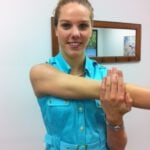
Photo 3- Infraspinatus Stretch: Extend your arm out directly in front of you and bend your elbow across your body. With your other hand gently pull your elbow across your body.
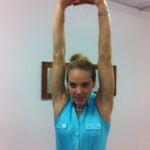
Photo 4- Latissimus Dorsi Stretch: Raise both arms overhead and place palms together interlocking fingers. At shoulders, lift arms upwards with fingers remaining intertwined.
Head Over Shoulders: Pull your chin down and backwards as if trying to make a double chin.
Shoulder Blade Pinch: Pinch shoulder blades together
Standing Extension: Stand and lean backwards - extend lower back.
Contributor: Gary E. Mattingly, PT, PhD: Professor Emeritus, University of Scranton, Dept. of Physical Therapy
Models: Katherine Weaver, SPT
Keep in mind that avoiding bad posture in your day to day activities can help keep your shoulder and back healthy, so remember “Sit up straight!”
Visit your doctor regularly and listen to your body.
NEXT MONDAY – Read Dr. Paul J. Mackarey “Health & Exercise Forum” in the Scranton Times-Tribune.
This article is not intended as a substitute for medical treatment. If you have questions related to your medical condition, please contact your family physician. For further inquires related to this topic email: drpmackarey@msn.com
Paul J. Mackarey PT, DHSc, OCS is a Doctor in Health Sciences specializing in orthopaedic and sports physical therapy. Dr. Mackarey is in private practice and is an associate professor of clinical medicine at Geisinger Commonwealth School of Medicine.
Prevention of Shoulder Injuries in Tennis: Strengthening. Part 1 of 2
HAPPY MEMORIAL DAY! You can tell that summer is in the air, not only by the arrival of the sunshine, warm air and longer days, but also by the beautiful sound of a tennis ball hitting a racquet hitting at Scranton Tennis Club and Birchwood Racquet and Fitness Club. So, get your racquets out and join the fun! However, take time to “tune up” in order to prevent injury, especially to the shoulder. In a sport that relies so heavily on the use of the shoulder, it is very common for tennis players to develop occasional shoulder pain or a more chronic problem such as shoulder rotator cuff tendinitis. That is exactly what happened to professional tennis star, Maria Sharapova and many others over the past few seasons.
For many, tennis is more of a seasonal sport. For example, in high school it is played in the fall for girls and spring for boys. In the off-season, a shoulder can lose much of its essential strength. This loss will result in a deconditioned shoulder at the start of the season and making it more susceptible to injury. Practicing with a deconditioned shoulder commonly results in sprain, strain and pain. Pain and weakness will significantly interfere with the ability to perform at a high level.
To prevent shoulder problems, one must participate in an exercise program specifically designed for tennis. A well-balance shoulder strengthening program includes rotator cuff and scapular (shoulder blade) muscle exercises, reeducation, biomechanics, and a stretching program pre and post hitting. This column will discuss some of these principles to properly prepare your shoulder for the tennis season and avoid injury.
STRENGTHENING EXERCISES FOR TENNIS
To avoid shoulder pain it is necessary to maintain shoulder strength. Stretching exercises are also important and will be discussed in next week in, Prevention of Shoulder Injuries in Tennis - Part II. Strengthening exercises need to concentrate on three groups of muscles: power muscles (the large muscles of the shoulder), shoulder blade stabilizer muscles (the muscles which stabilize the shoulder blade, and the all important rotator cuff muscles (the muscles which move the shoulder and control the cocking and follow through phases of the tennis stroke, while keeping the joint in proper position). Strengthening the power muscles of the shoulder is fairly easy; latissimus pull downs, pectoralis bench presses, and bicep curls will cover all bases. While these exercises are important in maintaining strength and power of the throwing shoulder, they are not as important as the exercises for the shoulder stabilizers and rotator cuff muscles.
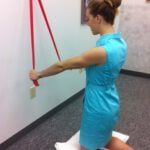
PHOTO 1 - Rotator Cuff Internal Rotation (Tennis Forehand Stroke): Holding a light or medium resistance band, imitate a forehand stroke with slight bend in the elbow…can be performed with band tied to tennis racket.
PHOTO 2- Rotator Cuff External Rotation (Tennis Backhand Stroke): Holding a light or medium resistance band, imitate a backhand stroke with slight bend in the elbow. can be performed with band tied to tennis racket.
PHOTO 3- Latissimus Pull downs – Kneeling or sitting:
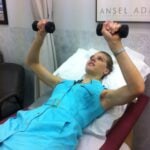
PHOTO 4- Bench Press - Lying on back with knees bent
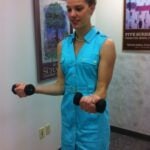
PHOTO 5- Biceps Curls - Sitting or standing
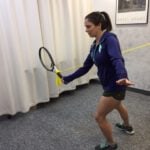
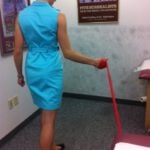
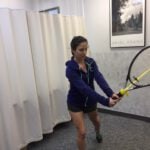
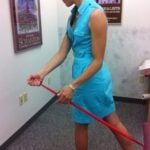
Models: Katherine Weaver, SPT & Lauren Calvey
Visit your doctor regularly and listen to your body.
Contributor: Gary E. Mattingly, PT, PhD: Professor Emeritus, University of Scranton, Dept. of Physical Therapy
NEXT MONDAY – Read Dr. Paul J. Mackarey “Health & Exercise Forum” in the Scranton Times-Tribune. Part 2 “Prevention of Shoulder Injuries in Tennis”
This article is not intended as a substitute for medical treatment. If you have questions related to your medical condition, please contact your family physician. For further inquires related to this topic email: drpmackarey@msn.com
Paul J. Mackarey PT, DHSc, OCS is a Doctor in Health Sciences specializing in orthopaedic and sports physical therapy. Dr. Mackarey is in private practice and is an associate professor of clinical medicine at Geisinger Commonwealth School of Medicine.

Karen Arscott, D.O.
Walking a Marathon – to Survive and Thrive! Part 2 of 2
Author: Karen Arscott, DO
Dr. Arscott is an Associate Professor of Medicine at GCSOM. She graduated from Philadelphia College of Osteopathic Medicine with D.O and is board certified in Neuromuscular Medicine and I am Chair of the Northeast Central Pennsylvania Interprofessional Education Coalition. I am Co-Chair of PA Lung a non-profit bringing awareness and support to those touched by lung cancer – this is in conjunction with Lung Cancer Alliance of which I am on the Medical and Professional Board. My walking buddies are my sister and my husband. I reside in Waverly with my husband James Arscott, D.O. and my granddaughter Sophia.
This column is a monthly feature of “Health & Exercise Forum” in association with the students and faculty of Geisinger Commonwealth School of Medicine.
The Marathon – The Race of Your Life!
Last week we learned how this lung cancer survivor ran the race of her life and went on to finish the walk of her life to live well and walk a marathon!
As a long time recreational runner, for many years I dreamed about attaining “the holy grail” … crossing the finish line of a marathon! The only problem was that I was unable to run any more. While this fact seems like a pretty big problem when talking about completing a marathon, I am eager to share why this is not impossible. Nine years ago, I heard about “Walker Friendly” marathons and I was intrigued. Before we knew what we were getting into, my husband and I registered for the “Walker Friendly” Philadelphia Marathon! Upon further research, we discovered that we had to find the time to train – yes, you do need to train to walk a marathon. One might wonder why my husband and I decide to register for the “walk friendly” Philadelphia Marathon without knowing the details. Well, my walking marathon was the reward for my successful survival marathon… as a lung cancer survivor!
I had finished the lung cancer survival marathon to save my life … I wanted to complete the walking marathon to live!
WHAT IS A “WALKER-FRIENDLY MARATHON?
A “walker-friendly” marathon is a marathon that accommodates the needs of those who chose to walk the 26.2 mile course instead of run. Moreover, it means that the course remains open for 7 hours instead of the normal 6 hours. An open course provides water and Gatorade stations, first aid support, road closures, and in general it means that you are not alone. A marathon is 26.2 miles and so to walk one in 7 hours translates into walking 16 minute miles on the average. You actually need to plan for a little faster than that because you will need to use the portable toilets (that is another story!) since you are out on the course for 7 hours.
Training – this is how we did it in about 5 months – and it worked! However, it is probably wise to begin earlier, six to eight months before the race, if you have the time. It really helps to find a partner or two. It was so great doing this with my husband as we had time to spend together talking – a true rarity nowadays! Moreover, as discussed in last week’s column, as a couple, we had just survived a very stressful time during my treatment and survival from lung cancer. One important benefit to walking, as compared to running, a marathon is that you are able to have a conversation with someone. I am not a proponent of wearing headphones while walking on streets as you cannot hear cars or animals coming up from behind.
First, you need to find a safe place to walk. You can start on a treadmill – treadmills are okay for a few miles but really get boring as your walks lengthen. Your first session will be to get an idea of what a 16 minute mile is like – because it is faster than you think. On a treadmill if you set the speed at 4.0 you will be walking a 15 minute mile. A setting of 3.7 will give you 16.12 minute miles. If you walk outside, which is really preferable once the weather breaks, find a 4 mile course by driving your car and measuring the distance. Hills are definitely beneficial in your course. Walk the 4 miles and see how long it takes. Keep walking that 4 mile course until you are able to walk it in one hour. You should plan on walking at least every other day. When walking swing your arms – this helps the natural fibrous coil built into your back muscles and therefore improves your efficiency. Once you can walk 4 miles in an hour, add 2 miles on to the course or find a new 6 mile loop. Walk this 6 mile course until you can walk it in 1 ½ hours. The 4 mile and 6 mile loops will be your mainstay as you increase your mileage. We could only find time to walk the longer distances on the weekends and so we would walk the 4 mile or 6 mile loops during the week after work. In retrospect, it might have been wise to enter a half marathon (13.1 miles) as a warm up to the full marathon. Oh well! Our courses were 4 miles, 6 miles, 9 miles, 14 miles, and 19 miles. After 2 months or so you will start the longer walks. Take water with you and try the different energy gels, beans, packets, and drinks. You will find that you will need the energy packet after about 7 or 8 miles and then every few miles to keep your muscles feeling strong. The practice walks are where you find what works best for you – I liked the gel and my husband liked peanut butter sandwiches!
Plan on at least 19 -20 mile training walk 2 or 3 times prior to the actual marathon. If you can do a little more, such as 24 – 26 miles, that would be preferable. When training and in the marathon, walk fast on flat surfaces and up hills be sure to swing your arms. Be careful and fight the urge to run down hills – running down hills is very hard on your joints especially your knees
The 26.2 miles in a marathon is truly a challenge and around 21 or 22 miles it is common to start to feel really tired and sore – if you get to that point and start visualizing your normal 4 mile loop you will start to feel the energy and excitement return. When you hit 25 miles you are home free and realizing that you are in the final mile is an unbelievable sensation – you will have energy and drive. Here is the thing – no matter how long it takes even 7 hours when you cross the finish line and they place the medal around your neck and wrap the silver blanket around you it will feel like you won – seriously you did win. Only about 0.5% of the country’s population complete a marathon. It is something to be very proud!
The Philadelphia marathon in 2008 was cold. The morning started at 26 degrees as more than 20,000 participants gathered at the starting line. As walkers we started towards the back and didn’t cross the starting line until 30 minutes after the race began! We walked fast just like we trained, but didn’t plan on the 15 - 20 minute wait for the portable toilets! We neared the rear of the Art Museum and suddenly heard the announcer say that he could see two more walkers coming up toward the finish. We were bursting as he said, “these will be the final runners of the 2008 marathon! Let’s play the song everyone is waiting all day to hear!” With that the “Rocky” theme song came on all of the speakers and the crowds (yes there were still thousands of people lining the street!) cheered. It was truly amazing and far beyond what we ever expected. My husband and I crossed the finish line, medals were placed around our necks, and silver blankets wrapped around our shoulders. There were people cheering and high-fiving us. We felt like we had won – and actually we had won. We won a personal battle and proved to ourselves that we could do anything, survive cancer and complete a marathon, one mile at a time!
I had finished the lung cancer survival marathon to save my life … I wanted to complete the walking marathon to live!
With good planning and a positive attitude, you too may be able to walk a half or full marathon. Good luck and maybe I will see you in the port-a-potty line sometime!
NEXT MONDAY – Read Dr. Paul J. Mackarey “Health & Exercise Forum!”
This article is not intended as a substitute for medical treatment. If you have questions related to your medical condition, please contact your family physician. For further inquires related to this topic email: drpmackarey@msn.com
Paul J. Mackarey PT, DHSc, OCS is a Doctor in Health Sciences specializing in orthopaedic and sports physical therapy. Dr. Mackarey is in private practice and is an associate professor of clinical medicine at Geisinger Commonwealth College of Medicine.
Karen Arscott, D.O.
Walking a Marathon – to Survive and Thrive! Part 1 of 2
Author: Karen Arscott, DO
Dr. Arscott is an Associate Professor of Medicine at GCSOM. She graduated from Philadelphia College of Osteopathic Medicine with D.O and is board certified in Neuromuscular Medicine and I am Chair of the Northeast Central Pennsylvania Interprofessional Education Coalition. I am Co-Chair of PA Lung a non-profit bringing awareness and support to those touched by lung cancer – this is in conjunction with Lung Cancer Alliance of which I am on the Medical and Professional Board. My walking buddies are my sister and my husband. I reside in Waverly with my husband James Arscott, D.O. and my granddaughter Sophia.
This column is a monthly feature of “Health & Exercise Forum” in association with the students and faculty of Geisinger Commonwealth School of Medicine.
The Marathon – The Race of Your Life! Part 1
With the Scranton Half and Boston Marathon behind us, many local runners are getting pumped up to get outside and run. In fact, many will be getting ready to begin their training for the Steamtown Marathon in October. Well, before you begin…this column will present a new perspective on marathon participation…walking a marathon.
This informative and inspirational story is about a lung cancer survivor who ran the race of her life and went on to finish the walk of her life to live well and walk a marathon!
As a long time recreational runner, for many years I dreamed about attaining “the holy grail” … crossing the finish line of a marathon! The only problem was that I was unable to run any more. While this fact seems like a pretty big problem when talking about completing a marathon, I am eager to share why this is not impossible. Nine years ago, I heard about “Walker Friendly” marathons and I was intrigued. Before we knew what we were getting into, my husband and I registered for the “Walker Friendly” Philadelphia Marathon! Upon further research, we discovered that we had to find the time to train – yes, you do need to train to walk a marathon. One might wonder why my husband and I decide to register for the “walk friendly” Philadelphia Marathon without knowing the details. Well, my walking marathon was the reward for my successful survival marathon…
In January 2006 I was diagnosed with lung cancer. At age 46 and without any known risk factors (non-smoker), to say we were shocked is an understatement. My husband and I are both physicians and we are up to date on all required medical education. However, we had no idea that lung cancer in never smoker women was on the rise and actually made up almost 20% of all lung cancer patients. Our education about lung cancer was really only beginning as I had much ahead of me, including surgery, which was thought to be a cure. Lung cancer quickly became a personal scare and now hopefully a distant memory. Despite my positive attitude, this disease presented ongoing challenges. Since I always considered myself athletic (some would say a jock), I decided to take control of my life through physical activity. I trained to complete a 5K race seven months after surgical removal of the upper part of the upper lobe of my right lung. This went well and we went on with our lives. However, sixteen months after my initial diagnosis, my lung cancer returned as metastasis in lymph nodes in my mediastinum (the middle of my chest). Suddenly, at 48 years old and feeling healthy, I was statistically looking at a 9% chance of living 5 years.
Once the initial shock had passed, I told my doctor to hit me with everything possible. My doctor laughed and said, “We will hit you with everything including the kitchen sink!” My marathon to live had just begun! First, was a port-a-cath placement which is a surgically inserted tube for vein access for the delivery of chemotherapy. Next, chemotherapy treatments began. The chemotherapy regimen I was given included carboplatin and docetaxel – this predated the tumor maker therapy now available. Every 3 weeks I received these medicines for four rounds. While receiving the chemotherapy, I continued exercising at spinning class. It was imperative that I maintain my cardiovascular fitness level as a major chest surgery was going to be next. Nine years ago there wasn’t any evidence concerning exercise and chemotherapy and so I decided to do what I felt would be best for me - which included exercise (it is now proven to be helpful, especially for lung cancer, to exercise while being treated). My only self-imposed rule was no exercise on the day I received my chemotherapy. The spinning class was an excellent choice for me as I knew everyone in the class and they were a cheer squad for me and my family – my family exercised with me throughout. I would close my eyes and pretend I was racing cancer and I always won!
My survival marathon continued. After the twelve weeks of chemotherapy, I had surgery to remove the entire right upper lobe of my lung along with the lymph nodes in the right side and middle of my chest. A little less than three weeks following my surgery, I started radiation five days per week and weekly cisplatin (another chemotherapy drug) for 7-8 weeks. Once I finished chemo in December 2007, it took almost 3 months for my blood counts to normalize and I started to feel like myself again.
In the spring of 2008, I was back at the gym in spinning class regularly and the seed of walking a marathon was planted by two women in the class. The Philadelphia marathon takes place in November which is Lung Cancer Awareness month – seemed like a perfect fit…I had finished the survival marathon for life and now I wanted to complete the walking marathon to live!
NEXT MONDAY – Read Dr. Paul J. Mackarey “Health & Exercise Forum” in the Scranton Times-Tribune. Next Week: The Walking Marathon – Part 2 will discuss training to complete a “walk-friendly” marathon.
This article is not intended as a substitute for medical treatment. If you have questions related to your medical condition, please contact your family physician. For further inquires related to this topic email: drpmackarey@msn.com
Paul J. Mackarey PT, DHSc, OCS is a Doctor in Health Sciences specializing in orthopaedic and sports physical therapy. Dr. Mackarey is in private practice and is an associate professor of clinical medicine at Geisinger Commonwealth College of Medicine.
Treatment and Prevention
Last week, in part I on spinal stenosis, we discussed the definition and diagnosis of the problem and why people with the disease have difficulty walking and standing and preferred sitting.This week we discuss treatment options and prevention for this problem. If a diagnosis of lumbar spinal stenosis is confirmed, the physician may choose conservative treatment. While the condition affects approximately 8-11% of Americans, mostly over 50, surgery is only a viable option in advanced cases in which nerve damage and weakness in the muscles of the legs is evident. In these cases, it is purported that surgery is approximately 80% effective. The purpose of this column will be to present conservative, non-operative measures. While conservative measures will not reverse the degenerative spinal changes that have already occurred, they can make accommodations and allow for improved function and possibly retard progression of the disease. Conservative management includes:
Medications:
There are a wide variety of medications for the treatment of spinal stenosis which may be used according to the stage or seriousness of your problem.
Posture/Position Retraining:
Most people with spinal stenosis have discovered through experience (cause and effect), that some positions and activities seem to aggravate their symptoms while others provide relief.
Physical Therapy:
Spinal stenosis is too complicated for the average person to establish an exercise or treatment program without professional help. In fact, many traditional exercises will aggravate the problem.
In addition to posture retraining and ergonomics, a comprehensive physical therapy program includes strengthening of the core and leg muscles, improving range of motion in the hips and lower back to increase the opening of the nerve canals, and increasing endurance to the leg muscles, all in a concerted effort to restore function.

Knees To Chest
Conclusion:
Since 25% to 50% of individuals treated non-surgically had satisfactory outcomes, conservative management is generally recommended for the elderly patients and those with mild to moderate symptoms.When conservative, non-operative management fails, when symptoms are severe, or in rare cases of rapid progression of leg weakness, and loss of function, surgery may be recommended. Surgery is indicated for individuals who failed non-surgical therapy and who have advanced imaging studies (MRI, CT, etc.) that correspond to the existing symptoms. Generally, an individual with spinal stenosis will undergo a decompressive laminectomy and occasionally a fusion. Surgical success rates up to 90% have been reported and high percentages of patients express satisfaction with the results.
Spinal stenosis is not necessarily progressive deterioration! Some individuals do deteriorate over time and eventually require surgery. However, large percentages of people with spinal stenosis maintain or improve with time. Also, consultation with your primary care physician and possibly a physiatrist, neurologist, neurosurgeon or orthopedic surgeon may be required to eliminate other possible causes of your symptoms: vascular problems, hip osteoarthritis, unstable degeneration of the spine, herniated lumbar disc, or peripheral nerve problems.
Contributions: Janet Caputo PT, DPT, OCS
Visit your doctor regularly and listen to your body.
NEXT MONDAY – Read Dr. Paul J. Mackarey “Health & Exercise Forum” in the Scranton Times-Tribune.
This article is not intended as a substitute for medical treatment. If you have questions related to your medical condition, please contact your family physician. For further inquires related to this topic email: drpmackarey@msn.com.
Paul J. Mackarey PT, DHSc, OCS is a Doctor in Health Sciences specializing in orthopaedic and sports physical therapy. Dr. Mackarey is in private practice and is an associate professor of clinical medicine at Gesisinger Commonwealth School of Medicine.